
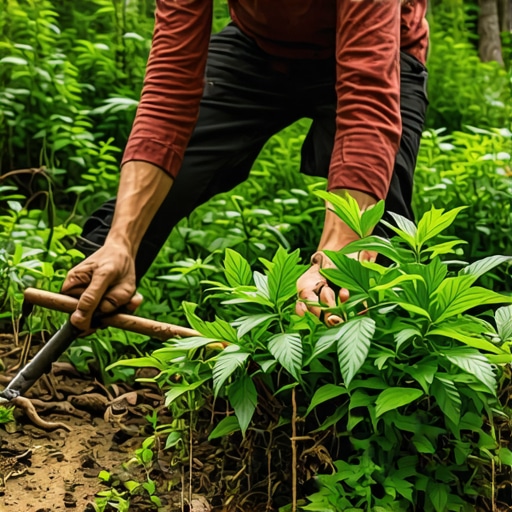
The Tactical Reality of Poison Sumac Remediation
Poison Sumac (Toxicodendron vernix) is a botanical hazard that requires precise chemical intervention and specialized PPE to neutralize without physical contact. Success hinges on using systemic herbicides like Triclopyr or Glyphosate applied via long-reach sprayers or the cut-stump method to ensure the root system dies while maintaining a safe distance from the urushiol oil.
I always drill into my new crew members: if you do not fix the soil grading or identify the species correctly first, every plant you put in the ground is just expensive compost, and in this case, it is dangerous compost. I remember a greenhorn on my team who thought he could just weed-whack a patch of sumac in a wet corner of a property. Within four hours, his face had swollen so badly he could barely see. He learned the hard way that 2026 Poison Sumac does not play. This plant contains a higher concentration of urushiol than poison ivy or oak. You do not touch it. You do not burn it. You do not mow it. You treat it like a biological spill.
The Biological Blueprint: Identifying Your Enemy
Identifying Toxicodendron vernix is the first step in a professional yard cleanup. This is not your typical staghorn sumac. This shrub or small tree thrives in standing water or highly saturated soils. It features pinnate leaves with 7 to 13 leaflets. Look at the rachis. If it is bright red and the leaflets are smooth-edged, you are looking at the enemy. Harmless sumacs have serrated leaves and red, fuzzy berries. Poison sumac has creamy white berries that hang in clusters. These berries are a clear warning sign. The plant is a woody perennial that can reach 20 feet in height. You need to know the height to calculate the reach of your spray equipment.
“A retaining wall doesn’t fail because of the stone; it fails because of the water trapped behind it. Similarly, a landscape fails when invasive toxic species are allowed to compromise the biological safety of the site.” – Hardscape Engineering Axiom
The Chemistry of Death: Selecting the Right Herbicide
To eliminate the plant without touching it, you must use translocating herbicides. These chemicals travel from the leaf or bark down into the rhizome system. If you just burn the leaves with a contact herbicide, the roots will push new growth within 14 days. You need a kill that goes to the core. We utilize Triclopyr for woody brush because it targets broadleaf plants without killing every blade of grass in the surrounding area. However, if the sumac is near a water source, you must use a formulation labeled for aquatic use to prevent ground-water contamination and irrigation issues.
| Herbicide Type | Active Ingredient | Application Method | Kill Rate |
|---|---|---|---|
| Systemic Brush Killer | Triclopyr (4-amino-3,5,6-trichloro-2-pyridinyloxyacetic acid) | Foliar Spray or Basal Bark | 95% on Woody Stems |
| Broad Spectrum | Glyphosate (N-(phosphonomethyl)glycine) | Foliar Spray | 90% (Non-selective) |
| Aquatic Grade | Imazapyr | Wick Application | 98% in Wetlands |
How do I kill poison sumac without getting close to it?
Use a high-pressure backpack sprayer with a telescoping wand extension. This allows you to stay 10 to 15 feet away from the foliage. Adjust the nozzle to a coarse droplet setting. Fine mists are the enemy. A fine mist can catch a 5 mph breeze and carry urushiol-laced droplets back onto your skin or into your lungs. We apply the chemical during the active growing season, typically between late spring and early autumn, when the plant is drawing nutrients into its root system. This ensures the toxin is carried deep into the plant’s vascular network.
The Professional PPE Checklist
Even if you plan on not touching the leaves, you must dress as if you are going to walk through a car wash of oil. Urushiol is a persistent resin. It stays active on tools and clothing for years. If you skip the gear, you will pay the price.
- Tyvek Suit: Disposable, hooded suits that prevent oil penetration.
- Nitrile Gloves: Double-layer, long-cuff gloves taped at the wrists to the suit.
- Face Shield: Full-face protection against accidental spray drift or leaf snap-back.
- Rubber Boots: Non-porous footwear that can be hosed down with a neutralizing wash.
Can I use a chainsaw to remove poison sumac?
Never use a chainsaw on live or dead poison sumac. The high-speed chain will atomize the urushiol oil, turning it into a toxic mist that you will inhale. This can lead to pulmonary edema and emergency room visits. If a tree is too large for chemical foliar treatment, use the hack-and-squirt method. Use a long-handled hatchet to make downward cuts into the trunk and immediately spray a 50% concentration of herbicide into the wound. This keeps the oil contained while delivering the lethal dose to the cambium layer.
Post-Removal: Restoration and Sod Install
Once the sumac is confirmed dead (usually indicated by brittle, grey wood and no leaf production for a full season), the area must be cleared. This is where yard cleanup protocols become technical. We do not chip this wood. We bag it and dispose of it in a landfill or bury it on-site away from irrigation lines. Do not burn the debris. Inhaling the smoke is potentially fatal. After clearing, the soil may be disturbed. We often follow up with a sod install to stabilize the soil and prevent invasive seeds from taking hold in the newly opened canopy space.
“Chemical control of woody species in wetland margins requires strict adherence to label rates to prevent unintended vegetative mortality in the riparian zone.” – Penn State Agricultural Extension
When installing new turf, ensure the soil pH is balanced between 6.0 and 7.0. If the sumac was growing in a low-spot, this is the time to bring in modified gravel or topsoil to correct the grade. Poor drainage is why the sumac was there in the first place. Fix the water, fix the problem. Deep, infrequent watering of new sod will force the roots to chase the moisture down, creating a dense mat that prevents sumac seedlings from emerging in the future. It works. We have seen it 100 times.
Disposal and Tool Decontamination
Your work is not done when the plant is dead. Every tool used must be decontaminated with Tecnu or a mixture of isopropyl alcohol and water. Urushiol is an oil; water alone will just spread it around. Scrub the sprayer wand, the hatchet, and your boots. Dispose of the Tyvek suit by turning it inside out as you remove it. This traps any residue inside the plastic barrier. It is a precise process. Don’t skip it.