
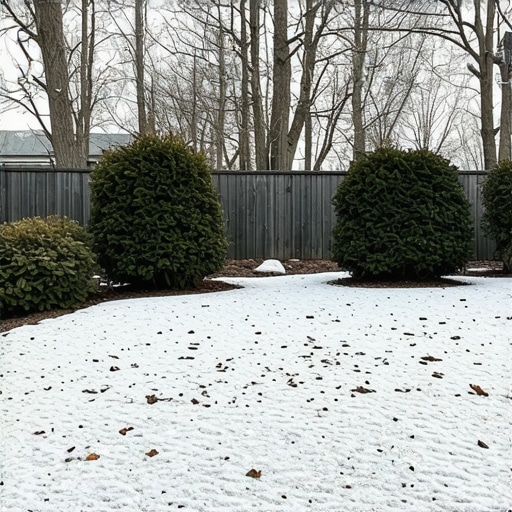
Why Clean Yards Often Damage Your Spring Garden Ecosystem
A professional winter yard cleanup in 2026 requires a shift from the sterile, clear-cut aesthetic to a scientifically grounded ecological landscaping approach that protects native pollinators. By leaving specific organic structures like hollow stems and leaf litter, you preserve the biological diversity and soil health necessary for a productive growing season. These elements act as natural insulation, maintaining soil temperature and preventing the deep freeze-thaw cycles that can heave new sod installs or damage irrigation lines.
The Apprentice Lesson: Soil is Not Dirt
I always drill into my new crew members: if you don’t fix the soil grading first, every plant you put in the ground is just expensive compost. Last season, I had a greenhorn who wanted to leaf-blow a client’s oak grove down to the bare mineral soil. He thought he was being thorough. I had to stop him right there. That ‘debris’ he was chasing was actually a 2-inch layer of high-value nitrogen and the winter home for every solitary bee on the property. We spent the next hour talking about the duff layer. If you strip the ground bare in November, you’re inviting erosion and killing the microbiology that makes your spring fertilizer effective. Soil is a living engine. Don’t starve it.
The Mechanics of Overwintering Insects and Stem Management
Most native bees are not hive-dwellers; they are solitary cavity-nesters that rely on the hollow or pithy centers of dried perennial stems to survive the winter. To manage these properly, you must identify the specific plant architecture before you reach for the shears. Stems from plants like Monarda (Bee Balm), Sambucus (Elderberry), and Hydrangea should be left at a height of 12 to 24 inches. This provides a structural void where larvae can develop undisturbed by the elements. Cutting these to the ground is a death sentence for the next generation of pollinators. Leave the stems. They are the infrastructure of your garden’s future.
“Maintaining a layer of leaf litter provides essential thermal insulation for ground-nesting bees and other beneficial insects, which are critical for pollination services in the following growing season.” – University of Minnesota Extension
The Physics of Leaf Litter and Soil Insulation
The fallen leaf is a precision-engineered thermal blanket. In a professional landscaping context, we look at the R-value of leaf litter. A 3-inch layer of shredded hardwood mulch or whole oak leaves can keep the soil temperature 5 to 10 degrees warmer than exposed earth. This is critical for irrigation systems where residual moisture in the upper soil horizons can freeze and cause lateral line fractures if the ground isn’t insulated. Furthermore, whole leaves provide the ‘gap space’ needed by larger insects and small amphibians. Shredding leaves is acceptable for lawn areas to prevent turf suffocation, but in garden beds, leave them whole.
How do I prepare my yard for winter without hurting bees?
To prepare your yard without harming pollinators, focus on targeted cleanup: remove diseased foliage and clear debris from drainage grates, but leave native perennial stems and at least two inches of leaf mulch in flower beds. Avoid tilling the soil, as 70% of native bees nest underground and require undisturbed earth to survive the winter freeze.
| Winter Cleanup Task | Traditional Approach (Avoid) | Ecological Approach (Professional Standard) | Benefit |
|---|---|---|---|
| Perennial Cutting | Cut to ground level | Leave 15-inch stems | Cavity-nesting bee habitat |
| Leaf Management | Bag and remove | Mulch into beds | Soil nutrient cycling |
| Soil Preparation | Rototill beds | Top-dress with compost | Protects ground-nesting bees |
| Turf Edging | Deep trenching in late fall | Wait until spring growth | Prevents root desiccation |
Strategic Sod and Irrigation Management in Late Season
If you have recently completed a sod install, winter management is high-stakes. Dormant sod still requires moisture to prevent root desiccation, especially in high-wind environments. However, you cannot rely on your standard irrigation schedule. I recommend a deep soak before the first hard freeze and then manual spot-watering during mid-winter thaws if the soil feels dry two inches down. Do not allow heavy equipment or high foot traffic on frozen sod; the ice crystals within the grass blades will shatter the cell walls, leading to brown-patching and crown death in the spring. It is a structural failure of the plant tissue. Keep off the grass.
Should I cut back my perennials before the first frost?
No, you should wait until late spring to cut back most perennials. Leaving the seed heads provides food for birds, while the standing stalks protect the plant’s crown from extreme cold. Only remove material that shows signs of fungal infection, such as powdery mildew or rust, to prevent spores from overwintering in the soil and infecting new growth.
“A retaining wall doesn’t fail because of the stone; it fails because of the water trapped behind it. Similarly, a garden doesn’t fail because of the cold; it fails because of the lack of biological protection.” – Hardscape Engineering Axiom
Winter 2026 Checklist for Professional Property Maintenance
- Inspect all irrigation backflow preventers and ensure they are drained and insulated.
- Flag drainage cleanouts to avoid damage from snow removal equipment.
- Clear leaves from turf grass to prevent snow mold, but relocate them to garden beds.
- Identify and mark ‘no-step’ zones where ground-nesting bees are likely located.
- Check the soil pH; late winter is an ideal time for lime applications as it takes months to react.
- Prune woody ornamentals for structure, but leave the pithy stems of perennials for the bees.
The Long-Term ROI of a ‘Messy’ Winter Garden
The drive for a perfectly manicured winter yard is a relic of bad 1980s landscaping. From a professional standpoint, the ‘messy’ garden is actually a high-performance system. The organic matter you leave behind breaks down into humus, improving soil cation exchange capacity (CEC) and reducing your need for synthetic fertilizers in the spring. This saves the client money and builds a more resilient landscape. When the ground thaws in 2026, you won’t be starting from zero; you’ll be waking up a fully functional biological engine. Don’t strip the gears before the race even starts. Leave the leaves. Leave the stems. Trust the biology.