
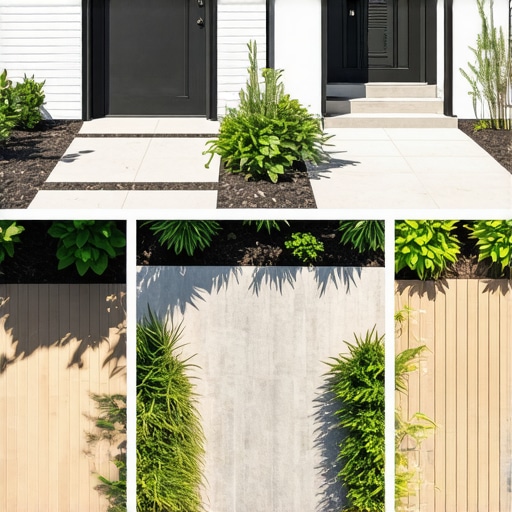
The Structural Foundations of 2026 Front Porch Design
Modern 2026 curb appeal for small front porches focuses on precision hardscape engineering and high-density native planting to maximize limited square footage. By integrating hydrostatic drainage systems and floating porcelain paver slabs, homeowners can create high-performance entryways that withstand climate shifts while maintaining a minimalist, professional aesthetic.
I recently got called out to tear up a $30,000 patio that was sinking because the previous contractor used a 4-inch base of clean stone without a geotextile fabric separator. The fines from the subgrade migrated into the stone, creating voids that eventually led to a total structural collapse. That $30,000 turned into a pile of rubble in three seasons because they skipped the engineering phase. If you do not fix the soil grading and base-layer compaction first, every plant or paver you put in the ground is just expensive compost or future debris. I tell my crew every morning: we are civil engineers who happen to work with biology. If the drainage isn’t at a 2 percent grade away from the foundation, you are failing the client. We do not do ‘mow-and-blow’ work here; we build legacy landscapes.
“A retaining wall doesn’t fail because of the stone; it fails because of the water trapped behind it.” – Hardscape Engineering Axiom
1. Floating Porcelain Slabs with Aggregate Infill
Floating porcelain slab systems utilize 2cm thick pavers set upon a densely compacted 2A modified stone base to create a modern, clean-lined entryway that resists frost heave. This design replaces traditional cracked concrete with a permeable or semi-permeable surface that manages runoff effectively through capillary action and strategic grading.
In 2026, the trend is moving away from heavy, chunky natural stone toward 24×24 inch porcelain tiles. These are non-porous, meaning they won’t absorb salt or de-icing chemicals that shatter concrete in the winter. For a small porch, you need to excavate at least 8 inches. You lay down a non-woven geotextile fabric first. This isn’t the cheap black plastic from a big-box store; this is industrial-grade separation fabric. Then comes 6 inches of 2A modified stone, compacted in 2-inch lifts using a plate compactor with at least 3,000 PSI of centrifugal force. The slabs are then set on a thin layer of sand or specialized pedestals. The result is a porch that won’t move an inch for twenty years.
How much modified gravel do I need for a patio base?
To calculate gravel needs, multiply the square footage by the desired depth in feet (e.g., 6 inches is 0.5 feet), then divide by 27 to get cubic yards. Always add a 15 percent compaction factor to your final number to ensure you have enough material to reach the required Proctor density.
2. High-Density Xeriscaping and Soil Microbiology
Modern curb appeal in 2026 prioritizes rhizosphere health and native perennial density, using mycorrhizal inoculants to establish root systems that require 70 percent less water than traditional ornamental gardens. Instead of a few lonely shrubs, we are looking at biological layering that covers the soil completely to prevent weed germination.
Stop buying ‘topsoil’ that is actually just screened construction fill. Real curb appeal starts with a soil test to determine your Cation Exchange Capacity (CEC) and pH levels. If you are planting around a small porch, you are likely dealing with compacted ‘builder soil’ which is basically dead clay. We amend this with 30 percent organic leaf compost and 10 percent coarse sand to improve macropore space for root respiration. For 2026, we recommend plants like Asclepias tuberosa or Carex pensylvanica. These aren’t just ‘pretty plants’; they are biological pumps that move water into the subsoil. We plant them close-at a 12-inch on-center spacing-to create a living mulch. This eliminates the need for the ‘mulch volcano’ look that rots the root flares of your trees.
“Soil compaction is the enemy of root respiration; any soil with a bulk density over 1.6 g/cm3 will physically resist root penetration.” – USDA Soil Biology Primer
3. Automated Micro-Irrigation and Nutrient Delivery
Modern irrigation for small porches utilizes pressure-compensating drip manifolds and inline emitters to deliver water directly to the root zone, preventing the fungal pathogens associated with overhead sprayers. These systems are integrated with smart controllers that adjust based on evapotranspiration (ET) rates and local weather data.
Don’t let a contractor sell you a standard spray head for a small front garden bed. It’s a waste of water and a recipe for powdery mildew. We install Netafim drip lines with 0.6 GPH (gallons per hour) emitters. These lines are buried under 3 inches of triple-shredded hardwood mulch. The water stays in the soil, not on the leaves. We also install a fertilizer injector (fertigation) into the main line. This allows us to deliver low-dose nitrogen and kelp extracts directly to the plants during their peak growth phases. It is the difference between a plant that just survives and one that dominates the landscape.
How do I choose the right sod for a small front yard?
Select a sod variety based on your USDA Hardiness Zone and daily sunlight hours; for high-traffic front yards in 2026, RTF (Rhizomatous Tall Fescue) is preferred for its ability to self-repair via underground runners. Ensure the sod is harvested within 24 hours of installation to prevent root desiccation and nitrogen burn.
| Material Property | Traditional Concrete Paving | 2026 Porcelain Slab System | Natural Flagstone |
|---|---|---|---|
| Permeability | Zero | High (with open joints) | Medium |
| Maintenance | High (Sealing/Cracking) | Ultra-Low | Moderate |
| Freeze/Thaw Resistance | Low | Excellent | Varies by Stone |
| Installation Depth | 4-6 Inches | 8-12 Inches (Proper Base) | 6-10 Inches |
The Professional Sod Installation Protocol
If you are replacing a dead lawn as part of your curb appeal overhaul, do not just throw sod over old grass. Follow this checklist:
- Site Stripping: Use a sod cutter to remove the top 2 inches of old vegetation and weed seeds.
- Subgrade Grading: Establish a 2 percent slope away from the porch foundation using a Harley rake or leveling bar.
- Soil Amendment: Incorporate 2 cubic yards of composted organic matter per 1,000 square feet.
- Starter Fertilizer: Apply a 10-20-10 NPK ratio to promote immediate phosphoric root development.
- Rolling: Use a water-filled roller after laying sod to eliminate air pockets between the roots and the soil.
- Irrigation: Water for 20 minutes immediately; keep the soil ‘sponge-damp’ for the first 14 days.
The ‘settling in’ period for these 2026 designs is roughly one full growing season. During year one, you will see the pavers settle slightly-this is why we use polymeric sand in the joints to allow for micro-movements without cracking. Your plants will be ‘sleeping’ the first year, ‘creeping’ the second, and ‘leaping’ the third. Do not over-fertilize in year one; you want the roots to hunt for nutrients, which builds a stronger, more resilient plant. Avoid the temptation to use big-box store weed-and-feed products; the high nitrogen content creates top-heavy plants with weak root systems that will collapse during a 2026 summer heatwave. Stick to the science, watch your drainage, and keep your hands in the dirt.