
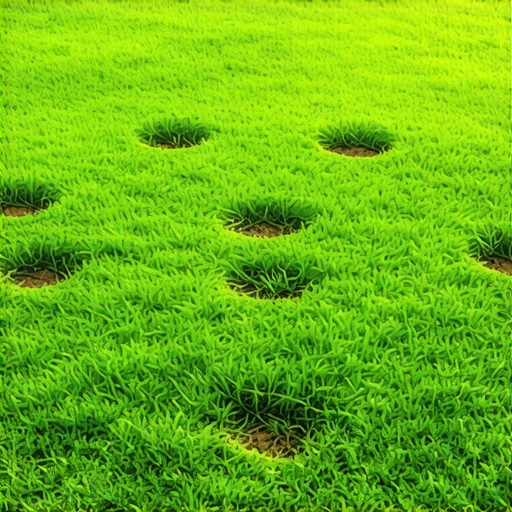
Your lawn is suffocating. You see the yellowing blades and the thinning patches, and you think it needs more nitrogen. You are wrong. Most 2026 lawn failures will stem from soil bulk density issues that no amount of fertilizer can fix. When soil particles are pressed together so tightly that oxygen diffusion rates drop below 10%, root respiration ceases. This is the structural reality of a compacted yard.
Why Your Lawn Feels Like Concrete: The Forensic Autopsy of Compaction
Soil compaction occurs when the pore spaces between soil particles are collapsed, leading to a drastic reduction in water infiltration and gas exchange. To fix this, we utilize core aeration to physically remove cylinders of soil, thereby decreasing the bulk density of the root zone and allowing the rhizosphere to breathe again.
I always drill into my new crew members: if you don’t fix the soil grading and relieve compaction first, every plant you put in the ground is just expensive compost. I remember an apprentice back in ’05 who thought he could skip the tight corners with the aerator. Three months later, those corners were nothing but moss and opportunistic weeds. He learned the hard way that landscaping is about the hidden mechanics beneath the surface, not just the aesthetic on top. If the soil is too dense for a screwdriver to penetrate 6 inches, it is too dense for irrigation to reach the roots.
“Core aeration involves the removal of small soil plugs or cores from the lawn, which reduces soil bulk density and improves the movement of water and air into the root zone.” – Penn State Extension
The Physics of Gas Exchange: Why Hole Density Matters Most
Hole density determines the success of your aeration because it dictates the total surface area available for gas exchange and water penetration. Aiming for 20 to 40 holes per square foot is the baseline for professional results; anything less is just a walk in the park with a heavy machine. Most DIY rentals pull 2-inch cores at a density of 5 holes per foot. It is useless. You need deep, 3.5-inch pulls to bypass the thatch layer and penetrate the subsoil.
How deep should lawn aeration holes be?
For effective compaction relief, aeration cores must reach a minimum depth of 2.5 to 3.5 inches. This depth ensures the machine penetrates the organic thatch layer and breaks into the mineral soil where the majority of root mass resides. Shallow holes only encourage surface rooting, which makes the turf vulnerable to heat stress.
Can I aerate my lawn if the soil is dry?
Aerating bone-dry soil is a waste of fuel and time. The tines will not penetrate, and you risk damaging the machine. Soil should be moist—comparable to a wrung-out sponge—to allow the tines to pull a clean, full-length core. If it hasn’t rained, run your irrigation for 45 minutes the night before your scheduled service.
| Soil Type | Bulk Density (g/cm³) | Aeration Frequency | Core Depth Required |
|---|---|---|---|
| Heavy Clay | >1.6 | Twice Yearly | 3.5 Inches |
| Sandy Loam | 1.2 – 1.4 | Annual | 2.5 Inches |
| Compacted Silt | 1.5 | Bi-Annual | 3.0 Inches |
Pre-Aeration Yard Cleanup: More Than Just Raking Leaves
Proper yard cleanup before aerating ensures that the machine’s tines make direct contact with the soil surface without being obstructed by debris. Removing sticks, heavy leaf litter, and excessive thatch allows the aerator to maintain consistent downward pressure. If you skip the yard cleanup, the tines will simply bounce off the debris, resulting in inconsistent hole depth and wasted effort. Don’t skip this. A clean slate is required for the mechanical process to work.
Sod Install vs. Core Aeration Recovery
Deciding between a new sod install or heavy aeration depends on the remaining percentage of desirable turf species in the lawn. If more than 50% of the yard is weeds or bare dirt, a full sod install is the only way to reset the ecosystem. However, if the grass is simply dormant or stressed by compaction, aggressive aeration followed by overseeding can save the existing turf at a fraction of the cost. When we perform a sod install, we still aerate the subgrade to prevent the new roots from hitting a hardpan layer 2 inches down.
“Oxygen diffusion is critical for root respiration; without it, ATP production halts, and the root system effectively suffocates.” – Agronomy Manual
Irrigation Logic: Watering for Root Depth, Not Appearance
Irrigation schedules must be adjusted post-aeration to leverage the newly created macropores that allow water to travel deeper into the soil profile. While the internet tells you to water every day, turf grass actually needs deep, infrequent watering—exactly 1 inch per week—to force roots to chase the moisture down. This creates a drought-resistant lawn. Shallow daily watering keeps the top inch wet, which leads to fungal pathogens like Pythium. Water deep. Water rarely.
- Flag all irrigation heads and utility lines before the machine arrives.
- Verify soil moisture levels using the 6-inch screwdriver test.
- Execute a cross-hatch pattern with the aerator to ensure maximum hole density.
- Apply a high-quality phosphorus-rich starter fertilizer immediately after pulling cores.
- Leave the soil cores on the lawn; they will break down and return microbes to the surface.
The 2026 season will be unforgiving to those who ignore soil structure. Compaction is a silent killer. It restricts the movement of nutrients, chokes out oxygen, and turns your yard into a hydrophobic wasteland. Pull the cores. Pull them deep. Pull more of them than you think you need. That is the only way to build a professional-grade lawn from the roots up.