
The Engineering Logic of Black Locust Raised Beds in 2026
Building raised beds with black locust requires a deep understanding of timber density and soil biology to achieve a structural lifespan exceeding thirty years. This project demands precision landscaping, professional irrigation integration, and a commitment to using materials that resist the relentless hydrostatic pressure of wet soil. When we talk about high-end installs, we are not just building boxes; we are engineering biological containment systems that must endure the elements while fostering a healthy rhizosphere.
The Apprentice Lesson: Soil Grading and Structural Integrity
I always drill into my new crew members: if you don’t fix the soil grading first, every plant you put in the ground is just expensive compost. I remember a job back in the early 2000s where a junior lead ignored the 2 percent slope requirement away from the foundation when installing a set of cedar beds. By the first spring thaw, the homeowner had two inches of standing water in their crawlspace because the beds acted as a dam. We had to rip the whole thing out, regrade the entire side yard, and restart from scratch. It was a $15,000 mistake that could have been avoided with a simple laser level and some common sense. This lesson applies to every sod install and yard cleanup we perform. You cannot fight gravity; you can only guide it. If your base is not stable and your grade is not shedding water, your expensive black locust lumber is being wasted on a failing foundation.
“Robinia pseudoacacia (Black Locust) is among the most decay-resistant timbers in North America due to its high concentration of extractive tannins and the presence of tyloses which plug the vascular tissue.” – United States Forest Service Silvics Manual
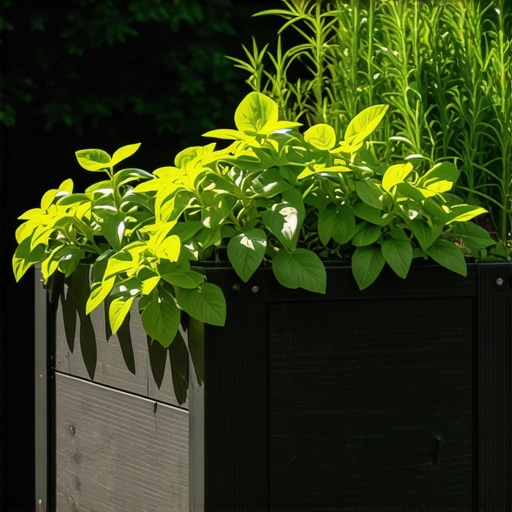
Black locust is the undisputed king of domestic hardwoods for ground contact. Unlike cedar, which might give you ten to fifteen years before the bottom course starts to go soft, black locust is essentially petrified wood that is still growing. It has a Janka hardness rating of 1,700 lbf, making it harder than white oak or hard maple. This density is what makes it rot-resistant, but it also makes it a nightmare for contractors who don’t have the right tools. You do not just drive a screw into locust. You will snap the head off every single time. You must pre-drill every hole and use 316-grade stainless steel fasteners. Why stainless? Because the very tannins that protect the wood from fungi will react with galvanized or ceramic-coated screws, causing ugly black streaks and eventual fastener failure. [image_placeholder_1]
Wood Comparison for Raised Bed Construction
| Material Property | Black Locust | Western Red Cedar | Pressure Treated (ACQ) |
|---|---|---|---|
| Expected Lifespan | 30+ Years | 10-15 Years | 15-20 Years |
| Janka Hardness | 1,700 lbf | 350 lbf | 690 lbf |
| Chemical Leaching | Zero (Natural) | Zero (Natural) | Copper/Azole Risk |
| Fastener Requirement | Stainless Steel | Galvanized/SS | Ceramic/Galvanized |
How long do black locust raised beds last?
Black locust raised beds typically last between 30 and 50 years even with direct soil contact and no chemical liners. The high density of the wood prevents moisture penetration, while the natural chemical compounds within the wood fibers act as a powerful fungicide that prevents the structural breakdown common in softer woods.
The Science of Soil and Rhizosphere Management
Once the structure is built, the focus shifts to the biology. Most homeowners make the mistake of buying “garden soil” from a big-box store that is essentially ground-up wood chips and green waste compost that hasn’t finished cooking. This leads to nitrogen tie-up. As the carbon-heavy wood chips break down, the bacteria consume all the available nitrogen, leaving your plants stunted and yellow. For a 2026-spec bed, we utilize a mix of 60 percent screened sandy loam, 30 percent high-quality leaf mold, and 10 percent perlite or expanded shale for permanent aeration. We are looking for a bulk density of around 1.1 to 1.3 grams per cubic centimeter. This ensures the roots can penetrate deep into the bed without hitting a wall of compacted clay. During a yard cleanup, we often find that the biggest issue with existing beds is total soil collapse where the organic matter has oxidized, leaving a dense, anaerobic puck that kills plants.
Irrigation Integration and Water Efficiency
A raised bed is essentially a giant terracotta pot; it dries out faster than the surrounding ground. Integrating a dedicated irrigation zone is mandatory. We use 1/2 inch poly distribution tubing connected to 1/4 inch emitter tubing with 6-inch spacing. This provides a consistent 0.5 gallons per hour (GPH) flow rate directly to the root zone. Surface watering with a hose is a waste of time and water. It encourages shallow root growth and increases the risk of foliar diseases like powdery mildew. By burying the drip lines under two inches of arborist wood chips, we reduce evaporation by nearly 40 percent. This is critical when you are also managing a fresh sod install adjacent to the beds, as the water requirements for turf and vegetables are vastly different. The sod needs frequent, shallow watering to establish its roots, while the beds need deep, infrequent soaking to force roots downward.
“Hydrostatic pressure is the primary cause of retaining wall and raised bed failure; water must be allowed to exit the soil profile through drainage apertures or granular backfill.” – International Concrete Paver Institute (ICPI) Standards
Do I need a liner for raised beds?
While black locust is rot-resistant, a breathable geotextile liner is recommended to prevent soil fines from leaching through the joints of the wood. Avoid using plastic or non-breathable membranes, as these trap moisture against the wood and create anaerobic conditions in the soil, which can lead to root rot and localized wood decay.
The Installation Checklist for Professional Results
- Verify utility markings via 811 before any excavation or irrigation trenching.
- Level the footprint using a 4-inch base of compacted 2A modified stone to prevent settling.
- Use 316-grade stainless steel timber screws (6-inch minimum for 4×4 posts).
- Install a 1/2 inch hardware cloth at the bottom to deter burrowing rodents like voles.
- Ensure the soil pH is tested and amended to 6.5-6.8 before planting.
- Apply a high-quality sod install around the perimeter to stabilize the soil and prevent erosion.
The 2026 Maintenance and Settling Period
After the first full season, you will notice the black locust silvering out. This is purely aesthetic and does not indicate a loss of structural integrity. You do not need to stain or seal this wood; doing so actually prevents the wood from breathing and can trap moisture inside the grain. Check your irrigation filters every spring. Sediment buildup in drip emitters is the leading cause of plant failure in raised systems. If you conducted a thorough yard cleanup before the build, your weed pressure should be minimal, but keep an eye on the bed margins. The interface between the bed and the lawn is a prime spot for invasive grasses to creep in. A sharp spade edge or a dedicated metal border can keep your turf and your garden from becoming a single, tangled mess. Professional landscaping is about clear boundaries and disciplined maintenance. This setup is built for the long haul. It will be there long after the “mow-and-blow” crews have moved on to the next cheap project. You are investing in a legacy structure that produces food and beauty for decades. Stick to the science, respect the wood, and don’t skip the prep work. That is how you build for the future.