
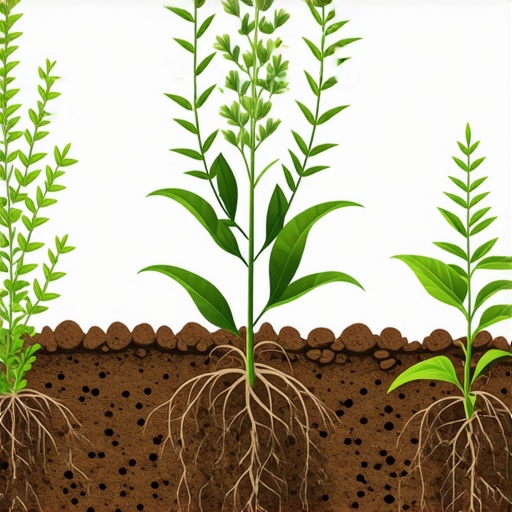
The Reality of Landscaping in Heavy Clay Soils
Heavy clay soil consists of microscopic, flat mineral particles that pack tightly together, severely limiting the pore space available for oxygen and water movement. To manage this soil texture, you must select native plants with deep root systems capable of penetrating compacted layers and surviving anaerobic conditions during wet seasons.
I always drill into my new crew members: if you don’t fix the soil grading first, every plant you put in the ground is just expensive compost. Most rookie contractors think they can just dig a hole, drop in a plant, and walk away. In heavy clay, that hole becomes a literal bathtub. When the rain hits, the water sits in that bowl because the surrounding clay is too dense to let it drain. The roots drown, the plant rots, and the homeowner is out five hundred bucks. I have seen 20-year-old oaks die in three months because a ‘mow-and-blow’ crew buried the root flare in clay-heavy backfill. You have to understand the engineering of the dirt before you touch a shovel. Landscaping is about managing hydrostatic pressure and oxygen exchange, not just making things look pretty for a week.
“Clay soils have a high water-holding capacity but a low infiltration rate, meaning irrigation must be applied slowly to avoid runoff and anaerobic root zones.” – Penn State Extension
How do I improve drainage in clay soil?
Improving drainage in heavy clay requires a combination of core aeration, the addition of organic matter to build soil structure, and proper surface grading to direct water away from plant root zones. Avoid over-tilling, which can destroy soil aggregates and lead to even tighter compaction over time.
Top Native Plant Pick: Baptisia australis (False Indigo)
Baptisia australis, or Blue False Indigo, is a rugged native perennial that develops a massive, woody taproot system capable of punching through the densest clay subsoils. This plant is a nitrogen-fixer, meaning it works with soil bacteria to convert atmospheric nitrogen into a form usable by plants, improving soil fertility naturally.
When we talk about landscaping for 2026, we are looking for plants that don’t need a life-support system of fertilizers. Baptisia is a beast. Once established, you aren’t moving it. That taproot goes deep, often three to four feet, searching for moisture while the surface clay is baked bone-dry in August. It mimics the action of a mechanical tiller but does it biologically. In the first year, it might look small. It is putting all its energy into that root. By year three, it is a three-foot-wide shrub-like powerhouse that scoffs at the freeze-thaw cycles that heave lesser plants out of the ground. Don’t skip the initial yard cleanup to clear out invasive grasses before planting this; it needs the space to establish its crown without competition.
The Role of Vernonia fasciculata (Ironweed) in Drainage Management
Vernonia fasciculata, commonly known as Ironweed, thrives in saturated clay and low-lying areas where water tends to pond after heavy storms. Its upright, stiff stems and aggressive fibrous root system help stabilize soil and facilitate deep water infiltration, making it a critical component for rain gardens or bioswales.
I use Ironweed when a client has a ‘swamp’ in their backyard that they can’t afford to tile. Instead of fighting the water, we use the biology of the plant to manage it. This plant loves the high Cation Exchange Capacity (CEC) of clay. It drinks up the excess nutrients that would otherwise wash into the storm drains. It reaches heights of five feet, providing a structural backbone to a garden bed that won’t flop over in a high wind. It is the antithesis of the weak, over-bred annuals you find at big-box stores. It is built for the struggle of the clay belt.
| Plant Name | Root Type | Clay Tolerance | 2026 Design Utility |
|---|---|---|---|
| Baptisia australis | Deep Taproot | Extreme | Structural focal point / Nitrogen fixer |
| Vernonia fasciculata | Fibrous / Rhizomatous | High (Wet) | Water management / Erosion control |
| Panicum virgatum | Deep Fibrous | Extreme (Dry/Wet) | Winter interest / Soil carbon building |
Panicum virgatum (Switchgrass): The Biological Tiller
Panicum virgatum is a versatile native ornamental grass that features deep fibrous roots extending up to ten feet into the clay profile. These roots create macropores in the soil, which significantly improves permeability and allows for better irrigation efficiency in previously compacted residential landscapes.
How much modified gravel do I need for a patio base?
For a standard hardscape install in clay soil, you need a minimum of 6 to 8 inches of compacted modified gravel (2A or CR617) to prevent settling. In heavy clay, you must also use a geotextile fabric between the subgrade and the gravel to prevent the stone from sinking into the mud.
Switchgrass is what I call ‘infrastructure vegetation.’ It does the heavy lifting for the rest of the yard. When we do a sod install, I often recommend a border of Switchgrass. Why? Because sod, especially Kentucky Bluegrass, has shallow roots that hate clay. The Switchgrass acts as a buffer, pulling water down and breaking up the hardpan. It prevents the hydrostatic pressure from building up against the edges of the lawn. During your fall yard cleanup, leave the stalks standing. They provide winter cover and keep the root crown protected from the ice. It is a no-nonsense plant for a no-nonsense landscape.
Engineering the Site: Sod Install and Irrigation in Clay
A successful sod install on heavy clay requires mechanical scarification of the subsoil to a depth of 4 inches to prevent the interface layer from becoming a barrier to root growth. Irrigation systems must be programmed for cycle-and-soak settings to prevent surface runoff and ensure water reaches the root zone without saturating the surface.
- Call 811 / Dig Safe at least 72 hours before any excavation or deep planting.
- Test soil pH; clay is often alkaline or acidic depending on the parent material.
- Remove any thatch layers from existing turf before adding new sod.
- Ensure the irrigation controller has a rain sensor to avoid drowning clay-based beds.
- Use a power rammer or plate compactor for any hardscape edges near clay slopes.
“A retaining wall doesn’t fail because of the stone; it fails because of the water trapped behind it.” – Hardscape Engineering Axiom