
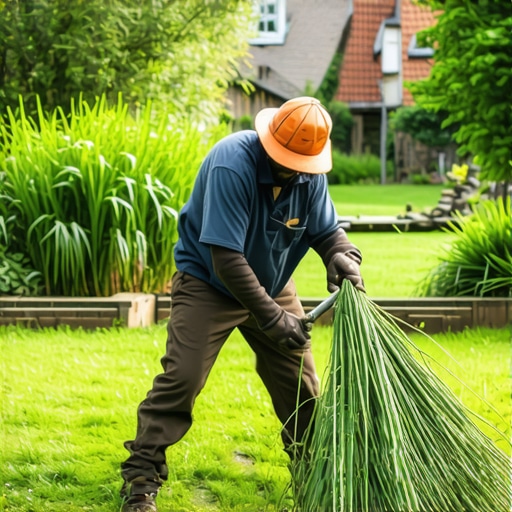
The Underground Warfare of Invasive Running Bamboo
To kill invasive bamboo without harming neighboring landscapes, you must employ a combination of mechanical rhizome severance and targeted systemic herbicides like Glyphosate or Imazapyr applied directly to cut culms. This prevents non-target drift and ensures the chemical translocates to the root system specifically. You are not just dealing with a plant: you are dealing with a biological machine designed for expansion. Running bamboo, specifically the Phyllostachys genus, utilizes leptomorph rhizomes that function like underground horizontal stems. They do not behave like typical weed roots. They have nodes and internodes, and every single node is a potential launch site for a new culm. If you leave a three-inch fragment in the soil during a yard cleanup, you have not solved the problem. You have simply pruned the subterranean network.
The Chemical Nightmare: A Cautionary Tale of Herbicide Drift
A homeowner recently called me in a panic after they completely torched their front lawn and their neighbor’s prize-winning azaleas by applying a high-pressure spray of 41 percent Glyphosate on a windy afternoon. They thought they were being aggressive. In reality, they were being reckless. The bamboo barely flinched because the leaf surface area was too small to carry the poison to the massive rhizome mass, but the chemical drift decimated everything else in a twenty-foot radius. This is why I preach the ‘cut-and-paint’ method. You must be surgical. High-end landscaping is about precision, not carpet-bombing. You are dealing with a plant that can grow three feet in twenty-four hours under the right conditions. It requires a professional-grade strategy, not a big-box store solution.
“Running bamboo species utilize leptomorph rhizomes that can extend up to fifteen feet in a single growing season, making containment a structural engineering challenge as much as a horticultural one.” – Agricultural Extension Office Manual
The Forensic Autopsy of a Failed Bamboo Barrier
Most bamboo containment projects fail because the contractor used thin, sixteen-mil pond liner or, worse, cheap landscape fabric. I have seen rhizomes pierce right through standard plastic. When the pressure of the rhizome tip, which is sharp enough to draw blood, meets a flimsy barrier, the barrier loses every time. Then there is the issue of ‘jumping.’ If the barrier is not installed with a two-inch lip above the soil grade, the rhizome will simply grow over the top, hidden by mulch, and re-infest the yard. I have excavated $50,000 sod install projects where the bamboo was popping through the new turf within six months because the previous crew didn’t understand hydrostatic pressure and soil compaction around the barrier edge. Irrigation lines are also at risk. Bamboo rhizomes will find the moisture from a leaky emitter and wrap around the PVC until it snaps.
Bamboo Control Methodology Comparison
| Method | Efficacy Rate | Labor Intensity | Risk to Neighbors |
|---|---|---|---|
| Surface Spraying | 15 percent | Low | Very High |
| Mechanical Digging | 60 percent | Extreme | Low |
| HDPE Barrier (80 mil) | 95 percent | High | None |
| Cut-and-Paint Chemical | 85 percent | Medium | Minimal |
How deep should a bamboo barrier be?
A professional-grade bamboo barrier must be at least twenty-four to thirty inches deep to account for the vertical diving depth of temperate running bamboo species. In sandy soils, you should push to thirty-six inches because the lack of soil density allows rhizomes to travel deeper in search of the water table. We use High-Density Polyethylene (HDPE) at a minimum of sixty-mil thickness, though eighty-mil is the industry standard for 2026. This material is impenetrable to the sharp tips of the rhizomes. When we install these, we don’t just dig a trench. We use a vibratory plow or a dedicated trencher to ensure the wall is continuous. Any gap is a failure point.
The Step-by-Step Eradication Protocol
Do not start by digging. Start by cutting. You need to starve the plant of its ability to photosynthesize. Cut every culm (stalk) to the ground. This forces the plant to draw energy from its starch reserves in the rhizomes. Once the culms are cut, you have a window of about fifteen minutes to apply a concentrated systemic herbicide to the fresh wound. The plant’s vascular system, the xylem and phloem, is still open and will pull the chemical down into the root system. If you wait an hour, the wound cauterizes and the chemical stays on the surface. It is a waste of time. This is why my crews work in pairs: one person cuts, one person paints.
Can I kill bamboo without hurting my grass?
Yes, but you must avoid the temptation to spray the entire area. Use a sponge applicator or a paintbrush. By targeting only the bamboo culms, you protect the surrounding sod install. Bamboo is a grass, so most selective herbicides that kill broadleaf weeds won’t touch it. You need a non-selective herbicide, which means anything it touches will die. Precision is your only defense. If you have a massive infestation, you may need to sacrifice a small area of lawn, perform a full yard cleanup, and then re-sod after the chemical has reached its half-life in the soil, usually fourteen days for standard Glyphosate formulations.
“A root barrier is only as effective as its installation depth; twenty-four inches is the minimum required to prevent most temperate bamboo species from diving beneath the obstruction.” – Hardscape Engineering Axiom
Professional Eradication Checklist
- Identify the species: determine if it is ‘clumping’ or ‘running’ bamboo before starting.
- Mark all underground utility lines: call 811 before trenching for barriers.
- Cut culms at a forty-five-degree angle to increase surface area for chemical absorption.
- Use HDPE barrier material: avoid PVC or thin liners.
- Secure barrier joints: use stainless steel closure strips, not tape.
- Monitor for three years: bamboo is resilient and may attempt a comeback from dormant nodes.
Maintaining a Bamboo-Free Zone
Once the primary mass is dead, the job is not over. You must manage the irrigation in the area. Over-watering the perimeter of your property creates an ideal environment for any missed rhizome fragments to thrive. Keep the soil moisture regulated. If you see a ‘spike’ (a new shoot) emerging, do not just kick it over. Dig it out. Follow the rhizome back to the main source. It will rot if you are persistent. This is a game of attrition. The plant has years of stored energy. You have a shovel and high-grade chemicals. Don’t let up. If you skip a month of monitoring, the bamboo wins. It is that simple. Landscaping is a battle against biology. You must be the more disciplined force.