
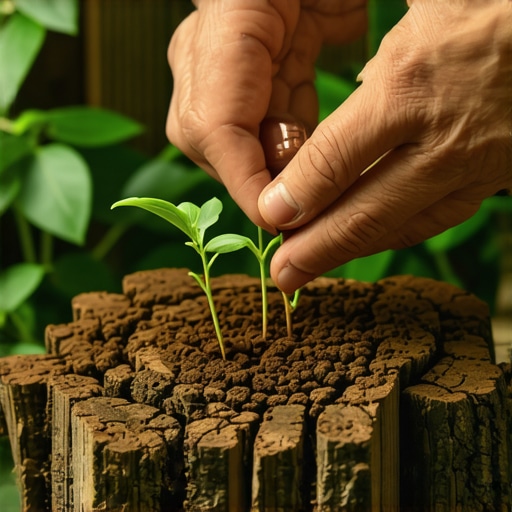
The Zombie Root Problem: Why Stumps Refuse to Die
Stump sprouts, often called epicormic shoots or suckers, are the tree’s desperate survival mechanism triggered by the loss of apical dominance once the primary trunk is severed from the root flare. These sprouts emerge from adventitious buds hidden beneath the bark, fueled by the massive energy reserves stored in the established root system. If you do not kill the root mass, you are simply managing a perennial nuisance that can buckle irrigation lines and ruin a fresh sod install. I always drill into my new crew members: if you don’t fix the soil grading and kill the biological engine of the stump first, every plant you put in the ground is just expensive compost. I have seen guys spend thousands on a yard cleanup only to have invasive species or 2026 stump growth punch through weed barrier and polymeric sand within six months. It is not just about the visible wood; it is about the vascular cambium and the phloem network that remains active underground long after the chainsaw has been put away.
“Effective stump management requires the permanent cessation of nutrient flow between the root system and any remaining meristematic tissue.” – ISA Arborists’ Certification Study Guide
The Science of Copper Toxicity in Woody Plants
The copper trick works because high concentrations of copper are phytotoxic to the vascular system of most deciduous and evergreen trees, disrupting the enzymatic activity required for photosynthesis and cellular respiration. When you introduce elemental copper directly into the sapwood, it oxidizes, releasing ions that travel through the xylem and phloem, essentially poisoning the nutrient transport mechanisms from the inside out. This is not a fast process, but it is a surgical one that avoids the soil pH devastation caused by dumping bleach or salt into your landscaping beds. Unlike systemic herbicides like glyphosate, which can leach through root grafts to kill neighboring healthy trees, copper stays localized to the stump you are targeting. You are looking for a slow metabolic collapse that prevents the tree from sending up those 2026 sprouts. The copper ions interfere with the auxin levels, the hormones responsible for growth, ensuring that the dormant buds never receive the signal to wake up and push through the soil surface.
How does copper kill a tree stump?
Copper ions introduced via nails or copper sulphate create a localized toxic environment that halts cellular division in the cambium layer of the stump. This vascular disruption prevents the root mass from distributing carbohydrates, leading to starvation and the eventual biological decay of the stump. It works by breaking the osmotic pressure within the wood fibers.
| Method | Cost Efficiency | Time to Result | Soil Impact |
|---|---|---|---|
| Copper Nails | High | 6-12 Months | Negligible |
| Chemical Herbicide | Moderate | 2-4 Weeks | High Risk |
| Stump Grinding | Low | Immediate | Physical Only |
| Rock Salt | High | 2 Years | Sterilizes Soil |
The Forensic Execution: How to Use Copper Nails Properly
To execute this correctly, you cannot use standard roofing nails; you need 100% pure copper nails, typically 3 to 4 inches in length, to penetrate past the dead bark into the living sapwood. Start by clearing the yard debris away from the root flare so you have a clear view of the circumference of the stump. Drive the nails every 1 to 2 inches around the perimeter, just inside the bark line where the vascular cambium is located. For a stump with a large diameter, you must also drive nails into the major surface roots that radiate from the base. This ensures the copper oxidation enters the lateral root system, which is often where the most aggressive stump sprouts originate. If you are dealing with a species known for vigorous suckering like Crepe Myrtle or Willow, increase the nail density. The goal is to create a chemical barrier that the tree’s defense systems cannot wall off. It will rot. Don’t skip the root flare.
How deep should you drive copper nails?
You must drive copper nails at least 2.5 to 3 inches deep to ensure they pass through the cork cambium and reach the active xylem layers. Surface-level penetration will fail because the outer bark is biologically inactive and will not facilitate the ion transport needed to kill the root mass.
“The metabolic disruption caused by heavy metals like copper in woody tissue interferes with enzyme production necessary for photosynthesis and cellular respiration.” – University of Kentucky College of Agriculture
The 2026 Prevention Checklist: Total Yard Control
- Identify the species: Some trees like Black Locust require double the copper density.
- Check soil moisture: Wet soil accelerates the oxidation of copper.
- Clear sod and mulch: Ensure the root flare is exposed to prevent adventitious growth from the base.
- Inspect irrigation zones: Ensure drip lines aren’t providing the stump with excess nitrogen.
- Monitor for fungal activity: Fungi indicate the lignin is breaking down, a sign of success.
The Hardscape and Irrigation Conflict
One reason I am so adamant about killing stump sprouts is the hydrostatic pressure and physical force these roots exert on hardscaping. A sinking patio or a cracked retaining wall is often the result of organic matter decaying unevenly or living roots expanding beneath the modified gravel base. If you do a sod install over a living stump, the nitrogen-rich fertilizer you use for the grass will actually feed the stump, leading to a zombie sprout explosion in 2026. You must verify the stump is dead before laying irrigation pipes. I once saw a 1-inch PVC line sheared clean off by a white oak sprout that the homeowner thought was dead. It was a $5,000 repair because they didn’t want to spend $20 on copper nails. Do the work now or pay the excavation crew later. There are no shortcuts in soil physics. If the structural integrity of the soil is compromised by voids from rotting roots, your grading will fail. The copper trick allows for a slow, controlled decomposition that lets the soil settle naturally over time, rather than the catastrophic collapse seen after aggressive grinding. Use the 2026 horizon as your target for a stable landscape. Follow the science. Kill the root.