
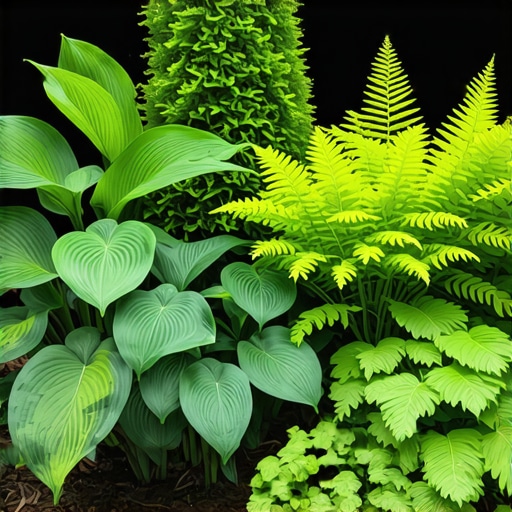
The Engineering Behind a High-Performance Shade Micro-climate
Successful 2026 shade garden design requires precision soil engineering, advanced drainage logic, and cultivar selection based on leaf cuticle thickness. By prioritizing gastropod-resistant biology and hydrostatic moisture control, homeowners can build a sustainable understory that survives without heavy chemical intervention or constant plant replacement cycles.
I recently got called out to tear up a $30,000 patio that was sinking because the previous contractor ignored the basic physics of the site. The pavers were heaving and the adjacent shade garden was a rotting, slug-infested mess because water had nowhere to go. They had installed a standard clay-heavy soil mix right up against a foundation without any thought for the hydrostatic pressure or the capillary rise that would inevitably occur. It was a forensic autopsy of a failed landscape. The base layer was just two inches of poorly compacted stone dust, which held water like a sponge. This saturated environment did two things: it undermined the patio’s structural integrity and created a perfect breeding ground for slugs. When I excavation the site, the smell of anaerobic soil was unmistakable. This is why 80% of my work happens before a single plant is purchased. If the grading and drainage are not within a 2% tolerance, you are not landscaping; you are just decorating a disaster.
The Biology of Slug Resistance in 2026 Shade Cultivars
Plants that resist slugs do so through structural lignification, chemical toxicity, or high-silica content in their cellular walls. Choosing these species ensures that your yard cleanup remains manageable and your irrigation needs do not result in a total loss of foliage to nocturnal pests. Look for thick, glaucous leaves that slugs cannot easily rasp.
“A retaining wall doesn’t fail because of the stone; it fails because of the water trapped behind it.” – Hardscape Engineering Axiom
How do I stop slugs from eating my shade garden?
To stop slugs, you must eliminate their moisture-rich hiding spots by maintaining a 1 inch mulch layer and selecting thick-leaved perennials like Helleborus or blue Hostas. Proper irrigation timing (watering only in the early morning) allows the soil surface to dry before slugs become active at night, effectively dehydrating their travel paths.
| Plant Name | Resistance Mechanism | USDA Zone | Soil Requirement |
|---|---|---|---|
| Hosta ‘Halcyon’ | Thick Wax (Glaucous) | 3 to 9 | Well-drained Loam |
| Helleborus orientalis | Alkaloid Toxicity | 4 to 9 | Neutral to Alkaline |
| Hakonechloa macra | High Silica Content | 5 to 9 | Moist Humus |
| Polystichum munitum | Lignified Fronds | 5 to 9 | Acidic / Forest Floor |
1. Hosta ‘Halcyon’: The Blue Wax Standard
While most hostas are basically slug salad, ‘Halcyon’ is different because of its pruinose coating. This is a waxy bloom that gives the leaves their blue color and makes them physically difficult for slugs to penetrate. When planning your landscaping, place these in the deepest shade to preserve that wax. If the sun hits them, the wax melts, the color turns green, and the slugs move in. I tell my crew: if the leaf feels like a thick piece of cardstock, the slug will likely skip it for something softer. Don’t plant these too deep; the root flare should be level with the soil surface to prevent crown rot.
2. Helleborus orientalis (Lenten Rose): The Chemical Deterrent
Hellebores are the tanks of the shade garden. They contain protoanemonin, a chemical that is toxic to many animals and highly unpalatable to slugs. These plants are ideal for a 2026 design because they are evergreen in many zones, providing structural interest when everything else is dormant. From an engineering perspective, their deep root systems help stabilize soil on minor slopes. Just ensure you aren’t using a high-nitrogen fertilizer; you want slow, steady growth, not soft, fleshy leaves that might tempt even the most hesitant pest.
3. Hakonechloa macra (Japanese Forest Grass): The Silica Defense
Slugs have a radula, a specialized tongue used for scraping. Japanese Forest Grass contains high levels of silica, which is essentially like the plant is made of microscopic glass shards. It is incredibly effective at deterring gastropods. In terms of irrigation, this grass requires consistent moisture but will rot in standing water. I always install a French drain or a 3-inch modified gravel sub-base if I’m planting these in heavy clay to ensure the roots never sit in a saturated B-horizon soil layer.
4. Polystichum munitum (Western Sword Fern): The Industrial Survivor
The Western Sword Fern is my go-to for yard cleanup efficiency. Its fronds are tough, leathery, and highly lignified. Slugs generally avoid them because the energy required to digest the tough fibers exceeds the caloric gain. This is a horticultural engineering choice: you are installing a plant that acts as a permanent structural element. When performing a sod install nearby, ensure the heavy equipment doesn’t compact the soil around the ferns, as they require high macropore space for gas exchange in the root zone.
“Successful plant establishment is 10% the plant and 90% the preparation of the soil profile to meet specific hydraulic conductivity standards.” – Agronomy Extension Manual
What is the best mulch for a slug-proof garden?
The best mulch is a coarse-textured cedar or pine bark applied no deeper than 2 inches. Avoid using fine-textured hardwood mulches or grass clippings, as these create a mat that holds excessive moisture and provides a thermal refugium for slug eggs. Sharp-edged materials like hazelnut shells or crushed oyster shells can provide an additional physical barrier to sensitive gastropod bodies.
- Step 1: Conduct a 24-hour percolation test to ensure drainage exceeds 1 inch per hour.
- Step 2: Excavate the top 6 inches of soil and amend with 30% organic compost and 10% coarse sand.
- Step 3: Install a low-volume drip irrigation system specifically targeted at the root zones.
- Step 4: Check the USDA hardiness zone and ensure the 2026 projections for your region match the plant’s needs.
- Step 5: Apply a thin layer of organic slug repellent (iron phosphate) only as a secondary measure.
It will rot. That is what I tell homeowners who think they can skip the soil grading phase. You cannot fix a bad foundation with a pretty plant. If your shade garden is a swamp, even the most slug-proof plant will eventually succumb to fungal pathogens like Phytophthora. Deep, infrequent watering is the key. You want to force the roots to chase the water down into the lower soil horizons. This builds a resilient plant that can handle the 2026 climate shifts we are seeing. Stop buying plants from big-box stores that have been pushed with high-nitrogen fertilizers; those plants are soft and weak. Buy from a reputable nursery where the plants have been hardened off and grown in a realistic soil medium. Your yard is an ecosystem, not a showroom. Treat it with the engineering respect it deserves.