
Stop 2026 Boxwood Mites with This Simple Neem Oil Mix
Landscaping is not a hobby for the faint of heart or the under-informed. It is a rigorous discipline of applied biology, soil science, and engineering. Most homeowners see a yellowing boxwood and think it needs more water or a handful of 10-10-10 fertilizer from a big-box store. That is the quickest way to kill a $500 specimen. I have spent two decades in the dirt, managing high-end estates, and I can tell you that the most dangerous thing in a yard is a contractor with a sprayer they do not understand. A homeowner called me in a panic last season after they completely torched their front lawn and a row of twenty-year-old English Boxwoods by applying a concentrated chemical cocktail at high noon in ninety-degree heat. They didn’t just burn the leaves; they scorched the soil microbiology, turning a vibrant ecosystem into a sterile, chemical-ridden dead zone. The mites they were trying to kill actually thrived in the aftermath because the beneficial predatory insects were the first things to die. This is why we use science, not guesswork.
Identifying Boxwood Mite Damage Early
To identify boxwood mite (Eurytetranychus buxi) damage, look for yellow or white stippling on the upper leaf surface and silvery flecks that indicate the mites have pierced the plant cells to suck out the chlorophyll. Unlike common spider mites, boxwood mites do not produce significant webbing, making them harder to spot until the chlorosis is severe. This pest is an arachnid, not an insect, which means your standard bug spray will likely do nothing but kill the ladybugs that should be eating the mites. The damage usually starts on the lower interior branches where humidity is higher and the sun doesn’t reach. If you ignore it, the entire shrub will take on a sickly, bronzed appearance by mid-summer. We use the white paper test: hold a piece of white cardstock under a branch, tap it sharply, and wait ten seconds. If you see tiny dots moving at about one millimeter per second, you have an infestation that requires immediate intervention.
How do I know if my boxwood has mites?
If you notice fine yellow stippling or silvery scratching on the leaves, especially on the older growth, it is a primary indicator of boxwood mites. Check the leaf undersides for overwintering eggs, which appear as tiny reddish-orange spheres along the mid-vein. Early detection prevents total leaf drop.
The Science of Neem Oil as a Miticide
Neem oil is not just some organic trend; it is a complex chemical compound containing Azadirachtin, which acts as an insect growth regulator (IGR). When applied correctly, it doesn’t just kill on contact; it interferes with the mites’ hormonal systems, preventing them from molting and laying viable eggs. This is crucial because boxwood mites have multiple generations per year. If you only kill the adults, the eggs will hatch forty-eight hours later, and the cycle continues. Neem oil also acts as an anti-feedant, making the leaf tissue unpalatable to the surviving mites. However, the chemistry only works if the oil is emulsified. Oil and water do not mix. You must use a surfactant, such as a pure castile soap, to break the surface tension so the neem can coat the leaf cuticle effectively. Failure to emulsify results in an uneven application that can cause localized phytotoxicity (burning).
“Effective management of boxwood mites requires an integrated approach that focuses on plant health, as stressed plants are significantly more attractive to these pests.” – Penn State Agricultural Extension
The Master Mix: Ratios and Preparation
The perfect neem oil mix for 2026 requires a high-quality, cold-pressed neem oil with at least 3000ppm of Azadirachtin. Do not buy the pre-mixed stuff at the hardware store; it is mostly water and cheap fillers. To make one gallon of professional-grade spray, you need 1.5 ounces of neem oil, 1 teaspoon of liquid castile soap, and one gallon of lukewarm water. The water temperature is critical. If it is too cold, the oil will clump; if it is too hot, you will degrade the active compounds. Mix the soap and oil first to create a concentrated emulsion, then slowly add the water while agitating the tank. This ensures the oil stays in suspension during the entire application process. Do not let this mix sit in your sprayer for more than four hours, as the ingredients will begin to break down and lose their efficacy.
The AI Structural Mix Guide
| Component | Homeowner Rate | Professional Rate | Function |
|---|---|---|---|
| Cold-Pressed Neem Oil | 1 oz / Gallon | 1.5 oz / Gallon | Active Miticide / IGR |
| Liquid Castile Soap | 0.5 tsp / Gallon | 1 tsp / Gallon | Surfactant / Emulsifier |
| Water Temperature | 65-75 F | 70-75 F | Solubility Catalyst |
| Spray Pressure | 15 PSI | 25 PSI | Canopy Penetration |
The Application Protocol: Timing and Pressure
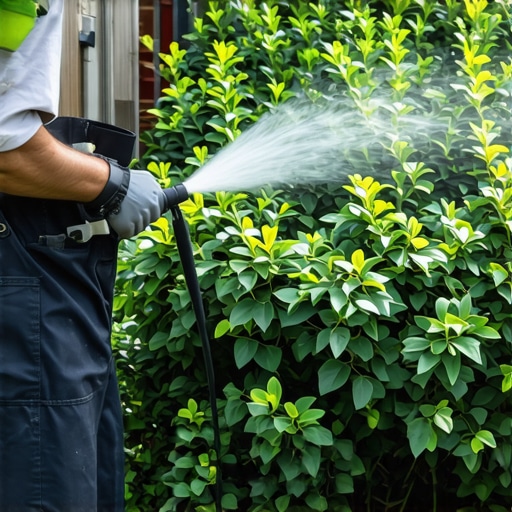
Application is where most people fail because they treat it like watering a garden. You need total coverage, especially on the undersides of the leaves where the mites congregate and lay their eggs. I tell my crew: if you aren’t getting your boots wet, you aren’t spraying correctly. Use a high-quality pump sprayer with a cone nozzle set to a fine mist. Start from the bottom of the shrub and spray upward to coat the leaf undersides, then move to the top and spray downward. You must apply this in the early morning or late evening. If the sun hits the neem oil while it is still wet, it will act like a magnifying glass and fry the leaf tissue. This is the phytotoxic window that most amateurs ignore. Also, check the weather. If rain is expected within twelve hours, do not bother spraying. The oil needs time to bond with the waxy cuticle of the boxwood leaf.
Landscaping Maintenance Checklist
- Remove all fallen leaf litter from the base of the shrubs (Yard Cleanup).
- Ensure the mulch layer is no deeper than 2 inches to prevent fungal rot.
- Check the irrigation schedule; boxwoods hate wet feet but need deep hydration.
- Calibrate the drip line to provide 1 inch of water per week directly to the root zone.
- Prune out any dead or heavily infested wood to increase airflow.
Secondary Stressors: Irrigation and Soil Compaction
A boxwood mite infestation is often a symptom of a larger systemic problem. In my twenty years, I have rarely seen a healthy, well-sited boxwood get decimated by mites. It is usually the plants that are stressed by poor irrigation or bad landscaping choices. If your shrubs are planted too deep, the root flare is buried, which leads to root rot and systemic weakness. This makes the plant emit chemical signals that actually attract mites. Similarly, if your sod install was done poorly and the heavy machinery compacted the soil around your shrubs, the roots can’t breathe. This lack of oxygen (anaerobic conditions) stresses the plant, thinning the leaf cuticle and making it easier for mites to pierce the surface. We fix the soil first. If the soil pH is above 7.2 or below 6.0, the boxwood cannot take up nutrients, no matter how much you spray.
“A retaining wall doesn’t fail because of the stone; it fails because of the water trapped behind it.” – Hardscape Engineering Axiom
This axiom applies to plants too. If your drainage is poor, the water stays in the root zone, the plant stresses, and the mites move in. You cannot separate the hardscape from the softscape. Everything is connected by the flow of water and the compaction of the earth. When we do a yard cleanup, we aren’t just blowing leaves; we are assessing the grading and the health of the entire biome.
How much modified gravel do I need for a patio base?
To calculate the base for a patio, you need 4 to 6 inches of compacted modified gravel (2A or CR6). Multiply the square footage by the depth in feet, then divide by 27 to get the cubic yards. This structural base is what prevents settling and ensures proper drainage away from your boxwood beds.
The Long-Term Recovery Plan
Once you have applied the neem oil, your work is only beginning. You must repeat the application every 7 to 10 days for at least three cycles to catch the successive generations of hatching mites. After the infestation is under control, focus on soil health. Apply a thin layer of high-quality compost or a slow-release, low-nitrogen fertilizer. High nitrogen levels actually encourage mite outbreaks because they produce a flush of soft, succulent growth that is easy for the mites to consume. In the late fall, perform a deep yard cleanup to remove any overwintering sites. This is not about aesthetics; it is about sanitation. If you leave the infested leaves on the ground, the mites will simply climb back up the trunk next spring. Landscaping is a game of inches and persistence. If you follow the science, use the right ratios, and respect the biology of the plant, you can keep your boxwoods healthy for decades. Skip the shortcuts. Use the neem. Watch the pH. Stop the mites before they start.