
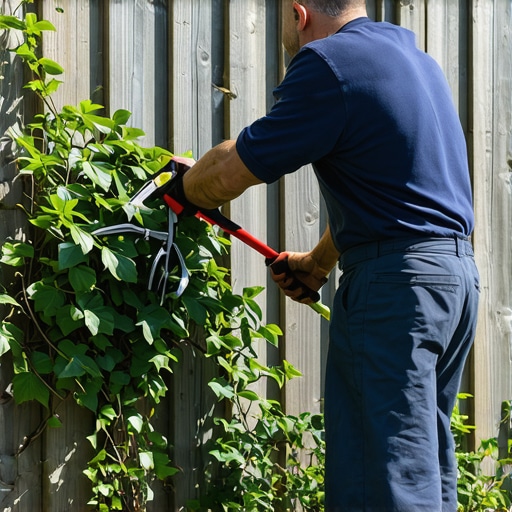
Why Mechanical Removal is the Only Professional Way to Manage Invasive Ivy
To remove deep ivy roots from fences without chemicals, you must sever the main vines at the base, allow the foliage to desiccate for several weeks, and manually excavate the root crowns using a digging mattock. This mechanical approach preserves soil microbiology, prevents groundwater contamination, and ensures the structural integrity of your fencing materials.
I always drill into my new crew members: if you don’t fix the soil grading and root management first, every plant you put in the ground is just expensive compost. I’ve seen kids spend three days spraying glyphosate on Hedera helix, only for the plant to shrug it off because of its waxy cuticle. You can’t be lazy with ivy. You have to get your hands in the dirt. English Ivy is an opportunistic climber that uses adventitious roots—tiny, hair-like structures—to physically bond with your fence. On a wooden fence, these roots find every crack and moisture pocket, accelerating rot. On chain-link, the sheer weight of a mature ivy canopy can exceed 500 pounds per linear foot during a rainstorm, leading to post-failure. When we do a yard cleanup, we treat ivy as a structural threat, not just a weed.
“English Ivy (Hedera helix) is an aggressive invader that outcompetes native vegetation by forming dense monotypic stands. Its weight can cause tree canopy collapse and structural damage to vertical surfaces.” – Penn State Extension
The Engineering of Ivy Attachment
Ivy doesn’t just lean; it glues. The plant secretes a complex mixture of nanoparticles and arabinogalactan proteins that harden into a biological cement. When you try to rip a green, living vine off a cedar fence, you aren’t just removing the plant; you’re taking the wood fibers with it. This is why we never pull green ivy. You have to kill the supply line first. By severing the trunk at the base and leaving a 12-inch gap—a technique we call “The Air Gap”—you force the upper foliage to utilize its own stored moisture. Once that moisture is gone, the adhesive bond of the rootlets brittle and fails. This makes the eventual removal a matter of light brushing rather than destructive pulling.
| Removal Method | Time to Completion | Impact on Fence | Root Success Rate | ||||||||
|---|---|---|---|---|---|---|---|---|---|---|---|
| Chemical Spray | 4-6 Weeks | High (Staining/Corrosion) | Low (Waxy Cuticle Resistance) | Manual Severing | 2-3 Weeks | Low (Minimal Wood Damage) | High (Total Crown Removal) | Heat/Propane Torch | Immediate | Critical (Fire Risk) | Medium (Regrowth Common) |
Phase 1: The Tactical Cut and The Air Gap
The tactical cut involves using bypass loppers to create a clear 6-to-12-inch gap between the ground-rooted vines and the foliage climbing the fence. This process immediately halts the vascular transport of water and nitrogen to the upper canopy, leading to foliar desiccation and the eventual degradation of the rootlet adhesive bonds.
Don’t just snip it. You need to clear a physical zone. If you leave the severed ends touching, the ivy can sometimes bridge the gap through sheer humidity and rapid regrowth. Use a sharp spade to cut the vines at the soil surface and then use loppers to cut them again 12 inches up the fence. This is the stage where most DIYers fail; they get impatient. They want the ivy gone today. But if you wait 14 days, the leaves will turn brown and brittle. The vines will shrink. The tension on your fence posts will drop significantly. It makes the landscaping work safer and more efficient.
How much modified gravel do I need for a fence base to prevent ivy?
While gravel won’t stop ivy completely, a 4-inch deep trench of 2B modified stone or crushed aggregate at the base of the fence creates a dry, low-nutrient zone that discourages surface runners. Ivy loves damp, organic-rich soil. By replacing the topsoil at the fence line with inorganic material, you make the environment hostile to new ivy scouts. This is a standard practice during sod install or new fence construction to ensure long-term maintenance is manageable.
Phase 2: Excavating the Root Crown and Lateral Runners
Excavating ivy roots requires a sharp-edged spade or mattock to locate the primary root crown, which is often buried 4 to 8 inches deep. You must lift the entire root mass out of the loam or clay to prevent vegetative propagation from left-behind fragments.
Ivy is a hydra. If you leave two inches of a healthy root in the ground, it will be back in six months. This is why irrigation zones near fences are particularly problematic; the constant moisture keeps the ivy’s metabolism high. When we excavate, we look for the ‘mother’ root. It’s usually thick, woody, and orange-tinted. You have to follow the lateral runners. These are the horizontal roots that crawl just under the surface. They’re the scouts. If you don’t pull them, they’ll eventually find a way back to the fence. It’s back-breaking work, but it’s the only way to be 100% sure. Dig deep. Shake the soil off the roots. Bag them. Never compost ivy; the heat of a standard backyard bin isn’t enough to kill the seeds or the nodes.
“Mechanical control is the most effective way to eliminate established ivy without damaging the surrounding soil chemistry or non-target species.” – Texas A&M Agronomy Manual
Will ivy roots destroy a chain-link fence?
Yes, ivy roots and vines will eventually destroy a chain-link fence by adding thousands of pounds of static load and trapping moisture against the galvanized steel. Over time, the constant moisture leads to oxidation and rust, while the thickening woody vines will actually bend the wire mesh out of shape, eventually pulling the top rail down as the fence posts lean under the weight of the massive canopy. If you see your chain-link fence bowing, the ivy is no longer a cosmetic issue; it is a structural failure in progress.
The Professional Post-Removal Checklist
Once the ivy is gone, the job isn’t finished. You’ve just opened up a vacuum in the ecosystem. If you don’t fill that space, something worse will move in. Here is our crew’s standard operating procedure for post-ivy remediation:
- Inspect Fence Integrity: Check for rot in wood posts or rust in metal ones. Use a screwdriver to probe the base of wooden posts for soft spots.
- Soil Remediation: Ivy depletes the soil of specific nutrients. Add a high-quality organic compost to restore the microbial balance.
- Leveling and Grading: Ivy removal often leaves holes and uneven ground. Level the area to ensure water flows away from the fence line.
- Mulching: Apply 3 inches of hardwood mulch. This blocks sunlight from any remaining ivy fragments, preventing regrowth.
- Install a Barrier: Consider a heavy-duty plastic root barrier if the neighbor’s yard is still infested with ivy.
It will rot. If you leave the dead ivy on the fence too long, it becomes a fire hazard and a home for rodents. Wait until it’s brown, then gently brush it off with a stiff broom. Don’t use a pressure washer on a wooden fence; you’ll blow the wood fibers apart. Just use a broom and some elbow grease. Proper yard cleanup isn’t about speed; it’s about the sequence of operations. Do it right once, and you won’t have to do it again next season.