
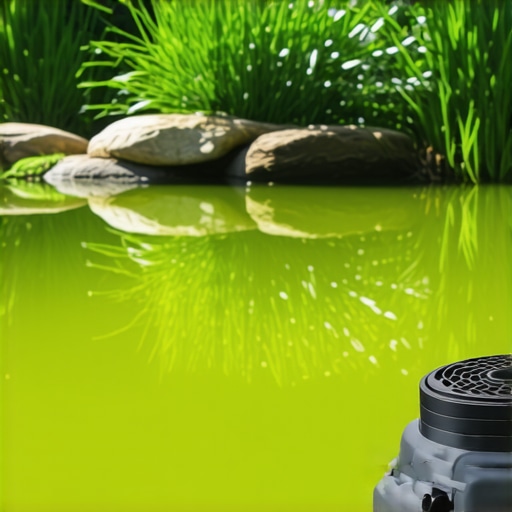
Clean 2026 Pond Filters in 5 Minutes Without Tools: The Professional Maintenance Protocol
The smell of a failing pond is unmistakable: it is the scent of anaerobic rot and neglected biology. When I step onto a property where the water looks like pea soup and the pump is screaming at a high-pitched whine, I know exactly what I am looking at. I am looking at a homeowner who was sold a ‘low-maintenance’ dream but given a mechanical nightmare. Most people think a pond is a decoration. It is not. A pond is a pressurized biological reactor that requires precise gas exchange and nitrogen processing. If your filter is clogged, your fish are swimming in their own toxic waste, and your pump is burning out its motor against 15 PSI of unnecessary backpressure. To clean a 2026 pond filter in under 5 minutes without tools, you must leverage the internal backwash mechanism and external waste discharge valve. This system uses the pump’s own hydraulic pressure to agitate the bio-media, dislodging the ‘schmutzdecke’ or bio-film layer, and flushing it out of the system before it can mineralize into solid sludge. I recently got called out to tear up a $30,000 pond and patio that was sinking because the previous contractor buried the filtration canister three feet deep with no access port. The water had nowhere to go when the filter clogged, so it backed up, saturated the sub-grade, and turned the modified gravel base into a slurry. The entire hardscape heaved four inches. That is what happens when you ignore the engineering for the sake of the ‘look.’ Never prioritize aesthetics over access. If you cannot reach the filter handle in five seconds, the design is a failure.
“A pond ecosystem relies on the continuous conversion of ammonia to nitrites and then to nitrates; any interruption in water flow through the filtration media leads to a rapid drop in dissolved oxygen and the death of aerobic nitrifying bacteria.” – Penn State Agricultural Extension
How often should you clean a 2026 pond filter?
For a standard 2026 pond filter system, you should perform a backwash cleaning every 7 to 10 days during the peak growing season to maintain optimal flow rates. Frequency depends heavily on your fish load and the amount of organic debris entering the water from surrounding landscaping. If you ignore this schedule, the bio-media will compact, causing the internal bypass valve to open and return unfiltered water to the pond. Yard cleanup is a critical component of pond maintenance. If you are not keeping the perimeter of the pond clear of deciduous leaf litter, you are effectively dumping raw nitrogen into your filter every time the wind blows. When we do a sod install near a water feature, I always ensure the grade slopes away from the pond. If you get fertilizer runoff from new sod into your water, you will see an algae bloom that will choke a 2026 filter in forty-eight hours. You need to understand the material you are working with. Not all filter media is created equal. The 2026 series typically uses a combination of reticulated foam and plastic bio-balls.
The Technical Breakdown of Filter Media Efficiency
| Media Type | Surface Area (sq ft/cu ft) | Primary Function | Cleaning Interval |
|---|---|---|---|
| Reticulated Foam | 200-300 | Mechanical Straining | Weekly |
| Bio-Balls | 50-100 | Biological Colonization | Monthly |
| Kaldnes K1 | 250+ | Moving Bed Bio-Reactor | Semi-Annually |
| Matala Mats | 150-250 | Pre-filtration | Bi-Weekly |
How do you know if your pond filter is clogged?
The most immediate indicator of a clogged pond filter is a visible reduction in the flow rate of your waterfall or return jets. You can also monitor the pressure gauge on the canister head; a rise of 3 to 5 PSI over the baseline ‘clean’ pressure indicates that the media is saturated with debris. Don’t wait for the water to turn brown. By then, the damage to the nitrifying bacteria is already done. In my 20 years of landscaping, I have seen more pumps killed by head pressure than by age. It is a slow death. The motor runs hotter and hotter until the internal seals fail.
The 5-Minute No-Tool Cleaning Step-by-Step
To clean the filter without tools, follow this sequence exactly. First, shut off the pump power. Turn the multi-port valve to the ‘Clean’ or ‘Backwash’ position. If your model has an agitating handle, pump it vigorously 15 to 20 times. This mechanical action breaks the surface tension of the muck trapped in the foam. Next, turn the pump back on. You will see dark, sludge-colored water exiting the waste line. Run this for approximately 60 to 90 seconds until the water runs clear. Switch the valve to ‘Rinse’ for 30 seconds to reset the media, then return it to ‘Filter’ mode. This is why irrigation logic is so important in pond design. I often plumb the waste line of the pond filter directly into the garden irrigation system. That pond ‘muck’ is liquid gold for your perennials. It is high-nitrogen, phosphorus-rich organic fertilizer. Why waste it down a storm drain?
“The structural integrity of a water feature’s surrounding hardscape is dependent on managed drainage; hydrostatic pressure from filter overflow is a leading cause of retaining wall rotation.” – Hardscape Engineering Axiom
What happens if you don’t clean your pond filter?
Neglecting the pond filtration system leads to a buildup of hydrogen sulfide gas in the bottom layers of the filter media, which is lethal to koi and goldfish. When the pump finally pushes a slug of this anaerobic water into the pond, you can lose an entire school of fish in minutes. It happens fast. I have seen homeowners lose $5,000 worth of imported Japanese Koi because they didn’t want to spend five minutes turning a valve. This is the difference between a professional and a hobbyist. A professional understands that we are managing a closed-loop life support system.
- Check the pressure gauge every Monday morning.
- Backwash for 90 seconds or until the sight glass is clear.
- Empty the skimmer basket of any yard cleanup debris.
- Inspect the UV clarifier bulb for operation (replace annually).
- Monitor water levels to ensure the pump never runs dry.
Can you clean a pond filter without killing good bacteria?
Yes, you can clean a pond filter without destroying your beneficial bacteria colony by using only pond water for the rinsing process. Never use chlorinated tap water to rinse your filter media, as the chlorine will instantly oxidize the delicate Nitrobacter colonies you have spent months establishing. The 2026 series is designed to be cleaned with the water inside the pressurized loop, which is already dechlorinated and pH-stable. This maintains the biological balance while removing the physical sludge. It is a precise balance. If you over-clean, you’ll see an ammonia spike. If you under-clean, you’ll get a parasitic outbreak. Stick to the five-minute backwash. It is the sweet spot of pond maintenance. Don’t skip this. Your fish will thank you, and your pump will last twice as long. If you are doing a yard cleanup, make sure you aren’t blowing grass clippings toward the pond. Those clippings are small enough to pass through the skimmer and will mat down your filter media like a layer of felt. That is a shortcut to a dead pump. Landscaping around a pond requires a specific plant palette. Avoid trees with invasive root systems like Willows or Maples that will hunt for the water line and eventually pierce your liner or clog your external plumbing. Use sedges, rushes, and non-invasive perennials. Keep the biology simple so the mechanics can do their job.