
Engineering the 2026 High-Heat Landscape
Designing a drought-resistant yard in 2026 requires a systemic shift from aesthetic gardening to horticultural engineering, prioritizing soil hydrology, thermal mass management, and hydro-zoning. By integrating native plant biology with precision irrigation, homeowners can create a high-performance landscape that survives 110-degree spikes without taxing local water grids.
I always drill into my new crew members: if you don’t fix the soil grading first, every plant you put in the ground is just expensive compost. Most of these guys want to jump straight to the pretty stuff, the flowering perennials or the decorative stone. I tell them to put the shovel down. If your yard doesn’t have a 2% slope away from the foundation or if your soil is a compacted slab of clay with zero pore space, you are building a graveyard. I’ve seen $50,000 installs turn into a swamp of root rot because the contractor didn’t understand that water follows the path of least resistance. In high-heat zones, your soil structure is your only bank account. If it can’t hold moisture at the root zone because of poor flocculation, your plants are going to go into metabolic shock the first time the mercury hits 100.
What is the best ground cover for high-heat drought areas?
The best 2026 ground cover for high-heat zones is a combination of creeping thyme, kurapia, or sedum species that offer high albedo and low evapotranspiration rates. These living mulches protect the soil microbiology from UV sterilization while providing a permeable surface that reduces the urban heat island effect on your property.
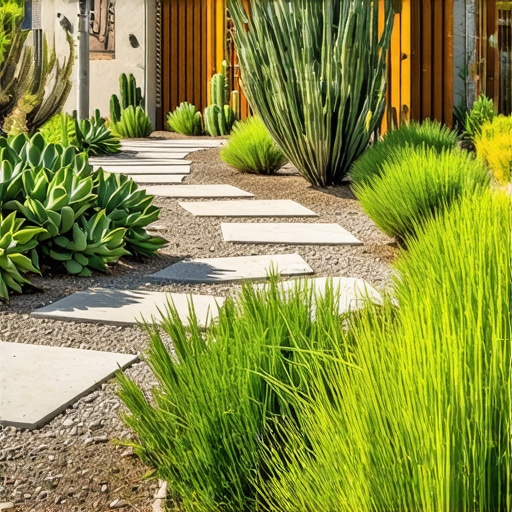
Hardscape is not just about looks; it is about thermal physics. In 2026, we are seeing a move away from dark basalts and toward light-colored natural stones like limestone or travertine. Darker stones act as thermal batteries, absorbing heat all day and radiating it back into your plants all night. This keeps the plant’s stomata open longer than they should be, leading to rapid dehydration. [image_placeholder_1] We also look at the modified gravel base for any hardscape. I use a 6-inch sub-base of 2A modified stone, compacted in 2-inch lifts using a plate compactor with at least 4,000 lbf. If that base isn’t solid, your polymeric sand will crack, weeds will take hold, and your drought-resistant patio will look like a jigsaw puzzle after one season.
“A retaining wall doesn’t fail because of the stone; it fails because of the water trapped behind it.” – Hardscape Engineering Axiom
How do I install a drip irrigation system for a xeriscape?
To install a sub-surface drip irrigation system, you must use pressure-compensating emitters spaced at 12-inch intervals, buried 4 inches beneath the mulch layer to eliminate evaporative loss. This configuration ensures that water delivery goes directly to the rhizosphere, promoting deep root growth and plant resilience during prolonged dry spells.
Stop buying plants at big-box stores. Those plants are pushed with high-nitrogen fertilizers in greenhouses; they have no callouses. They hit your 105-degree yard and melt. For 2026, I am sourcing nursery stock that has been hardened off in local conditions. We look at root flares. If a crew member buries a tree too deep, I make them dig it up. That root flare needs to breathe. If you bury it under a ‘mulch volcano,’ you’re just inviting fungal pathogens and girdling roots. It will rot. Don’t skip the 811 call either. I don’t care if you’re only going 6 inches deep for a French drain; hit a gas line and your yard cleanup becomes a federal incident.
| Material Type | Heat Retention | Water Permeability | 2026 Cost Index |
|---|---|---|---|
| Decomposed Granite | Medium | High | Low |
| Travertine Pavers | Low | Medium (if permeable) | High |
| Inorganic Mulch (Rock) | Very High | High | Medium |
| Organic Mulch (Bark) | Low | Low | Low |
Sod installation in high-heat zones is a high-risk operation. If you aren’t laying TifTuf Bermuda or a similar drought-hardy cultivar, you’re wasting money. Even then, the prep is 90% of the job. You need to till in 2 inches of compost to improve the Cation Exchange Capacity (CEC) of your soil. Without that, the sod is just sitting on a hot plate. Once it’s down, you don’t water five times a day for five minutes. That’s for amateurs. You water deeply at 4:00 AM to get 1 inch of water down, forcing those roots to chase the moisture deep into the subsoil. Roots don’t lie. They go where the water is.
“Plants don’t die from heat; they die from the metabolic exhaustion caused by the inability to move water to the leaf surface fast enough.” – Arid Lands Agronomy Manual
- Audit Your Soil: Get a pH and nutrient test before buying any amendments.
- Check Your PSI: Irrigation systems need regulated pressure to prevent misting and water drift.
- Mechanical Compaction: Never hand-tamp a patio base; use a vibratory plate compactor.
- Native Selection: Choose plants with a 20-year history of survival in your specific USDA zone.
- Mulch Depth: Maintain exactly 3 inches of organic mulch to regulate soil temperature.
Yard cleanup isn’t just about blowing leaves. It’s about scouting for pests like spider mites that thrive in hot, dry conditions. It’s about checking your drip emitters for calcium buildup. If one emitter is clogged, that $200 agave is toast in 48 hours. Compact or fail. That is the rule of the yard. Whether it’s the soil under your sod or the gravel under your pavers, if you don’t have the density, you don’t have a landscape. You have a mess. High-heat landscaping is a game of inches and percentages. Get the soil right, get the drainage right, and the plants will take care of themselves.