
Why Mulch Mistakes Are Fatal for Your 2026 Landscape
Mulching mistakes kill trees by inducing root flare rot, causing anaerobic soil conditions, and fostering girdling roots that eventually choke the vascular system. Proper application ensures moisture retention and temperature regulation, but improper depth or material choice leads to a slow, irreversible decline in tree health and structural integrity.
I always drill into my new crew members: if you do not fix the soil grading first, every plant you put in the ground is just expensive compost. I have seen guys with twenty years in the trade still piling wood chips against a trunk like they are building a campfire. Last month, we were called to a property where twelve mature maples were showing early canopy dieback. The homeowner thought it was a drought issue. It was not. It was a slow-motion execution. We started digging and found four inches of heavy, dyed mulch sitting directly against the bark. The phloem was already mush. When you bury the root flare, you are essentially wrapping the tree’s throat in a wet towel and waiting for the fungus to take hold. Landscaping is not about making things look pretty for a weekend; it is about managing biological systems for a decade. If you do not understand the gas exchange requirements of the rhizosphere, you should not be touching a shovel. My firm handles yard cleanup and sod install projects with a focus on civil engineering principles because the dirt does not lie. You can hide a bad grade for a season, but the first heavy rain will expose the fraud every time.
“A tree’s root system requires oxygen as much as it requires water; suffocating the root flare with excessive mulch is the primary cause of premature urban tree mortality.” – Penn State Department of Plant Science
Mistake 1: The Mulch Volcano and Root Flare Suffocation
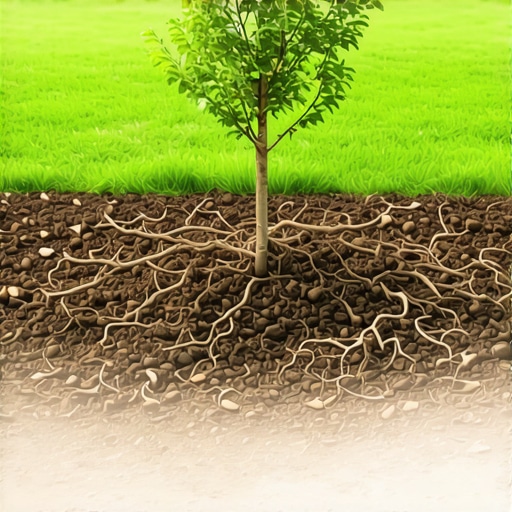
The mulch volcano is a lethal mound of wood chips piled high against the trunk of a tree, trapping moisture against the bark and preventing gas exchange. Bark is designed to protect the tree from the elements, but it is not waterproof from the inside out. When bark remains constantly saturated, it begins to rot. This allows pathogens like Phytophthora to enter the vascular system. Furthermore, trees breathe through lenticels in their bark. By burying these, you are quite literally suffocating the organism. We see this often during routine yard cleanup where crews value speed over science. The root flare, the area where the trunk expands at the base before entering the soil, must always be visible. If your tree looks like a telephone pole sticking straight out of the mulch, it is dying. You need to excavate that flare immediately. Deep mulch also encourages the growth of adventitious roots. These roots grow into the mulch layer rather than the soil. When the mulch dries out or decomposes, those roots die, leaving the tree with an inadequate support system. This is a common failure point we see in irrigation planning where water is concentrated only at the surface, never reaching the deep structural roots.
How much mulch do I need for a tree?
For most hardwood trees, a layer of 2 to 3 inches of organic mulch is sufficient to regulate temperature and retain moisture without compromising oxygen levels. Ensure the mulch is spread in a wide circle, often referred to as a mulch donut, keeping a 3-inch gap between the material and the trunk bark. This ensures the root flare remains dry and exposed to air while the feeder roots beneath the drip line benefit from the organic cover.
| Mulch Type | Decomposition Rate | Best Use Case | Primary Risk |
|---|---|---|---|
| Triple-Shredded Hardwood | Medium | Slopes and Garden Beds | Nitrogen Drawdown if fresh |
| Pine Bark Nuggets | Slow | Flat areas, Large Trees | Floating away in heavy rain |
| Arborist Wood Chips | Variable | Naturalized areas | Aesthetic inconsistency |
| Dyed Recycled Pallets | Very Slow | Commercial pathways | Chemical leaching and heat |
Mistake 2: Using Synthetic Barriers Under Organic Mulch
Applying landscape fabric or plastic sheeting under mulch creates a physical barrier that disrupts the natural nutrient cycle and destroys soil microbiology. Soil is a living matrix of fungi, bacteria, and macro-organisms like earthworms. When you install a synthetic layer, you cut off the supply of organic matter that these organisms need to survive. Over time, the soil beneath the fabric becomes compacted and anaerobic. I have excavated sod install sites where fabric was used five years prior, and the soil underneath was grey, foul-smelling, and devoid of life. The mulch on top eventually breaks down into a fine silt that clogs the pores of the fabric, turning it into a waterproof sheet. This leads to massive runoff issues and prevents your irrigation system from actually reaching the root zone. Instead of the water soaking into the earth, it sits on the plastic, evaporating or causing the mulch to turn into a moldy mess. If you want to stop weeds, use a thicker layer of organic mulch or a pre-emergent, but never plastic. Roots will eventually grow through the fabric anyway, making it impossible to remove without ripping the root system to shreds.
“Soil compaction and the use of non-porous barriers significantly reduce the infiltration rate of water, leading to increased hydrostatic pressure and plant stress.” – ICPI Hardscape Standards
Mistake 3: Relying on Chemically Dyed Recycled Mulch
Dyed mulch, often made from recycled pallets and construction debris, introduces unknown chemicals and heavy metals into your soil while potentially causing nitrogen deficiency. While the bright red or deep black look is popular in suburban landscaping, the cost to your trees is high. These wood products are often extremely dry and carbon-heavy. As soil microbes work to break down this high-carbon material, they pull nitrogen out of the soil to fuel the process. This creates a temporary nitrogen deficiency that can yellow the leaves of your trees and shrubs. More importantly, the dyes and the original treatments on the pallet wood (like CCA or methyl bromide) can leach into the rhizosphere. I prefer raw arborist chips. They contain a mix of bark, wood, and leaf matter which provides a diverse nutrient profile as it decays. In my firm, we prioritize the health of the 2026 canopy over the 2025 aesthetic. If you are serious about your landscape, you need to think about the long-term C:N ratio of your mulch. Using high-quality, aged organic matter is the only way to build the soil structure needed for long-term tree survival.
What is the best mulch for local trees?
The best mulch for local trees is aged, triple-shredded hardwood or arborist wood chips that have been allowed to compost for at least six months. These materials provide a stable carbon source that slowly improves soil structure without causing dramatic pH swings or chemical leaching. Local native mulches also contain beneficial mycorrhizal fungi that help tree roots absorb water and phosphorus more efficiently, especially in heavy clay soils.
Spring Yard Cleanup Checklist for 2026 Tree Health
- Inspect the root flare: Ensure the basal flare of every tree is visible and clear of debris.
- Test soil pH: Ensure the mulch is not causing the soil to become too acidic or alkaline for your specific tree species.
- Check irrigation coverage: Verify that your emitters are placed at the drip line, not the trunk.
- Remove old mulch: If mulch has matted into a hydrophobic crust, rake it out before adding a thin fresh layer.
- Edge the beds: Create a clean mechanical edge to prevent grass from encroaching on the tree’s root zone.
It will rot. Do not skip the excavation step. If you find circling roots during your cleanup, they must be pruned carefully. A tree that is girdled today will be a hazard in five years. We see it every season. Proper landscaping requires a pragmatic approach to biology. You are not just decorating a yard; you are managing a living investment. Get the mulch off the trunks, ditch the plastic, and use quality materials. Your trees will thank you in 2026 and beyond. If you do not have the time to do it right, do not do it at all. Half-measure landscaping is just a waste of money and a death sentence for your greenery.