
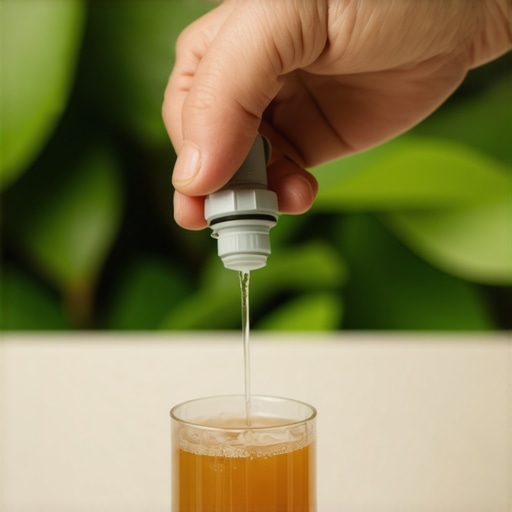
The Silent Killer of Modern Irrigation Systems
Drip emitter failure typically stems from calcium carbonate accumulation or biofilm blockages within the internal diaphragm. By using a distilled white vinegar soak, you dissolve these mineral salts and restore the flow rate to the manufacturer specified GPH (Gallons Per Hour) without damaging the internal silicone membranes or your landscaping soil chemistry. It is a surgical approach to irrigation maintenance that prevents the death of high-value plants. I have spent two decades looking at parched root balls and it is almost always a maintenance failure. A homeowner called me in a panic last August after they completely torched their front lawn and a $12,000 Japanese Maple by applying a high-concentration salt-based fertilizer through a clogged drip system. They thought the plants were thirsty, so they added more ‘food,’ but the emitters were 90% blocked by mineral scale. The little water that did get through was a toxic brine that finished the job. That is the chemical nightmare I see too often. People forget that a 2 GPH emitter is a precision tool. When it drops to 0.5 GPH because of hard water, your plant is effectively in a drought while your water bill remains high. It is a mechanical failure that requires a chemical solution, specifically acetic acid. If you ignore this, you are not just killing plants, you are wasting the structural integrity of your sod install. Soil compaction from hand-watering to compensate for a broken system is a death sentence for root respiration.
“In areas with water hardness exceeding 7 grains per gallon, mineral precipitation in drip emitters is an inevitability, not a possibility.” – Texas A&M AgriLife Extension
How do I know if my drip emitters are clogged?
You identify a clog by measuring the wetted diameter of the soil surface and checking for pressure-compensating (PC) diaphragm distention. If the soil remains dry or the emitter ‘weeps’ rather than drips at its rated interval, mineral scaling has likely restricted the orifice. Do not wait for the plant to wilt. By the time a woody ornamental shows leaf scorch, the root hairs are already desiccated. Take a 1-gallon bucket and a stopwatch. If a 2 GPH emitter takes more than 30 minutes to fill that gallon, you have a 100% capacity loss issue. This is common in regions with high TDS (Total Dissolved Solids) in the municipal or well water supply.
The $2 Vinegar Soak: The Step-by-Step Remediation
The remediation process involves acetic acid immersion to break the ionic bonds of calcium and magnesium deposits within the emitter housing. This is the most cost-effective yard cleanup task you can perform. Follow this protocol for individual emitters:
- Extraction: Carefully pop the emitter out of the 1/2-inch or 1/4-inch distribution tubing using an emitter tool. Avoid tearing the poly-tubing.
- Pre-Rinse: Use a stiff brush to remove external soil and debris from the inlet barb.
- The Bath: Submerge the emitters in a 1:1 solution of distilled white vinegar and warm water. Let them sit for 12 to 24 hours.
- Mechanical Agitation: Shake the container periodically. You will see small white flakes—calcium—breaking loose.
- Pressure Flush: Reinstall and run the system at 25-30 PSI to blow out any remaining softened particles.
| Method | Cost | Effectiveness | Risk Level |
|---|---|---|---|
| Vinegar Soak | $2.00 | High (95% restoration) | Low (Safe for plants) |
| Muriatic Acid | $15.00 | Extreme | High (Soil pH damage) |
| High-Pressure Air | $0.00 | Low | Medium (Diaphragm rupture) |
| Total Replacement | $0.50/unit | 100% | Low (Labor intensive) |
How much modified gravel do I need for a patio base?
While discussing irrigation, we often find drainage issues affecting hardscapes. To calculate modified gravel for a patio base, you must multiply the square footage by the compacted depth (usually 4 to 6 inches) and divide by 27 to find the cubic yardage, then add a 20% compaction factor. Poorly drained soil near your drip lines can cause hydrostatic pressure that shifts your pavers.
“A retaining wall doesn’t fail because of the stone; it fails because of the water trapped behind it.” – Hardscape Engineering Axiom
Why You Should Never Use High-Pressure Air to Clear Clogs
Using a 100 PSI air compressor to ‘blow out’ a drip line usually ruptures the internal silicone diaphragm of pressure-compensating emitters. Most drip components are rated for a maximum of 30 to 50 PSI. Exceeding this creates a mechanical failure where the emitter will never properly regulate flow again. It will either leak or spray, ruining your distribution uniformity. Stick to the vinegar. It is slower, but it preserves the engineering. During a yard cleanup, I see people try the air compressor trick all the time. They end up with ‘geysers’ in their flower beds and wonder why their water bill tripled. It is a classic amateur mistake. Precision irrigation requires a gentle touch and correct chemistry, not brute force. If you are doing a sod install, the last thing you want is uneven water distribution from blown emitters. It leads to fungal spots in the over-watered areas and brown-outs in the dry spots. Consistency is the only way to maintain turf health. If you are serious about your land, treat your emitters like the precision nozzles they are. Clean them every spring. It is cheap insurance for a healthy landscape.