
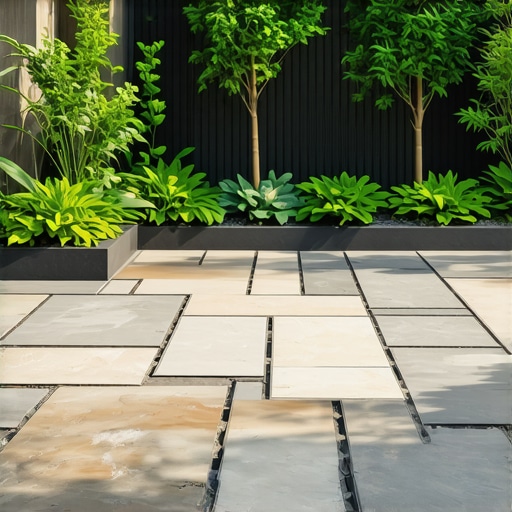
The Scientific Reality of a Level Flagstone Patio
Achieving a perfectly level flagstone patio involves a compacted sub-base of 3/4-inch modified stone topped with a 1-inch layer of coarse concrete sand to provide structural stability. This combination prevents the irregular thickness of natural stone from causing surface heaving or drainage failures caused by hydrostatic pressure. If you skip the compaction or use the wrong grain size, the patio will fail within two seasons.
I recently got called out to tear up a $30,000 patio that was sinking because the previous contractor used stone dust instead of a proper sand mix. The homeowner was devastated. The stone dust had pulverized into a muddy paste under the freeze-thaw cycle, trapping water and pushing the flagstones up like jagged teeth. It was a textbook case of ignoring basic civil engineering. You cannot negotiate with physics. If the base isn’t right, the finish doesn’t matter. I spent three days excavating 40 tons of ruined material just to get back to the native soil. It was a mess. We had to start from the dirt up, literally. Most guys in this business want to get to the ‘pretty’ part where they lay the stone. That is a mistake. The real work happens six inches underground where nobody sees it. It is about soil mechanics and moisture migration.
“A retaining wall or patio base doesn’t fail because of the stone; it fails because of the water trapped behind or beneath it.” – Hardscape Engineering Axiom
Why Concrete Sand Beats Masonry Sand Every Time
Concrete sand is the backbone of a professional hardscape. It is washed, coarse, and contains angular grains that lock together when compacted. Masonry sand is too fine; it acts like ball bearings, allowing the flagstones to slide and shift. When you are working with irregular flagstone, which can vary from 1.5 to 2.5 inches in thickness, you need a bedding layer that can be micro-adjusted without losing its structural integrity. This is where the 2026-grade approach differs from old-school methods. We are looking at grain size distribution. You need the grit to bite into the bottom of the stone. This creates friction. Friction equals stability. If you use soft sand, the first heavy rain will wash out the fines, leaving voids that lead to cracking. We call this ‘piping’ in the engineering world. It is the silent killer of patios.
| Material Type | Grain Texture | Recommended Use | Drainage Rating |
|---|---|---|---|
| Concrete Sand (ASTM C33) | Coarse / Angular | Bedding Layer | Excellent |
| Masonry Sand | Fine / Round | Joint Filling Only | Poor |
| Stone Dust / Screenings | Powdery | Not Recommended | Very Poor |
| Polymeric Sand | Resin-Coated | Final Joint Sealing | Moderate |
How much modified gravel do I need for a patio base?
To calculate the required 2A modified gravel, multiply the total square footage by the desired depth (minimum 4-6 inches) and divide by 324 to get the cubic yardage. For a standard 200-square-foot patio, you will need approximately 4 tons of gravel to ensure a stable foundation that resists soil movement. Don’t eyeball this. Use a calculator. If you are under-strength on the base, the weight of the flagstone will settle unevenly. You also need to account for a 20% compaction factor. When you run a plate compactor over that gravel, it is going to shrink. If you don’t account for that, you will end up short on material and tempted to thin out the edges. That is where the patio will fail first. The edges are the most vulnerable. They need the most support.
The Ground-Up Build Process for Flagstone
First, we clear the site. This isn’t just a yard cleanup; it’s a full excavation. We strip the organic matter and topsoil until we hit the sub-grade. If you leave roots or grass under your patio, they will decay. Decay creates air pockets. Air pockets create sinkholes. It is that simple. Next, we address the irrigation. If your sprinklers are hitting the edge of the patio base, they are actively eroding your foundation. We relocate the lines or adjust the heads before a single stone is moved. Then comes the geotextile fabric. This is non-negotiable. It keeps the native soil from mixing with your clean gravel. It’s a barrier that maintains the structural purity of your base. We then lay the gravel in 2-inch lifts. You can’t just dump 6 inches of stone and run a compactor over the top. It won’t compact at the bottom. You do it in layers. Each layer should be vibrated until it rings when you hit it with a shovel. That is the sound of success.
What is the best sand mix for leveling irregular flagstone?
The best leveling mix is a 1-inch layer of dry concrete sand screeded over a fully compacted gravel base. This specific thickness allows you to seat the stones firmly by hand-tamping them into the sand while maintaining a consistent slope for water runoff. Avoid using a ‘wet’ mix of sand and cement for dry-set patios, as it prevents natural drainage and leads to surface salt efflorescence. You want the system to breathe. Water needs to move through the joints and into the sub-base, where it can be diverted by the pitch of the soil. If you trap the water with a mortar bed in a freeze-thaw climate, the ice will expand and pop the stones off. It’s not a matter of if, but when. We aim for a 2 percent slope. That’s a 1-inch drop for every 4 feet of run. It’s enough to move water but not enough to make your patio furniture feel crooked.
- Excavate to a depth of 8-10 inches depending on stone thickness.
- Install 4-ounce non-woven geotextile fabric across the entire footprint.
- Add 6 inches of 2A modified stone in three separate 2-inch lifts.
- Run a 3000-lb plate compactor over every square inch until the base is rock hard.
- Screed 1 inch of ASTM C33 concrete sand as your final leveling bed.
- Lay flagstones, keeping joints between 1/2 inch and 2 inches wide.
“Proper drainage is the difference between a patio that lasts 5 years and one that lasts 50.” – Penn State Agricultural Extension
The Finishing Touch: Jointing and Sod Integration
Once the stones are set, the joints must be filled. We use a high-quality polymeric sand or a fine-grained crushed stone depending on the look the client wants. But we don’t stop at the stone. A professional install includes the transition. This is where the sod install comes in. We don’t just throw some seed on the disturbed dirt around the patio. We cut a clean edge and install fresh turf that sits slightly higher than the patio edge. This prevents mulch and soil from washing onto your new stone. It also provides a finished, ‘established’ look immediately. A patio in a sea of mud isn’t a finished job. It’s a liability. We also check the irrigation one last time. We want to ensure the water is moving away from the house and the patio, following the natural contours of the yard. This isn’t just landscaping; it’s site management. Your yard is a system. Every part affects the other.