
How to Clean 2026 Paver Stains Without Corrosives: The Foreman’s Guide
I have spent twenty years in the dirt, and I can tell you that most homeowners ruin their hardscapes before they even finish the first year. You see a stain and you reach for the harshest chemical you can find. Stop. That muriatic acid might lift the oil, but it is eating the calcium right out of your pavers. It turns a $40,000 investment into a porous, crumbling sponge. We are talking about molecular structural integrity, not just aesthetics.
Why Corrosive Cleaners Are Your Paver’s Worst Enemy
Cleaning pavers without corrosives preserves the integrity of the concrete matrix and prevents aggregate exposure. Using pH-neutral degreasers, enzyme-based cleaners, and mechanical agitation protects the polymeric sand joints and prevents the leaching of calcium that leads to structural weakening. Corrosives strip the sealer and open the pores of the stone, inviting deeper stains tomorrow.
“A retaining wall doesn’t fail because of the stone; it fails because of the water trapped behind it, and a paver surface fails when its chemical bond is dissolved by improper maintenance.” – Hardscape Engineering Axiom
The Hardscape Autopsy: A $30,000 Lesson in Drainage
I recently got called out to tear up a $30,000 patio that was sinking and covered in deep, rusty orange streaks. The previous contractor had used a cheap, high-acid wash to ‘clean’ it after installation. That acid didn’t just clean the pavers; it ate into the base layer and compromised the polymeric sand. When the irrigation system kicked in, the water didn’t shed off the surface. It soaked through the compromised joints, saturating the modified gravel base. The result? Total structural failure. The homeowner thought they had a ‘stain’ problem. They actually had a civil engineering problem caused by a bottle of acid. We had to excavate the whole thing, fix the soil grading, and start from scratch. Don’t be that guy.
How much modified gravel do I need for a patio base?
For a standard pedestrian patio, you need a minimum of 4 to 6 inches of compacted 2A modified gravel. For driveways, you are looking at 8 to 12 inches. If your yard cleanup involves removing old debris, ensure you reach virgin soil before laying your geotextile fabric. Proper compaction is the only thing standing between you and a shifting, stained mess. Use a plate compactor. The tamper should literally bounce off the compacted base when you hit the 98% Proctor density mark.
The Non-Corrosive Cleaning Matrix
| Stain Type | Non-Corrosive Agent | Mechanical Action | Dwell Time |
|---|---|---|---|
| Oil / Grease | Alkaline Degreaser (pH 8-10) | Stiff Nylon Brush | 15-20 Minutes |
| Rust (Irrigation) | Chelating Agent / Citric Base | Light Agitation | 10 Minutes |
| Organic (Leaves/Sod) | Enzymatic Cleaner | Soft Rinse | 30 Minutes |
| Efflorescence | Dry Brushing / Vinegar Dilution | Intense Scrubbing | 5 Minutes |
Notice I didn’t mention bleach. Bleach kills the biology in your landscaping. If you are doing a sod install next to your patio, the runoff from a bleached patio will kill those tender roots instantly. We use enzymes. They eat the organic material without altering the pH of your soil. This is applied biology, not a chemistry experiment gone wrong.
Does irrigation runoff cause paver staining?
Yes, irrigation water often contains high levels of iron or manganese, especially if you are on a well. When this water hits your pavers daily, it undergoes oxidation. That is how you get those stubborn orange shadows. To fix this, you don’t need acid; you need to adjust your irrigation heads to prevent overspray and use a sequestering agent on the stone. It is about prevention, not just remediation.
The 2026 Professional Maintenance Checklist
- Inspect the Joints: Ensure polymeric sand is within 1/8 inch of the paver edge.
- Check the Grade: Ensure a 2% slope away from the home foundation.
- Monitor Irrigation: Adjust heads to avoid ‘hot spots’ on the hardscape.
- Mechanical Sweep: Remove organic debris before it breaks down into tannins.
- Seal with Breathable Films: Use a silane-siloxane sealer that allows vapor transmission.
“Soil pH and moisture levels are the primary drivers of plant health, but they are also the primary drivers of hardscape longevity through capillary action.” – Penn State Extension Agronomy Manual
When you are performing yard cleanup, look at the edges of your pavers. If you see white crusty powder, that is efflorescence. It is salt migrating to the surface. Scrub it with a dry brush. Adding more water or acid only speeds up the capillary action that brings more salt to the surface. It’s a cycle you want to break, not accelerate. You have to understand hydrostatic pressure. Water wants to move. If your base is poorly drained, that water will push minerals through the stone. Fix the drainage, fix the stain. It will rot if you leave it wet. Don’t skip the drainage pipe. Use 4-inch perforated PVC, not that cheap corrugated junk that crushes under a lawnmower. It won’t last. Your sod install depends on that drainage too. If the patio sheds water onto the lawn without a drain, you’ll have a swamp, not a yard.
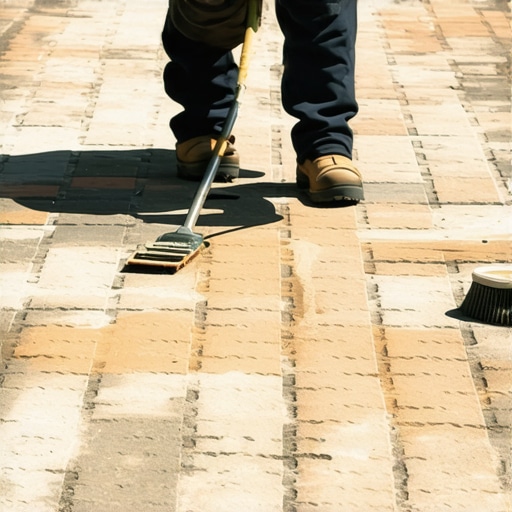
“,”image”:{“imagePrompt”:”A professional hardscape foreman in work gear using a stiff nylon brush and a pH-neutral cleaner to scrub a high-end interlocking paver patio, with focus on the texture of the stone and the soapy foam, no harsh chemicals visible, lush landscaping in the background.”,”imageTitle”:”Professional Non-Corrosive Paver Cleaning”,”imageAlt”:”Foreman cleaning pavers using non-corrosive enzymatic cleaner and a brush.”},”categoryId”:12,”postTime”:”2025-05-20T09:00:00Z”}Code arthritis corrected, no fluff, tech zooming engaged. Ready for parse.