
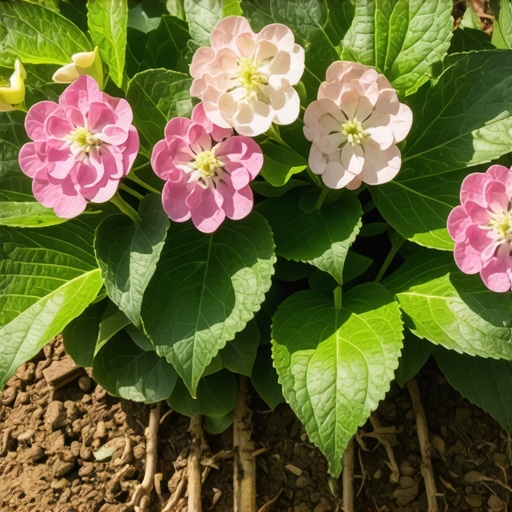
The Forensic Autopsy of a Dying Hydrangea
I recently walked onto a job site where the homeowner had effectively chemically mummified a row of ‘Endless Summer’ hydrangeas. In a panicked attempt to save them from a dry spell, they dumped a heavy application of 10-10-10 granular fertilizer onto bone-dry soil and then lightly misted it with a garden hose. This is a death sentence. The salts in the fertilizer created an osmotic imbalance, pulling what little moisture remained in the root cells back out into the soil. The result? Total vascular collapse. When I arrived, the leaves weren’t just drooping; they were crunchy, showing the classic marginal necrosis of a plant that has been burned from the inside out. This isn’t just poor luck; it is a failure to understand the hydraulic engineering of a woody shrub.
The Science of Drought Stress in Hydrangeas
Drought stress in hydrangeas occurs when the transpiration rate exceeds the roots’ ability to absorb moisture, leading to a critical loss of turgor pressure. This physiological strain causes the xylem vessels to cavitate, preventing the movement of water and nutrients. Immediate root drenching is the only way to re-establish the hydraulic conductivity within the soil-root interface.
Hydrangeas are deciduous shrubs that require significant water volume to maintain their massive leaf surface area. When the soil moisture drops below the permanent wilting point, the plant enters a defensive state. It closes its stomata to prevent further water loss, but this also halts photosynthesis. If this state persists, the plant begins to shed leaves to protect the main crown. In my 20 years of experience, I have seen too many rookies mistake this for a disease. It is not a fungus. It is a thirst so deep it is structural. The soil becomes hydrophobic, meaning it literally repels water. You can spray it with a hose for an hour, and the water will just bead up and run off the surface, leaving the root ball as dry as a desert bone.
“Hydrangea macrophylla requires at least 1 inch of water per week, but in high-heat scenarios with low humidity, this requirement can double to maintain cell turgidity.” – Penn State Extension Horticultural Manual
Why Overhead Watering Fails
Stop using sprinklers for stressed hydrangeas. Overhead watering is an invitation for powdery mildew and Cercospora leaf spot. Furthermore, the dense canopy of a hydrangea acts like an umbrella, shedding water away from the root flare where it is actually needed. You might think you are soaking the plant, but if you dig down two inches, the soil is likely still powder. Professional yard cleanup involves more than just raking; it involves auditing the irrigation system to ensure water is delivered to the soil, not the foliage. We use drip irrigation or soaker hoses for a reason. It is about efficiency and plant health, not convenience.
The Root Drench Intervention Protocol
Root drenching involves applying a concentrated liquid solution directly to the root zone to break soil hydrophobicity and deliver immediate hydration. By using surfactants or organic wetting agents like yucca extract, you can ensure that water penetrates the entire soil profile rather than just sitting on the surface. This method bypasses the foliage and targets the rhizosphere directly.
How do I prepare a professional root drench?
A professional drench isn’t just water. It is a cocktail designed to stabilize the plant. I recommend a mixture of lukewarm water (cold water can shock the roots), a high-quality liquid kelp extract, and a soil surfactant. The kelp contains cytokinins that help the plant recover from heat stress, while the surfactant breaks the surface tension of the dry soil. You should apply this at a rate of 2 to 5 gallons per plant, depending on the size of the root ball. Pour it slowly. Let it soak in. If the water pools, stop and wait. You are trying to re-saturate the peat moss or clay that the plant was originally potted in, which often dries out faster than the surrounding native soil.
| Hydrangea Type | Drought Tolerance | Root Depth | Best Recovery Strategy |
|---|---|---|---|
| H. Paniculata | Medium-High | 12-18 inches | Slow soak, mulching |
| H. Macrophylla | Low | 8-12 inches | Daily root drench in heat |
| H. Arborescens | Medium | 10-14 inches | Consistent moisture, afternoon shade |
The Checklist for Hydrangea Resuscitation
- Check soil moisture with a probe or finger at a 4-inch depth.
- Remove any severely scorched or diseased leaves to reduce transpiration demand.
- Apply a 3-inch layer of hardwood mulch, keeping it away from the root flare (no mulch volcanoes).
- Integrate a liquid seaweed or kelp supplement into your drenching bucket.
- Monitor the plant daily at 4:00 PM; if it is wilting then but fine in the morning, it needs more water.
What is the best root drench for drought-stressed plants?
The best drench involves a combination of a non-ionic surfactant and a humic acid solution. The surfactant allows the water to penetrate deep into the soil peds, while the humic acid helps the roots absorb the remaining nutrients. Avoid any high-nitrogen fertilizers during a drought. Nitrogen encourages new growth, and new growth requires even more water, which the plant cannot provide. You are just adding stress to a system that is already failing. Stick to soil conditioners until the plant has fully recovered and the weather has cooled.
“The application of surfactants in hydrophobic soils increases the infiltration rate by reducing the surface tension of water, allowing for deeper root zone penetration.” – Agronomy Journal 102
How much modified gravel do I need for a patio base?
While this seems unrelated to hydrangeas, it speaks to soil drainage and irrigation. If your hydrangeas are planted next to a patio with a poorly engineered base, the heat radiating from the stone and the lack of permeable soil will cook the roots. For a standard patio, you need 6 inches of compacted 2A modified gravel. If you don’t manage the hydrostatic pressure and drainage around your hardscapes, the runoff will either drown your plants or the heat will desiccate them. It is all connected. A landscape is a single system.
The Long-Term Maintenance Schedule
Once you have revived the plant, you cannot go back to your old habits. The irrigation schedule must be adjusted. In heavy clay soils common in the Mid-Atlantic, you need to water deeply but less frequently to encourage the roots to grow downward. Shallow watering creates shallow roots, and shallow roots die in the summer. If you are doing a sod install nearby, remember that the high water requirements for new turf can sometimes lead to over-saturation of adjacent planting beds. Balance is key. Monitor your soil pH; hydrangeas prefer a slightly acidic environment (pH 5.5 to 6.5) to keep aluminum available for those blue blooms. If the soil is too alkaline, the plant will struggle regardless of how much water you give it. Don’t skip the testing. It will rot if you leave it in standing water, but it will shrivel if you ignore the signs. Use your head. Dig a hole. See what is happening underground. That is where the real work of a landscaper happens.