
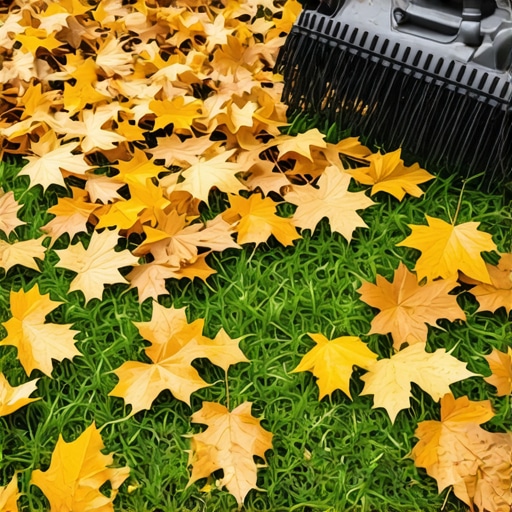
Wet leaves are not just a cosmetic nuisance; they are a biological blanket of death for high-performance turf. By the time 2026 rolls around, homeowners who still rely on the manual rake are not only wasting physical labor but are actively damaging their soil structure through repetitive mechanical friction. Clearing wet leaves without a rake requires a shift from manual scraping to high-volume airflow management and microbial breakdown strategies that preserve the crown of the grass plant while maintaining proper soil gas exchange.
The Chemical Nightmare: Why Wet Leaves Are Turf Killers
Wet leaf accumulation creates an anaerobic seal over the lawn, trapping moisture and gases that trigger rapid fungal colonization and root crown rot. When organic matter like oak or maple leaves becomes saturated, it sticks together in layers, blocking sunlight and preventing the turf from performing basic photosynthesis, which leads to a rapid depletion of carbohydrate reserves in the root system.
I remember a call-out three years ago to a property in a high-humidity zone where the homeowner had just spent $12,000 on a premium Kentucky Bluegrass sod install. They let a massive pile of wet sycamore leaves sit for just ten days after a heavy rain. When I peeled back those leaves, the grass underneath was white, slimy, and smelled like a swamp. The leaves had fermented. The lack of oxygen had allowed anaerobic bacteria to take over, essentially ‘digesting’ the living turf. We had to strip the top two inches of soil and start over because the pH had plummeted to an acidic 4.5 in those localized spots. It was a total loss that could have been avoided with 20 minutes of high-CFM airflow.
“Excessive leaf litter creates a microenvironment conducive to snow mold and other psychrophilic pathogens that can devastate turfgrass during dormant periods.” – Agricultural Extension Research
How can I clear wet leaves without a rake?
To clear wet leaves without a rake, you must utilize a commercial-grade leaf blower with at least 600 CFM (Cubic Feet per Minute) or a specialized mulching mower equipped with high-lift blades. These tools move the leaves using air pressure or mechanical shredding, which avoids the surface-level tearing and soil compaction associated with traditional raking methods.
The Mechanics of Airflow: CFM vs. MPH
Moving wet, heavy debris is a matter of volume, not just speed. Many ‘mow-and-blow’ hacks brag about their 200 MPH blowers, but air speed means nothing if you don’t have the volume to lift the weight. You need high Cubic Feet per Minute (CFM) to break the surface tension of wet leaves sticking to the grass blades. For a 2026 lawn, I recommend nothing less than a 750 CFM backpack blower or a walk-behind turbine blower for larger estates. It is about the mass of the air hitting the mass of the water.
| Blower Type | Minimum CFM | Best For | Wet Leaf Efficiency |
|---|---|---|---|
| Handheld Cordless | 450-500 | Small Patios/Dry Debris | Low |
| Professional Backpack | 750-1000 | Standard Lawns/Wet Leaves | High |
| Walk-Behind Turbine | 2000+ | Large Estates/Heavy Matting | Extreme |
What is the best tool for wet leaf removal?
The best tool for wet leaf removal is a high-volume backpack blower or a vacuum-mulcher system. These tools prioritize air volume over velocity, allowing the operator to lift saturated organic material from the turf canopy without causing mechanical damage to the grass blades or the underlying root system.
The Mulching Alternative: Biological Integration
If the leaf layer is thin enough, you shouldn’t be moving them at all; you should be shredding them. Modern high-lift mulching blades are designed to pull the leaves upward into the mowing deck, where they are sliced into microscopic fragments that fall between the grass blades. This returns nitrogen and carbon directly to the soil. However, this only works if you don’t skip a week. Once that mat gets thicker than two inches, mulching will smother the lawn. You have to be surgical. If you see ‘clumping,’ you’ve failed. Stop and bag it.
“A retaining wall doesn’t fail because of the stone; it fails because of the water trapped behind it, and a lawn doesn’t die from the leaves, but from the moisture those leaves trap against the crown.” – Hardscape and Turf Engineering Axiom
- Step 1: Assess leaf moisture. If they are dripping, wait for a two-hour wind window.
- Step 2: Use a high-CFM blower to move the bulk of the mass to a hard surface or tarp.
- Step 3: For the remaining ‘stuck’ leaves, use a mower with a bagging attachment to create suction.
- Step 4: Check your irrigation. If leaves are wet, turn off the zones. Adding more water is arson.
- Step 5: Apply a light dose of pelletized lime if the leaves were acidic (like Oak).
Engineering the Clean: The 2026 Checklist
Don’t just work harder; work with the physics of your yard. Every yard has a natural drainage and wind pattern. Always blow with the wind, never against it. It sounds simple, but I see guys fighting a 15 MPH headwind every day. It’s a waste of fuel and time. Compacted soil makes leaf removal harder because the leaves have more surface area to ‘grip.’ Core aeration in the fall reduces this surface tension and allows the lawn to breathe even if a few leaves are left behind.
Professional Equipment Checklist for 2026
- Backpack Blower: Minimum 750 CFM, 200 MPH.
- Mulching Mower: High-lift blades with a sharp 30-degree bevel.
- Soil Probe: To check for moisture saturation beneath the leaf mat.
- Debris Tarp: Heavy-duty polyethylene to drag mass quantities to the curb.
- Personal Protection: Wet leaves are slippery; use boots with aggressive lug patterns.
Stop treating your lawn like a floor that needs sweeping. Treat it like a living, breathing organism that is currently being suffocated. If you don’t get the oxygen back to that root zone, you’re just growing expensive compost. Do it right. Use the air. Keep the rake in the shed where it belongs. It will rot if you don’t move it.