
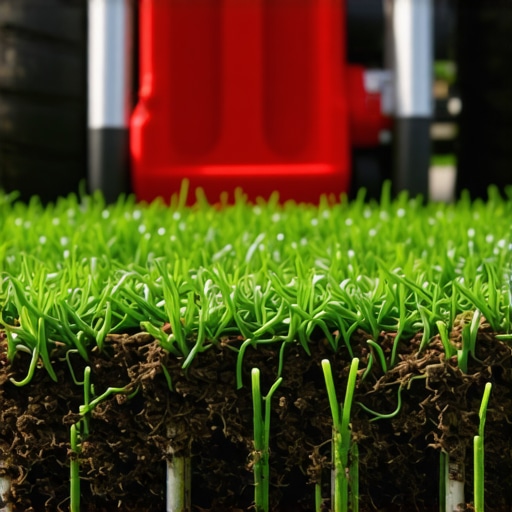
The Autopsy of a Dead Lawn: Why New Sod Turns Into a Yellow Rug
Sod root failure occurs when the interface between the new turf and the existing soil becomes an impenetrable barrier, often due to high bulk density, anaerobic conditions, or a ‘glazing’ effect from heavy machinery during the initial sod install. To fix this, you must mechanically disrupt the soil surface to lower the bulk density below 1.6 g/cm³ and introduce oxygen into the rhizosphere. If you can peel your sod back like a piece of carpet six months after installation, your yard is effectively on life support. This isn’t just a cosmetic issue; it is a structural biological failure.
A homeowner called me in a panic last season after they completely torched their front lawn. They had spent nearly $9,000 on a high-end Kentucky Bluegrass sod install, but within three weeks, the blades were shriveling despite constant irrigation. When I walked onto the property, my boots didn’t sink; they bounced. The soil underneath was as hard as a highway shoulder. They had applied a heavy-handed dose of 20-10-10 synthetic fertilizer on a dry day, which, combined with the lack of root penetration, created a chemical burn that salted the earth. We had to perform a full forensic recovery, starting with deep core aeration and a humic acid soak just to get the soil to accept water again. The lesson? You can’t force a plant to grow in a tomb.
“Soil compaction is the single most common cause of turfgrass decline in urban environments, as it restricts the movement of air, water, and nutrients into the root zone.” – Penn State Center for Turfgrass Science
Why is my new sod not rooting?
New sod fails to root primarily because of subsoil compaction and pore space collapse. When the soil is too dense, the tender root tips cannot physically penetrate the ground, leading to a shallow, matted root system that is highly susceptible to heat stress. This is often exacerbated by ‘hydrophobic’ soil conditions where water sits on the surface rather than reaching the roots.
The ‘Deep Channel’ Aeration Hack: Beyond Basic Spiking
The ‘Deep Channel’ hack involves a two-stage process: a double-pass mechanical core aeration followed immediately by a surfactant-based liquid aeration treatment to chemically break surface tension and penetrate the clay lattice. This combination creates physical macropores while simultaneously opening up the microscopic micropores within the soil structure. By doing this in 2026, you are not just punching holes; you are re-engineering the soil’s hydraulic conductivity. Forget the spike shoes; those just compress the soil further. You need to pull cores.
When we talk about the 2026 standard for yard cleanup and lawn health, we are looking at the Cation Exchange Capacity (CEC). If your soil is compacted, the CEC is irrelevant because the roots can’t reach the nutrients. The hack is to use a 3/4-inch diameter hollow tine that pulls a plug at least 4 inches deep. Immediately after, you apply a solution of 12% humic acid and a non-ionic surfactant. This lubricates the soil particles, allowing them to shift and settle in a way that creates larger air pockets. This is ‘Engineering Zooming’—we are manipulating the soil at a molecular level to ensure the survival of your investment.
| Aeration Method | Depth Capability | Impact on Bulk Density | Best For |
|---|---|---|---|
| Spike Aeration | 1-2 inches | Minimal / Negative | Temporary DIY fixes (Not recommended) |
| Core Aeration | 3-4 inches | Significant Reduction | Standard sod install recovery |
| Liquid Aeration | Molecular Level | Chemical Softening | Breaking surface tension/Hydrophobic soil |
| Hybrid Method | 4+ inches | Maximum De-compaction | Severe root failure and 2026 standards |
How much modified gravel do I need for a patio base?
While this article focuses on sod, many homeowners ask about hardscaping during a yard cleanup. For a standard patio, you need a minimum 6-inch base of compacted modified gravel (usually 2A or 3/4-minus). This ensures proper drainage and prevents the frost heave that often kills nearby turf by altering the local water table.
The Irrigation Trap: Why More Water Isn’t the Answer
Excessive irrigation on compacted sod creates an anaerobic ‘death zone’ where roots rot due to a lack of oxygen rather than thriving from the moisture. To fix this, you must transition from daily ‘sips’ of water to ‘deep, infrequent’ cycles that force the roots to chase the moisture downward through the aeration holes. If the soil is saturated but the roots are shallow, the plant will essentially drown in a standing pool of its own waste gases. This is where most landscaping projects fail—they treat the symptom (yellow grass) by adding the cause (more water).
“Hydrostatic pressure in the soil can crush delicate root hairs if drainage is not maintained through proper pore space distribution.” – ICPI Hardscape Engineering Manual
Check the moisture by doing the ‘knuckle test.’ Stick your finger into the soil under the sod. If it’s muddy, stop watering. If it’s bone dry but the grass is wet, your soil is hydrophobic. You need the aeration hack immediately. Don’t skip this. Without oxygen, the nitrification process stops, and your expensive sod becomes compost.
The Post-Aeration Recovery Checklist
- Core Verification: Ensure cores are 3-4 inches deep and 2-3 inches apart.
- Microbial Inoculation: Apply a high-quality mycorrhizal fungi supplement to the open holes.
- Organic Top-Dressing: Spread 1/4 inch of screened leaf compost to fill the voids.
- pH Adjustment: Test soil; if below 6.0, add pelletized lime to prevent moss encroachment.
- Irrigation Calibration: Set timers for 4:00 AM to minimize fungal growth and maximize absorption.
Scaling the Solution: Yard Cleanup and Soil Rebirth
A true yard cleanup isn’t just about raking leaves; it’s about resetting the biological clock of your property. If you have been dealing with sod root failure, your entire landscaping strategy needs a forensic overhaul. This includes checking for root girdling on nearby trees and ensuring that irrigation heads are not over-spraying onto hardscapes, which leads to mineral buildup in the soil. We often find that sod fails because the ‘mow-and-blow’ crews scalp the grass too short, reducing the plant’s photosynthetic capacity and forcing it to use up stored energy in the roots just to survive.
Stop using big-box store weed-and-feed products. They contain high-salt fertilizers that further dehydrate the soil biology. Instead, focus on soil microbiology. When you aerate, you are inviting aerobic bacteria to return to the root zone. These bacteria break down thatch—the layer of dead organic matter between the grass and the soil—converting it into usable nitrogen. This is the natural nitrogen cycle, and it is more effective than any blue liquid you can buy in a jug. It’s about biology, not just chemistry. Your yard is an ecosystem. Treat it like one.