
The Forensic Autopsy of a Scorched Lawn
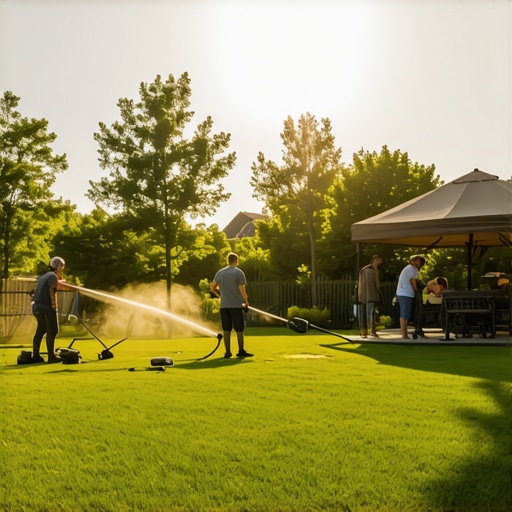
Preparing 2026 lawns for extreme summer heat requires a fundamental shift from cosmetic maintenance to sub-surface structural engineering. If you wait until the first 90-degree day to think about your turf, you have already lost the battle. I recently stood on a client’s property that looked like a burnt biscuit. They had a chemical nightmare on their hands. A homeowner called me in a panic after they completely torched their front lawn by applying a high-nitrogen ‘turf builder’ during a dry spell in late June. The nitrogen salts acted as a desiccant, pulling every last molecule of moisture out of the root zone through osmotic pressure. It was a $15,000 mistake that required a full excavation. The soil was so chemically imbalanced that even the weeds were dying. We had to strip the top four inches of dead biomass and start over. Most people think heat kills grass. Heat doesn’t kill grass; poor soil management and physiological stress kill grass. You need to understand the evapotranspiration rate. This is the sum of evaporation from the soil and transpiration from the plant. In extreme heat, this rate skyrockets. If your soil profile cannot recharge that moisture, the plant enters a permanent wilting point. It is a biological shutdown. No amount of emergency watering can fix a dead crown.
[IMAGE_PLACEHOLDER]
Yard Cleanup as Soil Surgery
Pre-heat yard cleanup involves the surgical removal of excess thatch and the mechanical opening of the soil profile to ensure maximum gas exchange and water infiltration. Thatch is the layer of organic debris between the green vegetation and the soil surface. A little is good: too much is a barrier. If your thatch layer is thicker than half an inch, it becomes hydrophobic. It literally repels water. You can run your irrigation for three hours and the soil underneath will remain bone dry. I tell my crew to check the thatch density before every spring cleanup. We use vertical mowers to slice through that organic mat. This isn’t just raking leaves. This is about ensuring that 2026’s heatwaves don’t bounce off the surface of your lawn. We also focus on core aeration. We want 3-inch plugs pulled every 4 inches. This creates a direct path for oxygen to reach the aerobic bacteria that drive the nitrogen cycle. Without oxygen, your soil goes anaerobic. It starts smelling like rotten eggs. That is the smell of your investment dying.
“Turfgrass water requirements increase exponentially as ambient temperatures exceed 85 degrees Fahrenheit, leading to localized dry spots if soil structure is compacted.” – Agronomy Manual for Professional Turf Managers
Precision Irrigation and Hydrostatic Survival
Successful irrigation in extreme heat requires delivering 1 to 1.5 inches of water per week in two deep cycles to encourage geotropism and deep root growth. Most homeowners water for 15 minutes every day. This is the worst thing you can do. It creates a shallow, lazy root system that lives in the top inch of soil. When the 2026 sun hits 100 degrees, that top inch of soil cooks. The grass dies in hours. You have to force the roots to chase the water down into the cooler sub-soil. We use the ‘soak and cycle’ method. We apply water until the soil reaches field capacity, then we stop before runoff occurs. We wait an hour for it to soak in, then we apply the rest. This prevents the wasted runoff that usually ends up in the gutter. You need to perform a catch-can test. Put out tuna cans and see how long it takes to hit that one-inch mark. If you don’t measure, you are just guessing. And guessing is expensive.
How much water does my lawn need in 100 degree weather?
In 100-degree weather, your lawn needs approximately 0.25 to 0.40 inches of water per day, but it should be applied in deep, infrequent intervals rather than daily mists. This ensures that the water penetrates at least 6 inches into the soil profile where temperatures remain 10-15 degrees cooler than the surface. If you see ‘footprinting’—where the grass stays flat after you walk on it—the plant is in early wilt. You must apply water immediately, preferably before 8:00 AM to minimize fungal pathogens like Rhizoctonia solani. Avoid watering at night. Wet blades plus warm nights equals a fungal buffet.
The Science of Summer Sod Install
A sod install during peak summer requires a strictly managed establishment phase where the interface between the new soil and the existing grade never drops below 60% moisture capacity. Installing sod in the heat is high-stakes gambling. The biggest mistake is the ‘perched water table’ effect. This happens when you lay fine-textured sod soil over a coarse-textured existing soil. The water won’t move across the boundary. It sits there. The roots of the new sod won’t penetrate the native soil. They just rot in the mud. We prevent this by tilling the soil interface. We mix the new and old soil together. It is backbreaking work, but it is the only way to ensure the grass survives the first two weeks of July. You also need to roll the sod. If there is an air pocket between the root and the dirt, that root will hit the air and die. It is called air pruning. In 2026, air pruning is a death sentence.
| Nutrient/Action | Pre-Heat Focus (Spring) | Peak Heat Focus (July-Aug) | Recovery Focus (Sept) |
|---|---|---|---|
| Nitrogen (N) | Low-Slow Release (1lb/1000sqft) | ZERO (Unless spoon-feeding) | Standard (1lb/1000sqft) |
| Potassium (K) | High (Improves Cell Walls) | Moderate (Stress Management) | Moderate |
| Mowing Height | 3.0 Inches | 4.0 to 4.5 Inches | 3.5 Inches |
| Irrigation Frequency | 2x Per Week | 3x Per Week (Deep) | 2x Per Week |
Landscaping for Thermoregulation
Strategic landscaping uses heat-tolerant species and proper mulch depth (3 inches) to reduce ground-level temperatures by up to 15 degrees. Do not use rock mulch near your lawn. Rock is a thermal mass. It absorbs heat all day and radiates it back into your grass all night. This prevents the grass from entering its nocturnal cooling phase. Use organic wood mulch. It stays cool. It breaks down into humus. It feeds the soil. Also, consider your grading. If water pools in one area, the grass will boil in the sun. The water gets hot enough to cook the roots. You need a 2% slope away from the house to a designated drainage area or a French drain. Proper drainage is just as important in a drought as it is in a flood. It is about control.
“A retaining wall doesn’t fail because of the stone; it fails because of the water trapped behind it.” – Hardscape Engineering Axiom
What is the best fertilizer for heat-stressed grass?
The best fertilizer for heat-stressed grass is a slow-release potassium-rich formula with an NPK ratio like 5-0-20. Avoid high-nitrogen fertilizers which force vertical growth at the expense of root storage. High potassium (K) strengthens the cellular walls of the grass blades, making them more resistant to transpirational water loss and physical wear. You want the plant to be tough, not just green. Soft, fast-growing grass is the first thing to die when the thermometer hits triple digits.
The 2026 Heat Prep Checklist
- Test soil pH: Aim for 6.2 to 6.8 for maximum nutrient availability.
- Calibrate irrigation heads: Ensure 100% overlap (head-to-head coverage).
- Sharpen mower blades: Ragged cuts lose moisture 50% faster than clean cuts.
- Apply a soil wetting agent: Reduces surface tension and improves water penetration.
- Raise the deck: Tall grass shades the soil and protects the crown.
- Identify ‘Hot Zones’: Areas near concrete or brick that need hand-watering.
- Check for grubs: Damaged roots cannot take up water during a heatwave.
- Limit traffic: Don’t walk on dormant or heat-stressed turf.
- Aerate early: Don’t wait until the soil is baked hard as a brick.
- Audit your trees: Ensure they aren’t competing for the same water as the lawn.
The reality is simple. You either build a resilient soil profile now, or you pay me to dig it up and replace it in 2027. Soil isn’t just dirt. It is a biological engine. If you don’t provide the fuel—oxygen, moisture, and the right minerals—the engine seizes. 2026 is coming. Your lawn’s survival depends on what you do in the next six inches of earth. Don’t be the homeowner with the burnt biscuit front yard. Mow high. Water deep. Fix your soil. It is that simple. It is that hard.