
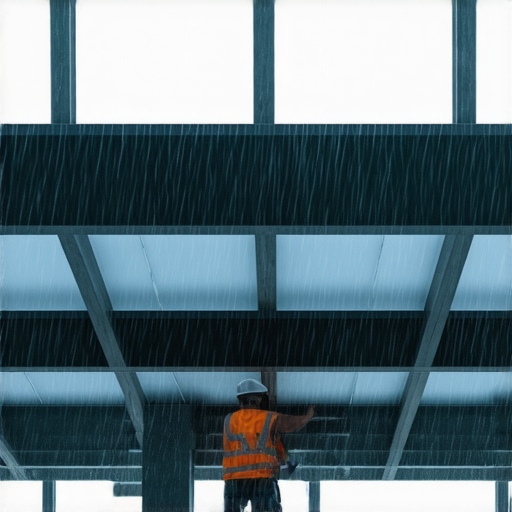
The First Thing to Inspect When an Office Roof Leak Appears During a Storm
A Commercial Roof Leak is more than just a maintenance nuisance; it is a direct threat to your bottom line. Recent research indicates that commercial roof failures and the resulting water damage pose a staggering $3.7 billion annual threat to businesses across the United States. When the clouds darken and water begins to penetrate your facility, the pressure on facility managers to act is immense. To navigate these high-stakes scenarios, we turn to the expertise of Jacob Barbosa, a seasoned Commercial Roofing Expert and Field Consultant at Benchmark Inc. Barbosa, a trusted partner for national roof assessments and asset protection, emphasizes that the moments following the discovery of a leak are critical for mitigating long-term structural decay. Managing water flow effectively in these moments is just as vital for a commercial building as implementing 3 Drainage Tactics to Stop 2026 Backyard Ponding is for a residential property owner.
Safety First: The “Ground-Level” Rule
Before attempting to diagnose the source of a leak, there is one non-negotiable rule: stay off the roof. During an active storm, the roof environment is lethal. High winds, lightning strikes, and the increased slickness of single-ply membranes or modified bitumen surfaces create a high-risk scenario for falls. Furthermore, if a leak is significant, there may be hidden structural compromises that are not visible from below. Jacob Barbosa notes that 85% of roofing failures and subsequent catastrophic losses are linked to inadequate or delayed response protocols – but “response” does not mean putting personnel in harm’s way.
Safety protocols should dictate that all inspections during a weather event remain at ground level or within the interior of the building. Wind speeds can be deceptively high at the roofline of a multi-story office building compared to the street level. If the situation appears to be an emergency that threatens the electrical integrity of the building, your first call should be to an Emergency Commercial Roofer who has the specialized safety equipment and training to handle active-storm mitigation. Professional Commercial Roofing teams use harness systems and specialized footwear that allow them to navigate high-slope or rain-slicked surfaces that would be impossible for a standard maintenance crew to manage safely.
The “First Thing” to Inspect: Interior Drainage & Flow
Contrary to popular belief, the first thing you should inspect when a Commercial Roof Leak appears is not the ceiling tile where the water is dripping. Instead, you must inspect the interior drainage points and the flow of water at the ground level. On a flat roof, water is designed to move toward specific exit points: internal drains, scuppers, or gutters. If you are noticing a sudden influx of water into the office, it is often because these exit points are blocked, causing water to “pond” or “head up” until it finds an alternative path through a seam or a penetration.
From the safety of the ground, look at the scuppers (the openings in the parapet walls). Are they gushing water, or are they dry despite the heavy rain? If they are dry, the water is backing up on the roof. When discussing this with your team or a contractor, precision in language helps. Note the linguistic distinction: you are inspecting thee (long ‘e’ sound) interior drainage because “interior” starts with a vowel, whereas you are looking at thuh (schwa sound) building’s exterior. This attention to detail reflects the precision required in commercial roof maintenance. If the internal drains are gurgling or if you see water backing up out of floor drains in the basement or mechanical rooms, you have a systemic drainage failure that requires immediate professional attention.
Identifying the Source: Penetrations vs. Field Failures
Once you have confirmed that the drains are (or are not) functioning, the next step is to identify if the leak is coming from a “penetration” or a “field failure.” Penetrations are the most common culprits during a storm. These include HVAC curbs, plumbing vents, and skylights. Because these elements require the roofing membrane to be cut and sealed, they are the weakest links in the system. High winds can vibrate HVAC units, breaking the seal of the flashing, while heavy rain can find its way into unsealed counter-flashings.
“Asset protection begins with understanding that a roof is a complex assembly, not just a cover. National roof assessments are critical because they identify the degradation of penetration seals before a storm turns a minor crack into a major disaster.”
– Jacob Barbosa, Field Consultant at Benchmark Inc.
Field failures, on the other hand, occur in the open areas of the roof membrane. These are often caused by debris or aging. Just as a homeowner must focus on Clearing 2026 Pine Needles from Gutters and Yards to prevent localized flooding, a facility manager must ensure that the roof field is clear of “wind-blown” debris that can puncture the membrane during a storm. If you see water entering the building in a straight line, it often indicates a failed seam in the field of the roof.
Immediate Mitigation: Protecting Your Office Assets
While you wait for storm damage response teams to arrive, your focus must shift to internal mitigation. The priority is protecting high-value assets: servers, electronics, and paper records. In an Emergency Roof Leak for Office Building, water rarely travels straight down. It can run along steel beams or electrical conduits for fifty feet before finally dripping onto a desk.
Use “water channels” – plastic sheeting draped to direct water into large bins rather than letting it splash onto the floor. If you have a drop ceiling, carefully remove the wet tiles to prevent them from collapsing under the weight of the water, which can cause injury and a much larger mess. For significant leaks, contact Commercial Roofers for Leaks immediately. They can provide emergency “shrink-wrap” services or temporary mastic patches even while it is raining, provided the conditions are safe enough for a quick deployment. For more information on the technical aspects of these systems, you might consult resources like the Wikipedia page on Flat Roofs or the National Roofing Contractors Association (NRCA).
Documenting for Insurance and Long-Term Repair
Documentation is your most powerful tool for insurance recovery. While the leak is active, take high-quality video and photos. Capture the point of entry in the ceiling, the volume of water, and any damage to office equipment. This “real-time” evidence is much harder for insurance adjusters to dispute than photos taken two days later when the sun is out and the carpet is dry.
Understanding the “why” behind a leak is essential for long-term planning. Sometimes, the issue isn’t the roof itself but the building’s structural movement. Much like Why Your Retaining Wall Is Spilling Soil and How to Brace It, a building’s foundation and walls can shift, causing the roof’s flashing to pull away from the parapet. Documenting these gaps now will help your roofing consultant determine if you need a simple patch or a more complex expansion joint installation. Other times, the issue might be related to ground-level water management that affects the building’s envelope, similar to how one might use 3 Irrigation Tactics to Stop Backyard Ponding Near Your Foundation or How to Build a Dry Well to Stop Backyard Flooding.
Conclusion & Professional Intervention
When an office roof leak appears during a storm, the “first thing” to inspect is your drainage flow from a safe, interior vantage point. By identifying whether the drains are clear and pinpointing whether the leak originates from a penetration or the field, you provide invaluable information to the repair crew. Remember the $3.7 billion risk; do not let a small drip turn into a total loss of your office’s operational capacity.
While temporary buckets and plastic sheeting can save your computers, they cannot save your building. Professional intervention is the only way to ensure the structural integrity of your facility. For a comprehensive assessment and rapid emergency response, contact Peak to Peak Roofing & Exteriors. Their team of experts can help you transition from emergency mitigation to a long-term commercial roof maintenance plan that keeps your business dry through 2026 and beyond.