
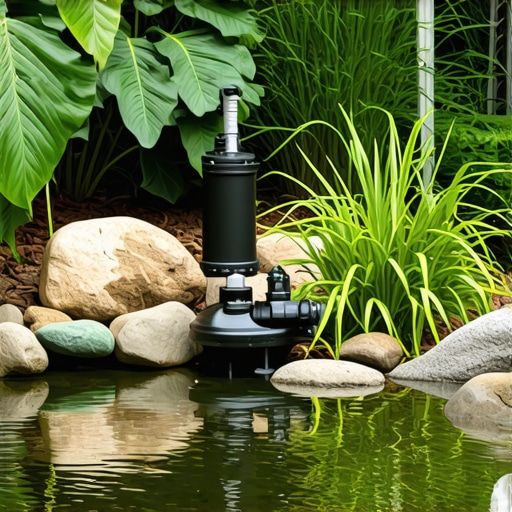
The Forensics of a Failing Fountain: Identifying Pump Noise
I recently got called out to tear up a $30,000 patio and water feature that was sinking because the previous contractor failed to account for the vibration-induced soil settlement of a massive, improperly seated centrifugal pump. The homeowner was losing sleep not just from the financial loss, but from a persistent, grinding hum that sounded like a freight train in their backyard. This noise is rarely just a nuisance; it is a mechanical distress signal indicating that your hydraulic system is eating itself from the inside out. Understanding the physics of water movement and mechanical friction is the only way to silence a system permanently. Don’t listen to the guys who tell you to just throw more rocks on it. That is a temporary fix for a terminal problem.
The Anatomy of Cavitation: Why Your Pump Is Screaming
A noisy pond pump is usually caused by cavitation, clogged intake screens, or worn impeller bearings which disrupt the laminar flow of water and create micro-explosions of vacuum bubbles. When the pressure at the pump inlet drops below the vapor pressure of the water, bubbles form and then collapse violently against the impeller blades, creating a distinct gravel-grinding sound. This is not just noise; it is physical erosion that will pit your hardware until it fails. Most residential landscaping projects fail because the pump was sized for head height but not for the Net Positive Suction Head (NPSH) required to maintain stable flow. It will fail.
“A pump does not suck water; the atmosphere pushes water into the low-pressure zone created by the impeller. Any restriction in this process leads to cavitation and mechanical fatigue.” – Hydraulic Engineering Standards Manual
How do I stop my pond pump from humming?
To stop a pond pump from humming, you must first isolate the vibration from the pond liner or vault using EPDM rubber pads and then inspect the impeller for debris or calcium scale. A low-frequency hum usually indicates structural resonance where the pump’s motor frequency matches the natural frequency of the enclosure, whereas a high-pitched whine often points to failing ceramic bearings or a dry-run scenario. Check your water levels. Low water causes air entrainment. Air is the enemy of a quiet pump.
| Noise Type | Probable Mechanical Cause | Required Remediation Action |
|---|---|---|
| Grinding / Gravel Sound | Cavitation or Debris in Housing | Clean intake; check for suction line restrictions |
| High-Pitched Squeal | Bearing Failure / Friction | Replace motor or lubricate (if applicable) |
| Low-Frequency Hum | Vibration Transfer / Resonance | Install rubber isolation mounts; check base compaction |
| Intermittent Churning | Air Entrainment / Low Water | Top off pond; check for leaks in irrigation lines |
The Role of Proper Yard Cleanup in Pump Longevity
Routine yard cleanup is a mechanical necessity because organic debris like pine needles and oak catkins are the primary causes of pump-inlet restriction and subsequent motor strain. When these materials bypass your skimmer, they wrap around the impeller shaft, increasing the torque required to spin the motor and causing the internal copper windings to overheat. This heat degrades the capacitor. If your pump sounds like it is struggling, your first move shouldn’t be a wrench; it should be a net. Clear the perimeter. Ensure the sod install around the pond hasn’t led to runoff that silts up the intake. Soil in the pump housing acts like liquid sandpaper on your seals.
How much does it cost to replace a pond pump impeller?
Replacing a pond pump impeller typically costs between $40 and $150 for the part itself, depending on whether you are running an asynchronous or a magnetic-drive motor. If the noise has persisted for months, the heat likely warped the volute housing, which can escalate repair costs or necessitate a full pump replacement costing $300 to $900. Do not wait for it to seize. A seized motor is a fire hazard. Address the noise when it starts, not when the water stops moving.
Engineering the Silence: Structural Solutions
While the internet tells you to wrap your pump in foam to quiet it, that is a dangerous mistake because it traps heat and kills the motor’s lifespan. You need mechanical isolation, not insulation. In high-end landscaping, we use 45-mil EPDM gaskets between the pump housing and the vault walls to break the path of vibration. If your pump is submerged, ensure it is not sitting directly on the pond floor where it can vibrate against stones. Suspend it slightly or place it on a dedicated pump pad. Fix the grade. If the pump vault is leaning, the shaft is under uneven load. It will wear out prematurely.
“Vibration in hydraulic systems is 90 percent preventable through proper base preparation and 10 percent through mechanical dampening.” – International Hardscape Engineering Association
- Check the intake screen for algae or leaf buildup daily.
- Verify that the voltage at the outlet matches the pump’s requirements (115v vs 230v).
- Ensure the discharge pipe diameter is not smaller than the pump outlet.
- Inspect the O-ring for cracks that could allow air into the system.
- De-scale the impeller with a mild citric acid solution every season.
- Use a watt-meter to check for spikes in energy draw.
- Clear any sod install debris from the drainage path.
- Confirm the check valve is not vibrating against the vault wall.
- Tighten all plumbing unions to prevent micro-leaks.
- Listen for the “click” of a failing thermal switch.
The Final Diagnosis: Maintenance Over Replacement
A quiet pump is a sign of a healthy ecosystem. If you ignore the noise, you aren’t just risking a pump; you are risking the oxygen levels in your pond, which can kill your fish in hours during a summer heatwave. Most pump issues are not manufacturing defects but installation failures. Check your plumbing. If you have 90-degree elbows directly on the discharge, you are creating backpressure that forces the pump to work harder and louder. Use 45-degree sweeps instead. It’s basic physics. Your pump will thank you with silence.