
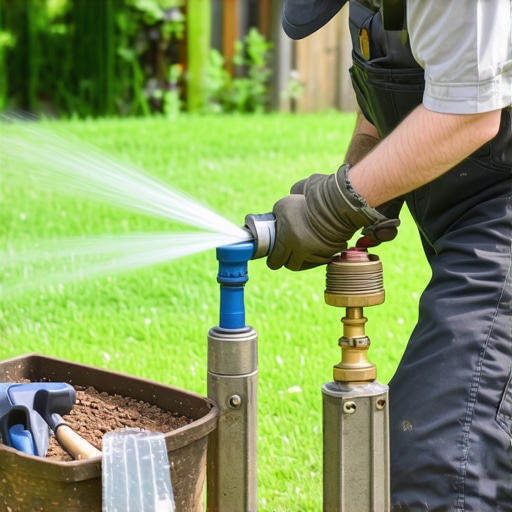
The sound is unmistakable. It is a sharp, metallic hum vibrating through the soil, often accompanied by a valve that refuses to open or close properly. In the world of high-end irrigation, a buzzing valve is not just an annoyance; it is a symptom of electrical or mechanical failure that can lead to catastrophic water loss or a torched lawn. When you hear that hum, the clock is ticking on your turf health. A buzzing solenoid is essentially a magnetic coil struggling against physics. If you do not resolve it, the heat generated by the electrical resistance will eventually melt the plastic housing or fry the output terminal on your expensive controller. This is not a task for the ‘mow-and-blow’ crowd who just kick the valve box and hope for the best. This requires a forensic look at 24VAC electrical systems and hydraulic pressure dynamics.
The Anatomy of Irrigation Valve Chatter
To fix a buzzing irrigation valve, you must identify if the sound is electrical or mechanical by measuring voltage at the solenoid and inspecting the internal diaphragm for debris or calcification. Most buzzing results from a failing solenoid coil, a low-voltage drop in the field wiring, or a trapped air pocket within the valve bonnet. Identifying the root cause requires a systematic teardown of the valve components to prevent unnecessary part replacement. I always drill into my new crew members: if you do not fix the soil grading and protect the valve boxes from moisture, every electrical repair you make is just a temporary bandage on a bleeding wound. I once saw an entire acre of new sod install turn into a brown wasteland because an apprentice ignored a ‘slight hum’ in the main manifold. By the time the homeowner noticed, the solenoid had fused shut, the pump ran dry, and the thermal overload failed. It was a twenty thousand dollar mistake caused by a thirty dollar part. Understanding the interaction between the iron plunger and the magnetic field is the difference between a master technician and a hack.
“A retaining wall doesn’t fail because of the stone; it fails because of the water trapped behind it.” – Hardscape Engineering Axiom
How much voltage does a sprinkler solenoid need?
Most residential and commercial irrigation controllers output 24 to 28 volts of alternating current (VAC). At the valve, you should ideally see no less than 22VAC. Anything lower than this threshold creates an ‘under-powered’ magnetic field. The plunger will hover in a state of indecision, vibrating against the spring rather than pulling fully into the ‘open’ position. This is the source of your buzzing. It is physics. You cannot argue with it. Check your wire nuts. If they are not waterproof grease caps, they are corroded. Corrosion increases resistance. Resistance drops voltage. Lower voltage equals buzzing.
Why is my irrigation valve buzzing but not turning on?
If the valve buzzes but no water flows, the solenoid is likely trying to lift the plunger, but the plunger is stuck. This happens due to ‘mineral scale’ or ‘biolfilm’ buildup. In regions with hard water, calcium deposits act like glue inside the plunger tube. The coil gets hot because it is energized but cannot complete its mechanical stroke. This is a fire hazard. Well, maybe not a house fire, but it will certainly melt your valve box. You need to unscrew the solenoid and check the plunger. If it does not slide freely, replace it. Do not try to sand it down. The tolerances are too tight. Replace the whole solenoid. It is cheaper than a service call next week.
| Symptom | Likely Cause | Required Tool |
|---|---|---|
| High-pitched electrical hum | Low Voltage / Corroded Wiring | Digital Multimeter |
| Rattling / Vibrating sound | Air in Valve / Debris | Screwdriver / Flush Valve |
| Constant hum (Valve stays closed) | Stuck Plunger / Seized Coil | Replacement Solenoid |
| Clicking but no flow | Failed Diaphragm / Clogged Port | Replacement Diaphragm |
[image_placeholder]
During any yard cleanup or irrigation audit, we check the ‘ohm’ readings of every zone. A healthy solenoid should read between 20 and 60 ohms. If you see a reading below 10 ohms, the coil is shorted. If it is ‘open’ (infinite), the wire is snapped. This is data-driven landscaping. We do not guess. We measure. When we perform a new sod install, we ensure the irrigation system is pressurized and tested for 48 hours before a single blade of grass touches the soil. If a valve buzzes during the test, we replace the entire manifold. Reliability is the only metric that matters in professional horticulture.
“Soil compaction and poor drainage account for 80% of plant mortality in urban landscapes.” – Agricultural Extension Handbook
Step-by-Step Remediation for Buzzing Valves
Follow this protocol to eliminate the noise and restore hydraulic function. Skip no steps. 1. Shut off the main water supply to the irrigation system. 2. Disconnect the wire nuts from the buzzing solenoid. 3. Use a multimeter to check the voltage coming from the controller. If it is 24VAC, the controller is fine. 4. Check the resistance (ohms) of the solenoid. If it is outside the 20 to 60 ohm range, throw it away. 5. If the solenoid is good, the issue is mechanical. Unscrew the bonnet screws. Be careful not to lose the spring. 6. Inspect the rubber diaphragm for tears or pebbles. Even a grain of sand can prevent a seal. 7. Flush the valve body by turning the water on briefly while the top is off. This clears the lines. 8. Reassemble with a new diaphragm if the old one shows any signs of wear. 9. Use waterproof wire connectors for all splices. This is non-negotiable. 10. Re-test the zone. The valve should open with a solid ‘thunk’ and no vibration.
- Check the transformer output at the wall outlet first.
- Clean the solenoid plunger tube with a cotton swab and distilled water.
- Ensure the wire gauge is sufficient for the length of the run (18 gauge for most residential).
- Replace old grease caps every three years to prevent moisture ingress.
- Install a master valve to protect against line breaks and constant buzzing.
Landscaping is applied engineering. Whether you are dealing with a sod install or a complex irrigation repair, the principles of pressure and electricity remain the same. A buzzing valve is a warning. It is the system telling you that it is out of equilibrium. If you ignore it, you will eventually be digging up your yard to replace a melted manifold. Pay attention to the details. Use the right tools. Measure the voltage. Fix it right the first time. Your lawn depends on it. Your wallet does too.