
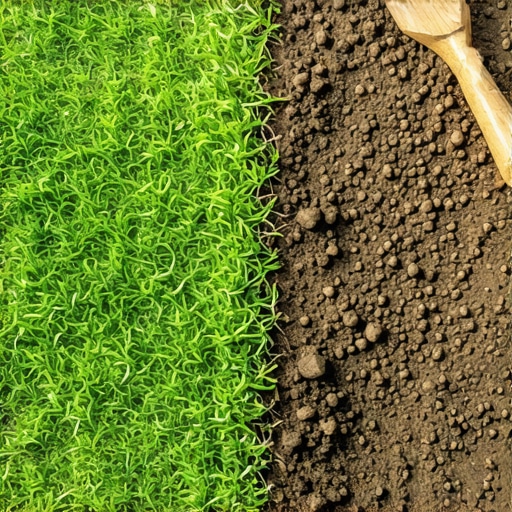
The Sudden Death of New Turf: A Forensic Analysis
You wake up, walk out to your porch, and instead of the deep forest green you paid $4,000 for, you see a crisp, straw-colored wasteland. New sod turns brown within 24 hours primarily due to root desiccation caused by a lack of soil-to-root contact, an engineering failure often exacerbated by air pockets and poor irrigation calibration. It is a structural collapse of the plant’s ability to move water through its vascular system. It’s not just ‘thirsty’; it is literally dying from a lack of physical connection to the earth.
I always drill into my new crew members: if you don’t fix the soil grading first, every plant you put in the ground is just expensive compost. I’ve seen guys slap sod over old thatch or uneven 811-marked utility lines without a second thought. They think the weight of the sod will flatten everything out. It won’t. If there is a half-inch gap between that pallet-cut root zone and your soil, that grass is as good as dead. I’ve had to fire foremen for skipping the roller because they wanted to beat the afternoon rain. You don’t skip the roller. Ever. You are looking for a 100% capillary connection. Without it, you are just laying a very expensive, very temporary outdoor carpet.
The Critical Failure: Why Air Pockets Are the Enemy
Air pockets beneath new sod act as thermal insulators that prevent moisture transfer and cause the root zone to reach lethal temperatures within hours of installation. These gaps prevent the capillary action necessary for the rhizomes to draw water from the subsoil, leading to immediate cellular collapse and leaf firing. It’s a basic physics problem. Water cannot jump across a vacuum. If that sod isn’t pressed firmly into the dirt, the sun hits the blades, the plant tries to transpire to stay cool, and it finds nothing in the tank. It wilts, then it fries.
“Rolling is essential to ensure intimate contact between the sod roots and the soil surface. Failure to roll can result in poor establishment and increased susceptibility to drought stress.” – Penn State Center for Turfgrass Science
How much irrigation does new sod really need?
To prevent new sod from browning, you must maintain soil saturation to a depth of 4 to 6 inches for the first 14 days, typically requiring irrigation cycles of 15-20 minutes, three times per day. The goal is to keep the rooting medium and the native soil interface consistently moist without creating anaerobic conditions that lead to pythium blight or root rot. You aren’t just watering the grass; you are cooling the ground. If that soil temp spikes above 85 degrees, those tender roots will cook in the moisture you just gave them. It’s a delicate balance of volume and frequency.
| Installation Phase | Critical Action | Technical Requirement | Risk of Failure |
|---|---|---|---|
| Yard Cleanup | Mechanical Debris Removal | Remove organic matter > 0.5 inches | High: Root Disconnect |
| Soil Prep | Grading & Compaction | 85% Proctor Density (light) | Medium: Settling/Puddling |
| Sod Laying | Staggered Seams | Tightly butted, no overlaps | High: Edge Desiccation |
| Post-Install | Heavy Rolling | 200-300 lb water-filled roller | Extreme: Air Pockets |
The Role of Yard Cleanup in Sod Success
Yard cleanup is the most overlooked phase of a landscaping project, involving the total removal of old turf, weeds, and organic debris to expose mineral soil. Failure to perform a thorough site clearing leaves a thatch layer that acts as a hydrophobic barrier, preventing nutrient uptake and proper root penetration for the new sod install. If you are laying sod over old dead grass, you are building a house on a foundation of sponges. It will shift, it will dry out, and it will fail. We use sod cutters to take it down to the dirt, then we Harley-rake the surface to break up the surface tension. Don’t skip the prep. Don’t be the guy who thinks a rake and a prayer is enough.
Why is my new sod turning brown in patches?
Patchy browning in new sod is usually the result of clogged irrigation nozzles, uneven soil grading, or localized dry spots where the weighted roller failed to compress a high point in the substrate. These brown spots indicate a hydrostatic disconnect where the plant is unable to access the water table provided by your sprinkler system. Check your head-to-head coverage. If one head is 5 degrees off, you’ll have a brown triangle by sunset. It’s that fast. You need to do a catch-can test. Put out tuna cans and see if they fill up evenly. If they don’t, your grass is going to look like a checkerboard of death.
“Establishment of turfgrass sod requires immediate and continuous moisture management until root penetration occurs into the underlying soil.” – Texas A&M AgriLife Extension
- Check for 811 Markings: Ensure all utility lines are marked before any excavation or heavy grading.
- Mechanical Sod Cutting: Remove the top 2 inches of old vegetation and debris.
- Soil pH Testing: Aim for a 6.0 to 7.0 range to ensure phosphorus is available for root growth.
- Pre-Hydration: Lightly mist the bare soil before laying the first piece of sod to prevent heat transfer.
- Double-Rolling: Roll the area in two perpendicular directions to ensure total contact.
The Science of the First 24 Hours
In the first 24 hours, evapotranspiration rates are at their peak because the root hairs have been severed during the harvest at the sod farm. The newly installed sod is effectively in a state of biological shock, requiring osmotic pressure to be maintained through constant top-dressing of moisture to prevent cellular wilting. If the temperature is over 90 degrees, you have a two-hour window from the time that sod hits the ground until it starts to suffer permanent damage. This isn’t a hobby; it’s a rescue mission. You need to have the irrigation running the second the first 500 square feet are down. Don’t wait until the whole yard is finished. If you do, the first pallet you laid is already dying while you’re still working on the last one.
The Long-Term Recovery Plan
Once you’ve identified the browning, immediate remediation involves hand-watering the affected areas and applying a liquid seaweed extract or humic acid to stimulate root primordial development. If the sod has reached a state of permanent wilting point, it may require plugging or overseeding once the root system of the surrounding turfgrass has stabilized. But let’s be real: if it’s crunchy and brown within 24 hours, the crown is likely damaged. You might get some green-up from the remaining energy in the roots, but it’ll be thin. It’ll be a magnet for crabgrass. Do it right the first time so you don’t have to do it twice. This isn’t about luck; it’s about engineering the environment so the plant has no choice but to grow. Dig deep. Roll hard. Water heavy. That’s the only way it works.