
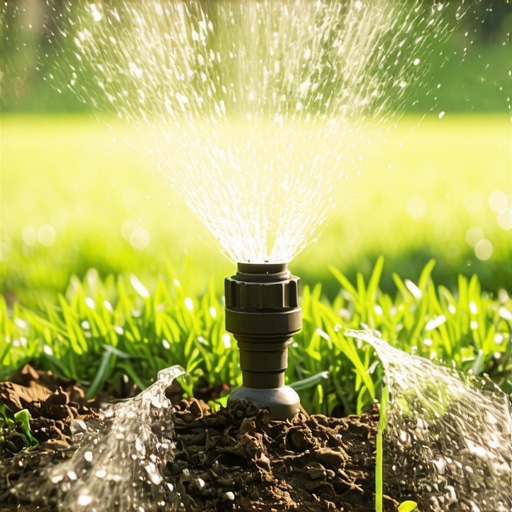
Imagine walking onto a job site where the client has just dropped $12,000 on high-end Tall Fescue sod, only to see Zone 4 gasping for air. The heads are barely weeping, water is bubbling at the base of the risers, and the turf is already showing signs of drought stress. This is not a mystery; it is a mechanical failure. Fixing low pressure in only one sprinkler zone requires a forensic understanding of hydraulic friction, valve mechanics, and soil physics. We do not guess in this industry. We measure. If your system was working last week and now it is not, something has changed in the subterranean architecture of your yard. It is either a physical breach, a mechanical restriction, or a biological intrusion. This guide breaks down the autopsy of a failing irrigation zone from the perspective of a contractor who has spent twenty years digging up the mistakes of amateurs.
The Diagnostic Starting Point: Is it the Source or the Circuit?
To diagnose low pressure in only one sprinkler zone, you must first isolate the solenoid valve from the lateral lines and sprinkler heads. If all other zones are functioning at the correct static pressure, the problem is localized to the specific hydraulic circuit downstream of that zone’s dedicated valve.
I always drill into my new crew members: if you don’t fix the soil grading first, every plant you put in the ground is just expensive compost. The same logic applies to irrigation. You can swap out heads all day, but if the underlying hydraulics are compromised, you are just wasting the client’s money. I remember a job in North Georgia where a ‘mow-and-blow’ hack had convinced a homeowner that they needed a new pump. I spent ten minutes looking at the Zone 3 valve and found a handful of pea gravel stuck in the diaphragm. Ten minutes of diagnostic work saved that client three grand. That is the difference between a professional and a laborer. You have to understand how the water moves before you start swinging a pickaxe.
“A retaining wall doesn’t fail because of the stone; it fails because of the water trapped behind it.” – Hardscape Engineering Axiom
The Valve Autopsy: The Most Common Point of Failure
When one zone loses pressure, the inline valve is the primary suspect because it acts as the gatekeeper for gallons per minute (GPM) flow. A partially obstructed valve diaphragm or a failing solenoid plunger will create a massive pressure drop that prevents heads from fully oscillating or popping up.
Inside every valve is a rubber diaphragm. This is a moving part, and like any moving part, it fatigues. Over time, the rubber can become brittle or develop a micro-tear. More commonly, if you’ve recently done a yard cleanup or added new landscaping beds, grit can enter the lines. Even a single grain of sand in the weep hole—the tiny orifice that allows the valve to equalize pressure—will prevent the diaphragm from opening fully. When that happens, the water is throttled. You might see 50 PSI at the backflow preventer, but by the time it chokes through that restricted valve, you’re looking at 15 PSI at the head. That isn’t enough to overcome the internal spring tension of a modern pop-up rotor.
How much pressure does a standard sprinkler head need to pop up?
Most commercial-grade sprinkler rotors require a minimum of 30 PSI to maintain a consistent spray pattern and 45 PSI for optimal distribution uniformity. If your static pressure drops below 25 PSI due to a leak or restriction, the internal wiper seal will fail to engage, causing water to leak from the riser.
| Pipe Type | Inside Diameter (ID) | Flow Rate (GPM) | PSI Loss per 100ft |
|---|---|---|---|
| Schedule 40 PVC | 0.75 in | 5 GPM | 2.4 PSI |
| Schedule 40 PVC | 1.00 in | 10 GPM | 2.2 PSI |
| Polyethylene (PE) | 0.75 in | 5 GPM | 3.8 PSI |
| Polyethylene (PE) | 1.00 in | 10 GPM | 3.2 PSI |
The Hydraulic Breach: Locating Underground Leaks
A lateral line break is the second most frequent cause of low pressure in one zone, often resulting from soil settling or root intrusion. When a poly pipe or PVC line fractures, the water follows the path of least resistance, bleeding off the dynamic pressure into the subsoil before it ever reaches the nozzles.
Detecting these leaks is an art. You aren’t always looking for a geyser. In heavy clay soils, a leak might never break the surface. Instead, you look for the ‘squish’ test. Walk the length of the zone’s lateral lines. If you feel a soft spot that wasn’t there yesterday, you’ve found your breach. I’ve seen sod install crews pin a piece of turf right through a 1-inch lateral line with a 6-inch landscape staple. It won’t show up immediately, but three weeks later, that hole has eroded into a cavity, and your pressure is gone. It will rot the roots of your new grass if you don’t dig it up and sleeve it with a proper coupling.
“Irrigation efficiency is not just about water timing; it is about the mechanical integrity of the delivery system to prevent localized anaerobic soil conditions.” – Texas A&M Agrilife Extension
What causes a sudden drop in water pressure in one irrigation zone?
A sudden drop is usually caused by a catastrophic pipe failure, a clogged internal filter, or a solenoid that has burnt out and cannot fully retract the plunger. Physical damage from aeration or trenching is also a common culprit in residential landscaping environments.
The Checklist: The 10-Minute Zone Pressure Audit
- Check the Flow Control: Ensure the thumb-screw on top of the valve isn’t accidentally turned down.
- Bleed the Valve Manually: Use the manual bleed screw to see if the heads pop up. If they do, the problem is electrical (solenoid).
- Inspect the Nozzle Filters: Remove the furthest head in the run and check the plastic screen for sediment or algae.
- Voltage Test: Use a multimeter to ensure the irrigation controller is sending a full 24V to the zone. Low voltage means a weak magnetic field in the solenoid.
- The Probe Test: Use a soil probe to check for localized saturation along the pipe path, indicating a subsurface leak.
The Biological Factor: Root Intrusion and Soil Compaction
In mature landscaping, the biggest enemy of your irrigation system is the very plants it feeds. Tree roots are opportunistic. They will find a microscopic weep in a PVC fitting and grow into it, eventually filling the entire diameter of the pipe with a root mass that acts like a biological plug. This is why I tell my clients: do not plant Willows or Maples directly over your main lines. It is a recipe for a $2,000 repair bill in five years. Furthermore, if you have a high-traffic area, soil compaction can actually crimp polyethylene pipe. If a heavy mower or a truck drives over a shallow line in wet soil, that pipe can be crushed to half its original diameter. You get the same GPM, but the friction loss skyrockets, and your heads stop performing. Don’t skip the depth requirements during installation. 12 inches is the minimum for a reason.