
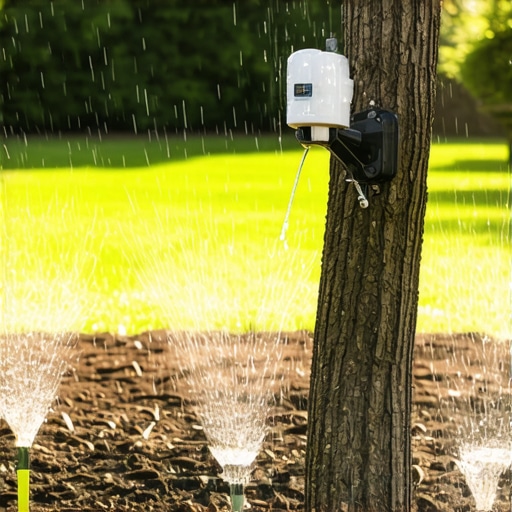
The Anatomy of an Irrigation Failure
Your lawn is turning a crispy shade of dormant brown while the sky is blue and the thermometer is hitting ninety. You look at your controller and it says ‘Sensor Active’ or ‘Rain Delay.’ There has not been a drop of rain in ten days. This is not a ghost in the machine; it is a failure of hardware, physics, or maintenance. Most homeowners treat their irrigation system like a set-it-and-forget-it appliance. In reality, it is a complex hydraulic network governed by a low-voltage electrical circuit. When that circuit breaks, your landscaping investment starts to die.
The Apprentice Lesson: Why Fundamentals Matter
I always drill into my new crew members: if you don’t fix the soil grading and the control logic first, every plant you put in the ground is just expensive compost. Last summer, I had a greenhorn who spent six hours doing a yard cleanup and a fresh sod install for a client in a high-end subdivision. By Friday, the sod was lifting at the edges. The homeowner was furious, claiming the irrigation was broken. My apprentice had checked the heads, but he never looked at the sensor mounting. The sensor was tucked under a deep eave where it never got sun, but it was caked in wet debris from a gutter overflow. It was staying saturated while the yard baked. I made him hand-water that 2,000 square foot plot for three days to save the crop. It was a $1,200 mistake in labor alone. Technical wisdom starts with the sensor.
“Rain sensors, specifically those using hygroscopic disks, are designed to interrupt the common wire of the irrigation controller. If these disks fail to dry out due to mold, debris, or improper placement, the system remains in a permanent ‘off’ state regardless of soil moisture.” – Irrigation Association Technical Manual
Why Your Rain Sensor is Stopping Your Sprinklers When it’s Dry
Your rain sensor is stopping your sprinklers because the hygroscopic disks inside the unit are either saturated, physically damaged, or the electrical bypass circuit has a short. If the sensor cannot dry out at the same rate as your soil, it will continue to signal the controller to stay off. This usually happens due to clogged vents, insect nesting, or shady placement.
The Mechanics of the Hygroscopic Disk
Most modern residential rain sensors do not use a cup to catch water. Instead, they use a stack of cork-like disks made of a synthetic material that expands when wet. When it rains, these disks swell and press a micro-switch. This switch opens the common wire circuit, cutting power to your valves. For the system to resume, the disks must contract. If you have a layer of algae or dirt on those disks, they will hold moisture like a sponge. They won’t shrink. Your controller thinks it is still a monsoon outside. It is simple biology and physics. Dirt holds water. Water expands the disk. The circuit stays open.
Common Hardware Failures and Obstructions
Debris is the number one enemy of a functional irrigation system. During a standard yard cleanup, most people ignore the sensor on the roofline. Spiders love the small vent holes in sensor housings. They spin webs that trap moisture and prevent airflow. Without airflow, the disks cannot dry. Furthermore, if you recently had a sod install, the increased humidity from the new grass and the frequent watering cycles can actually keep a poorly placed sensor damp enough to prevent it from resetting. Check for ‘wasp mud’ in the vents. It happens more than you think.
| Sensor Symptom | Likely Root Cause | Required Technical Fix |
|---|---|---|
| Sensor Active (Dry Weather) | Debris-clogged hygroscopic disks | Disassemble and clean or replace disks |
| Intermittent Signal Loss | Battery depletion (Wireless units) | Replace 3V or 9V lithium cell |
| Constant Rain Delay | Wiring short in common wire | Trace wire for spade/shovel damage |
| No Shutdown During Rain | Sensor bypassed at controller | Toggle switch from ‘Bypass’ to ‘Active’ |
How much modified gravel do I need for a patio base?
While this seems unrelated to irrigation, the drainage around your hardscape dictates your sensor placement. If you are building a patio near your irrigation heads, you need a minimum of 4 to 6 inches of compacted 21A or CR-6 modified gravel. Proper drainage ensures that standing water near the house doesn’t create a micro-climate of high humidity that trips your rain sensor or rots your foundation. Never place a sensor near a high-moisture zone like a drainage swale or a downspout exit.
How do I test if my rain sensor is actually broken?
You need a multimeter and a ladder. Set your multimeter to Ohms to check for continuity. When the sensor is dry, the circuit should be closed (low resistance). Manually depress the spindle on top of the sensor. The circuit should open (infinite resistance). If the resistance stays high even when the disks are bone dry, the internal micro-switch is fried. Replace the unit. Don’t try to solder it. It is a waste of time. These units are exposed to UV radiation and thermal expansion; they are consumables with a 5 to 7 year lifespan.
“Irrigation efficiency is not just about the delivery of water, but the precision of the interruption. A failed sensor can lead to a 40% increase in water waste or a total loss of turf during drought stress.” – Texas A&M AgriLife Extension
The Relationship Between Irrigation and Soil Microbiology
When your sensor fails and your water stays off, you aren’t just killing grass. You are murdering the soil microbiome. Most beneficial bacteria and mycorrhizal fungi require a consistent moisture film on soil particles to survive. When the soil bone-dries because of a faulty $50 sensor, those populations collapse. This makes your yard more susceptible to disease once you finally get the water back on. It is a vicious cycle. You need deep, infrequent watering to force roots to chase the water down, but you cannot have gaps of ten days in the middle of July.
Hardscape Engineering and Irrigation Conflict
I see this during landscaping projects all the time. A contractor installs a beautiful retaining wall and moves the rain sensor to a fence post to get it out of the way. If that fence post is under a tree canopy, the sensor is useless. Tree leaves hold water long after the rain stops, dripping onto the sensor. This keeps the system off while the lawn, which is in full sun, is screaming for hydration. Placement is engineering. It is not an aesthetic choice. Put the sensor on the highest point of the roof, away from trees and away from the path of the sprinkler heads themselves.
Rain Sensor Troubleshooting Checklist
- Check the controller display for a ‘Sensor Bypass’ or ‘Off’ icon.
- Inspect the sensor housing for spider webs, bird droppings, or mud-dauber nests.
- Ensure the sensor is not positioned directly over a sprinkler head’s spray path.
- Verify that wireless sensors have a strong signal strength (check for LED blinks).
- Manually press the test spindle to see if the controller reacts instantly.
- Confirm the ‘Rain Sensitivity’ dial is not set to the lowest possible threshold (e.g., 1/8 inch).
If you have just finished a sod install, your irrigation is your life support system. You cannot afford a sensor malfunction. New sod needs to be kept moist for the first 14 to 21 days until the roots knit into the soil. If your sensor trips because of a light morning dew, your $3,000 sod investment will turn into $3,000 of dead thatch. If you are in doubt during the establishment phase, simply bypass the sensor at the controller. It is better to over-water for a week than to let the roots desiccate because a sensor was feeling sensitive.
The Impact of Hydrostatic Pressure on Irrigation Lines
We often talk about rain sensors, but remember that the sensor controls the valves. If your sensor is working but you still see dry spots, check your pressure. High hydrostatic pressure can cause ‘misting’ at the heads. Misting water drifts away in the slightest breeze and never hits the ground. This makes the sensor think it has rained (if it’s in the mist path) while the soil stays dry. It is a feedback loop of failure. Install a pressure regulator if your static pressure exceeds 60 PSI. Your equipment will last longer and your grass will actually get the water it needs.