
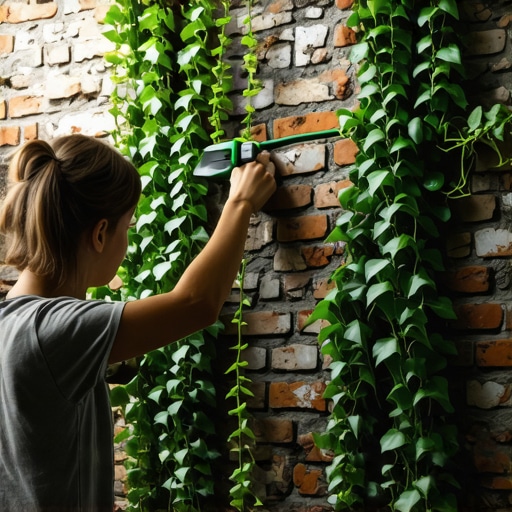
The Anatomy of Masonry Destruction: Why Ivy Removal is an Engineering Necessity
Removing English Ivy (Hedera helix) from a brick structure is not a cosmetic upgrade; it is a forensic rescue mission for your home’s structural integrity. When English ivy anchors itself to masonry, it utilizes thousands of tiny, suction-cup-like rootlets that secrete organic acids, specifically designed to dissolve minerals and create a mechanical bond with the brick surface. This process leads to moisture entrapment, which initiates a freeze-thaw cycle that can pulverize mortar joints and cause brick spalling. I always drill into my new crew members: if you do not fix the soil grading and handle the yard cleanup properly first, every plant you put in the ground is just expensive compost. I have seen too many apprentices try to rip ivy off a wall in one go, only to take three inches of 1920s lime mortar with it. You have to understand the biology of the plant to save the engineering of the wall. Stop looking for a shortcut and start looking at the chemistry of the bond.
“The presence of climbing plants on historic masonry can increase the rate of decay by trapping moisture against the surface and physically disrupting the mortar through root penetration.” – National Center for Preservation Technology and Training
The Forensic Step-by-Step for Safe Ivy Extraction
The safest way to remove ivy is a multi-week process that involves chemical dehydration and mechanical precision to ensure the brick and mortar remain intact. You must begin by severing the main trunks at the base of the structure, creating a 6-inch gap between the ground-rooted vine and the wall-climbing foliage. This cuts off the vascular system of the plant, forcing the rootlets to lose their turgor pressure. Over the next 14 to 21 days, the ivy will turn brown and brittle. Only then can you begin the extraction. Use a wooden scraper or a stiff nylon brush; never use a steel-wire brush or a metal pry bar, as these will score the brick face and create new entry points for water. If you encounter stubborn ‘feet’ or suckers, a solution of 20% acetic acid (industrial vinegar) can help break down the organic glue, but you must neutralize the area with water immediately after to prevent acid etching of the masonry.
How long does it take for ivy to die after cutting the roots?
After severing the main stems, it typically takes two to three weeks for the foliage to turn brown and the aerial rootlets to lose their grip. Do not attempt to pull the vines while they are still green and flexible, as the bond is at its strongest point during active growth.
Will pressure washing damage brick mortar?
Using a pressure washer on brick is dangerous if you exceed 800 to 1,000 PSI or use a zero-degree nozzle. High pressure can blast away weathered mortar and force water deep into the wall cavity, leading to internal rot and efflorescence.
| Method | Risk Level | Effectiveness | Required Tools |
|---|---|---|---|
| Direct Ripping (Green) | High | Low | Gloves, Crowbar |
| Chemical Dehydration | Low | High | Loppers, Time |
| Thermal Scorch | Extreme | Moderate | Propane Torch |
| Vinegar Saturation | Moderate | High | 20% Acetic Acid, Sprayer |
Restoring the Perimeter: Yard Cleanup and Soil Stabilization
Once the ivy is cleared, you are left with a landscaping vacuum that is often filled with dormant seeds and depleted soil. This is the critical phase for yard cleanup. Ivy is a nitrogen hog; it leaves the soil acidic and stripped of microbial life. To prepare for a successful sod install or new planting bed, you must excavate the top 4 inches of soil to remove the primary root mass and any remaining runners. If you leave even a 2-inch segment of root, it will resprout within a single season. After excavation, I recommend a heavy application of composted organic matter to restore the soil microbiology. If you are transitioning to a lawn, ensure your irrigation system is recalibrated. A brick wall that previously stayed damp under an ivy shroud will now reflect heat, increasing the evapotranspiration rate of the surrounding turf. You will need to adjust your irrigation zones to provide deep, infrequent watering—exactly 1 inch per week—to force new roots to chase the moisture down into the subsoil.
“A retaining wall doesn’t fail because of the stone; it fails because of the water trapped behind it, a problem exacerbated by invasive root systems that clog drainage weeping holes.” – Hardscape Engineering Axiom
The Post-Removal Maintenance Checklist
- Inspect Mortar Joints: Use a screwdriver to poke the mortar; if it crumbles like sand, you need a professional tuckpointing job.
- Check for Hydrostatic Pressure: Ensure the ground slopes away from the foundation at a rate of 1 inch per foot for the first 6 feet.
- Flush Irrigation Lines: Ivy roots often infiltrate irrigation emitters; run a pressure test to ensure no clogs exist.
- Monitor for Re-emergence: Spot-treat any new shoots immediately with a systemic herbicide containing glyphosate or triclopyr.
Precision matters. You cannot rush the recovery of a 100-year-old wall. It will rot if you don’t manage the moisture. Don’t skip the soil prep. Your landscaping is only as good as the foundation it sits on. By following this technical protocol, you ensure that your yard cleanup and subsequent sod install lead to a permanent solution rather than a recurring maintenance nightmare. It is about the long game. Take the time to do it right, or don’t do it at all. { “@context”: “https://schema.org”, “@type”: “FAQPage”, “mainEntity”: [ { “@type”: “Question”, “name”: “How long does it take for ivy to die after cutting the roots?”, “acceptedAnswer”: { “@type”: “Answer”, “text”: “It typically takes two to three weeks for the ivy to turn brown and for the aerial rootlets to lose their grip after the main stems are severed at the base.” } }, { “@type”: “Question”, “name”: “Will pressure washing damage brick mortar?”, “acceptedAnswer”: { “@type”: “Answer”, “text”: “Yes, if the pressure exceeds 1,000 PSI or a narrow nozzle is used, it can destroy weathered mortar and cause structural water damage.” } } ] }