
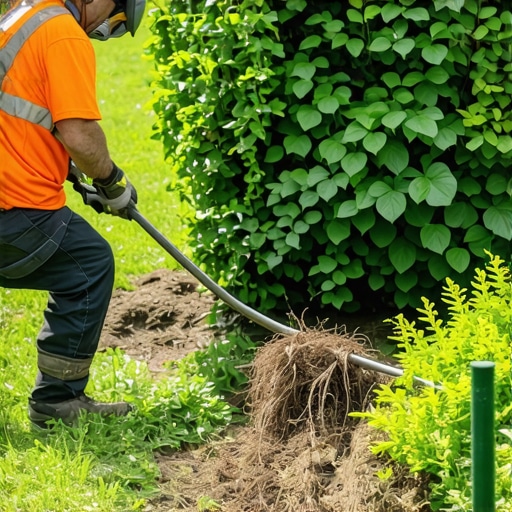
The Biological War Under Your Fence Line
To effectively dispose of invasive vines without regrowth, you must utilize the cut-stump method combined with a systemic herbicide like triclopyr. Simply pulling or mowing triggers dormant bud activation in the root crown, leading to aggressive multi-stemmed recovery within weeks of the initial yard cleanup.
I always drill into my new crew members: if you don’t fix the soil grading and address the root architecture first, every plant you put in the ground is just expensive compost. I remember an apprentice who spent eight hours pulling English Ivy by hand in a client’s backyard. He was proud of the clear dirt. Two months later, the yard looked like a jungle again because those adventitious roots were still buried three inches deep, feeding on the high-nitrogen fertilizer the homeowner applied for their new sod install. You can’t just treat the symptom; you have to kill the engine. Most invasive species like Oriental Bittersweet or Japanese Honeysuckle have evolved to survive mechanical trauma. When you snap a vine, the plant experiences a hormonal shift. Auxins drop, cytokinins rise, and the nodes below the break point explode with new growth. It is a biological survival mechanism that amateurs ignore at their own peril.
“A retaining wall doesn’t fail because of the stone; it fails because of the water trapped behind it. Similarly, an invasive species management plan fails when the metabolic pathway of the plant is not interrupted.” – Hardscape Engineering Axiom
The Science of Vascular Translocation
Vines are essentially hydraulic pumps. To kill them, you need to hijack their transport system. The cambium layer, that thin green ring just under the bark, is the highway for nutrients. In late summer and early fall, deciduous vines are pulling sugars down into the root system for winter storage. This is the optimal window for a systemic herbicide application. If you spray in the spring, the sap flow is upward, pushing the chemical out and resulting in a