
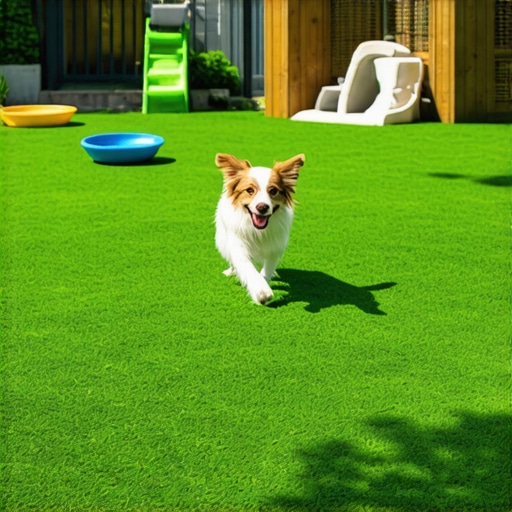
The Engineering of Canine-Resistant Landscapes
Designing a landscape for dogs requires a shift from aesthetic-only thinking to civil engineering and plant biology. I always drill into my new crew members: if you don’t fix the soil grading first, every plant you put in the ground is just expensive compost. Most homeowners want a lush green square, but dogs are high-impact biological machines that exert significant PSI on turf and dump concentrated nitrogen loads that chemically scorch traditional cool-season grasses. We don’t just build yards; we build resilient ecosystems that handle 60-pound paws and 7.0 pH urine streams.
“A retaining wall doesn’t fail because of the stone; it fails because of the water trapped behind it.” – Hardscape Engineering Axiom
The Physics of Soil Compaction and Nitrogen Loading
Traditional sod install projects often fail in dog-heavy environments because of two factors: soil compaction and urea concentration. When a dog runs, their paws compress the soil, collapsing the macropores required for oxygen to reach the root zone. This creates an anaerobic environment where landscaping plants suffocate and die. Furthermore, canine urine is essentially a concentrated liquid fertilizer. While small amounts of nitrogen help, the 3000+ ppm concentration in a single spot causes osmotic stress, drawing water out of the grass blades and killing them. To solve this, we move toward species with higher nitrogen tolerance and aggressive lateral growth patterns.
The Apprentice Lesson: Why Grading is Everything
I remember a project five years ago where we were called to fix a ‘mud pit’ in a backyard. The owner had spent thousands on high-end sod every spring for three years. Within months, it was gone. The problem wasn’t the grass; it was a 2% slope that directed all runoff into a low spot where the dogs played. The soil stayed saturated, the grass roots rotted, and the dogs turned the remaining organic matter into a slurry. We had to excavate 8 inches of clay, install a 4-inch irrigation and drainage system with a perforated French drain, and regrade the entire area to a 1:50 slope. Only then did the ground-cover stand a chance. It was a lesson in the physical reality of the site over the visual desire of the client.
Choosing the Right Grass Alternatives
Selecting the right ground cover involves analyzing the specific biome of your yard and the traffic patterns of your pets. We often look at yard cleanup as the first step to identifying where the high-traffic ‘dog highways’ are located. These paths are where you ditch the grass entirely in favor of hard-wearing alternatives.
| Alternative | Traffic Resistance | N-Tolerance | Maintenance Need |
|---|---|---|---|
| Microclover | High | Excellent | Low |
| Creeping Thyme | Medium | Moderate | Very Low |
| Kurapia | Very High | High | Low |
| Decomposed Granite | Extreme | N/A | Medium |
How much modified gravel do I need for a dog run base?
For a standard dog run, you should calculate for a 4-inch deep base of 2A modified gravel to ensure structural stability and irrigation efficiency. Multiply the square footage by 0.33 to get the cubic feet, then divide by 27 to find the total cubic yards required for the project. Don’t skip the compaction phase; use a plate tamper until you get a 95% Proctor density.
“Microclover (Trifolium repens var. ‘Pirouette’) is a resilient alternative to turf grass, offering high nitrogen fixation and a lower growth habit that withstands heavy foot traffic better than standard cultivars.” – Penn State Agricultural Extension
Hardscape Integration and Drainage Logistics
Sometimes the best ‘grass’ isn’t grass at all. In heavy use areas, we install a multi-layered drainage system. This begins with a 4-inch layer of clean #57 stone, followed by a geotextile fabric, and topped with a 2-inch layer of pea gravel or wood chips. This allows liquid waste to pass through the profile immediately, preventing the surface from becoming a bio-hazard. If you are using irrigation, adjust your zones to provide deep, infrequent flushing to move salts through the soil profile and prevent buildup.
Step-by-Step Dog-Friendly Installation Checklist
- Conduct a yard cleanup to remove all toxic flora (e.g., Sago Palm, Azaleas).
- Test soil pH and compaction levels; aerate to a depth of 6 inches if needed.
- Install sub-surface drainage pipes for areas with less than 2% slope.
- Select a seed mix or plug variety (like Microclover or Kurapia) suited for your USDA zone.
- Install a temporary fence to keep dogs off the new growth for at least 4-6 weeks.
- Set up automated irrigation to pulse water in 5-minute increments for cooling.
Maintaining the Bio-Balance
Once established, these alternatives require different management than a standard lawn. Do not use high-nitrogen synthetic fertilizers; the clover or legumes will fix their own nitrogen. Instead, focus on mechanical aeration and seasonal top-dressing with organic compost. If you see thinning in high-wear areas, overseed immediately. It won’t fix itself. You have to be proactive. If the soil gets hard, the plants die. Keep the soil open and the drainage clear. It is a biological system, not a static product.”,