
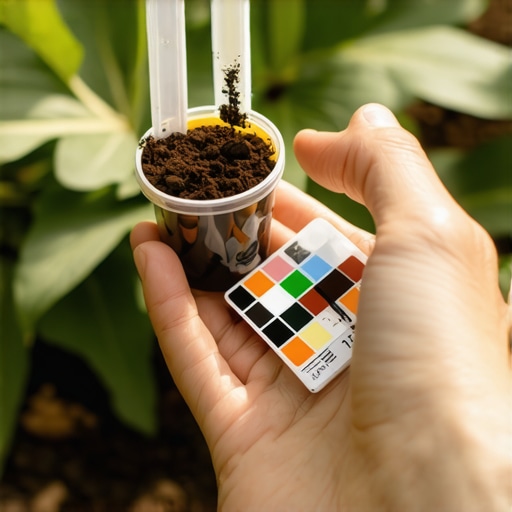
The Chemical Nightmare: Why Your Last Sod Install Likely Failed
A homeowner called me in a panic last spring after they completely torched their front lawn by applying three bags of high-nitrogen fertilizer to a soil with a pH of 8.2. They thought the yellowing meant the grass was hungry; in reality, the high alkalinity had locked out iron and manganese, making the nutrients unavailable to the roots. By adding more fertilizer, they simply spiked the salt index, leading to osmotic stress and a total root-zone collapse. This is the reality of guessing instead of testing. If you don’t understand the chemical profile of your dirt, you are not landscaping; you are gambling with high-priced compost. I see this every day. Homeowners spend thousands on a sod install or a yard cleanup only to watch the investment die because they ignored a simple logarithmic scale of hydrogen ions. Soil pH is the gatekeeper of your yard’s biology. If that gate is closed, no amount of irrigation or expensive seed will save you.
The Best Soil pH Testing Kits of 2026: Precision Tools for the Professional Homeowner
Soil pH testing kits for 2026 allow homeowners to measure the acidity or alkalinity of their substrate, directly influencing nutrient uptake for new sod installs and landscaping projects. Using calibrated digital meters or liquid reagents, you can prevent iron chlorosis and ensure your irrigation water isn’t sabotaging your turf’s health by shifting the soil chemistry over time.
“Soil pH is the single most important chemical property of soil because it controls the availability of essential plant nutrients.” – Penn State Agricultural Extension
When we talk about pH, we are talking about the concentration of hydrogen ions. It is a logarithmic scale, meaning a pH of 5.0 is ten times more acidic than 6.0. In my 20 years of running a crew, I have seen ‘hacks’ try to fix a lawn by just throwing lime at it without a single measurement. That is malpractice. For 2026, the technology has shifted toward high-accuracy digital probes that integrate with mobile apps to track trends. However, the old-school liquid reagent kits still have a place for those who want to see the chemical reaction with their own eyes. You need to know if you are dealing with heavy red clay that holds onto minerals or sandy loam that leaches them out during every rainstorm.
Comparing the Top Testing Methodologies for 2026
| Kit Type | Accuracy Level | Best Use Case | Maintenance Needs |
|---|---|---|---|
| Digital Glass Electrode | +/- 0.1 pH | Professional Landscaping | Calibration Buffers |
| Liquid Colorimetric | +/- 0.5 pH | Yard Cleanup Baseline | Refill Reagents |
| Bluetooth Soil Spikes | +/- 0.3 pH | Irrigation Monitoring | Battery Replacement |
| Lab Analysis (Mail-in) | Gold Standard | Initial Sod Install Prep | One-time Fee |
The Forensic Breakdown: How pH Affects Your Landscape Engineering
Why does pH matter so much for your landscaping? It comes down to Cation Exchange Capacity (CEC). Most essential nutrients like Nitrogen (N), Phosphorus (P), and Potassium (K) are most available to plants when the soil pH is between 6.0 and 7.0. Once you drift into the 8.0 range, phosphorus starts binding with calcium, becoming an insoluble solid that your grass cannot eat. It is like being in a room full of food but having your jaw wired shut. This is why a yard cleanup must always start with a soil test. If you are fighting weeds like plantain or dandelion, they might be thriving because your soil is too alkaline for the turf grass to compete. You aren’t just killing weeds; you are changing the environment so the weeds can’t survive. Don’t skip this. A $30 kit can save a $3,000 sod job.
How much does a professional soil test cost in 2026?
A basic professional soil test from an agricultural extension office typically costs between $15 and $50. In 2026, high-end digital kits for home use range from $80 to $250, but they provide real-time data that is essential for managing complex irrigation systems and sensitive sod installs during the first critical growing season.
Is a digital pH meter more accurate than test strips?
Yes, digital meters with glass electrodes are significantly more accurate than paper test strips. Test strips are often subjective and difficult to read if the soil slurry is dark or muddy. A calibrated digital probe provides a specific numerical value, which is vital when you are calculating the exact poundage of elemental sulfur or lime needed to adjust your landscaping beds.
The Master Landscaper’s Pre-Planting Soil Protocol
Before any of my guys put a shovel in the ground for a new landscaping project, we follow a strict protocol. We don’t care what the neighbor’s yard looks like. Every plot of land is a micro-climate. If you’re in a region with heavy clay, your pH will be more stable but harder to change. If you have sandy soil, your pH can swing wildly with every heavy irrigation cycle. You must test in multiple zones: the shaded area under the oaks will have a vastly different chemistry than the full-sun area near the concrete driveway, where lime leaches from the pavers into the soil.
- Step 1: Sample Collection. Use a clean stainless steel probe to take 10 samples at a 6-inch depth. Avoid using garden trowels that might be contaminated with rust or old fertilizer.
- Step 2: Homogenization. Mix the samples in a clean plastic bucket. Do not use metal buckets, as they can leach micronutrients into the sample and skew the results.
- Step 3: Moisture Check. Ensure the soil is moist but not saturated. Testing bone-dry soil or a mud puddle will lead to inaccurate sensor readings.
- Step 4: Calibration. If using a digital meter, always calibrate with a pH 4.0 and 7.0 buffer solution before the first test of the season. No exceptions.
- Step 5: Documentation. Record the date, weather conditions, and the specific area of the yard. This data is your roadmap for the next three years of maintenance.
“Nutrient management is futile if the soil pH is outside the 6.0 to 7.0 range for most cool-season grasses.” – Agronomy Manual of Turfgrass Science
How much modified gravel do I need for a patio base?
While soil pH covers the chemistry, physics matters for hardscapes. To calculate modified gravel (2A or 411), you need a minimum 6-inch compacted base for a standard patio. Multiply the total square footage by 0.5 feet, then divide by 27 to get cubic yards. Always add a 10 percent buffer for compaction loss. Don’t let a contractor tell you 4 inches is enough; it will settle and heave within two winters.
Remediation: Fixing the Chemistry After the Test
Once you have your numbers, the work begins. If your pH is low (acidic), you need calcitic or dolomitic lime. If it is high (alkaline), you need elemental sulfur or aluminum sulfate. But here is the professional secret: you cannot change pH overnight. It is a chemical reaction that requires soil microbes and moisture to complete. If you are doing a sod install, you should ideally adjust the soil three to six months before the grass arrives. If you are doing a yard cleanup now, get your sulfur down immediately so the winter rains can help it react. Also, check your irrigation water. In many municipal areas, the water is treated to be slightly alkaline to protect the city pipes from corrosion. Over time, your irrigation can actually raise the pH of your soil, fighting against your efforts to keep it acidic for plants like azaleas or blueberries. Monitor the water, monitor the soil, and your plants will actually grow instead of just surviving. It’s science, not luck.