
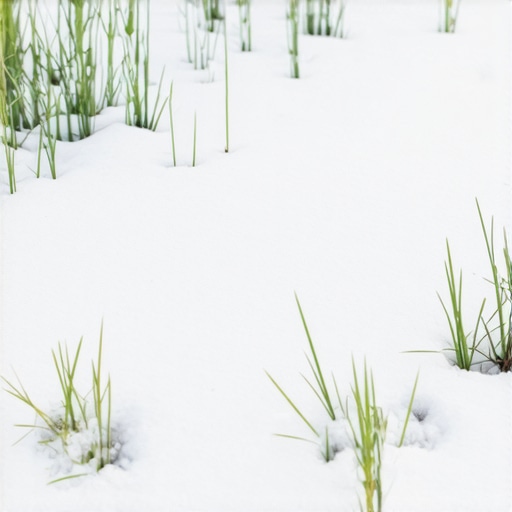
The Science of Dormant Seeding: A Strategic 2026 Advantage
Dormant seeding is the specialized horticultural practice of applying grass seed during the late fall or early winter when soil temperatures have dropped below 50 degrees Fahrenheit, preventing immediate germination until the following spring. This technique utilizes freeze-thaw cycles to naturally incorporate seed into the soil matrix, ensuring the earliest possible spring emergence and superior root establishment before summer heat stress begins.
Most homeowners and ‘mow-and-blow’ outfits think the growing season ends when the first frost hits. They are wrong. As a veteran with two decades in the dirt, I look at the winter landscape as a biological staging ground. I always drill into my new crew members: if you don’t fix the soil grading and site preparation first, every plant or seed you put in the ground is just expensive compost. I have seen countless $5,000 yard cleanups wasted because a contractor threw seed on top of compacted, frozen clay without understanding the physics of soil heaving. Success in 2026 requires more than just scattering grain; it requires an engineering mindset. You are essentially using the Earth’s natural expansion and contraction to do the work of a mechanical aerator.
“Dormant seeding success relies heavily on the timing of application; seed must be applied when temperatures are low enough to prevent germination, yet before heavy snow cover precludes soil contact.” – University of Minnesota Extension: Lawn Care Manual
The Physics of Freeze-Thaw Incorporation
When the ground freezes, moisture in the soil expands, creating small fissures and cracks. As it thaws, these cracks collapse. When you dormant seed, the seeds fall into these microscopic canyons. This provides the seed-to-soil contact necessary for success without you having to lift a rake in the spring. If you miss this window, you are stuck battling the spring mud, which is a recipe for soil compaction. Compaction is the silent killer of turf. It chokes off oxygen to the roots and turns your yard into a parking lot. Use a high-quality Kentucky Bluegrass or Perennial Ryegrass blend for this. Cheap big-box store ‘contractor mix’ is 20% weed seed and 30% filler. Avoid it like the plague.
| Seeding Method | Timing Window | Root Depth Potential | Water Requirement |
|---|---|---|---|
| Standard Spring | April – May | Shallow (2-3″) | High / Daily |
| Standard Fall | Sept – Oct | Moderate (4-5″) | Moderate |
| Dormant Seeding | Nov – Jan | Deep (6″+) | Natural Precipitation |
How much grass seed for 1000 sq ft in winter?
For dormant seeding, you must increase your seeding rate by 20% to 30% to account for seed decay and predation by birds or rodents during the winter months. For a new sod install alternative using seed, aim for 6 to 8 pounds of Pure Live Seed (PLS) per 1000 square feet, ensuring the distribution is uniform across the prepared soil surface.
The Technical Workflow for Winter Success
Before the first major snowfall, you need to conduct a thorough yard cleanup. Remove all leaf litter and debris. If you leave a layer of oak leaves under the snow, they will trap moisture and create a fungal breeding ground known as Snow Mold. Once the ground is clear, check your grading. Water must move away from the foundation. If you have low spots, fill them with a 70/30 mix of screened topsoil and coarse sand. Do not use ‘fill dirt’ from a random construction site; it is likely infested with invasive rhizomes.
- Step 1: Soil Test: Verify your pH is between 6.2 and 7.0. If it is acidic, apply pelletized lime now.
- Step 2: Core Aeration: Pull 3-inch plugs to relieve compaction. This creates ‘pockets’ for the seed to settle into.
- Step 3: Seed Selection: Use certified blue-tag seed. Check the ‘weed seed’ percentage on the label; it should be 0.01% or lower.
- Step 4: Application: Use a broadcast spreader. Drop the seed right before a light snow. The snow acts as a protective mulch.
- Step 5: Documentation: Mark your irrigation heads. You do not want to hit them with a snowplow or find them broken in the spring.
Will birds eat my grass seed in winter?
Birds will opportunisticly feed on surface-applied seed, but the freeze-thaw cycle mentioned earlier mitigates this by pulling the seed into the soil profile. Applying seed just before a forecasted snowfall provides a physical barrier, hiding the seed from avian predators and keeping it hydrated through the sublimation of snow. It is a natural camouflage.
“A retaining wall doesn’t fail because of the stone; it fails because of the water trapped behind it, and a lawn doesn’t fail because of the cold; it fails because of poor drainage.” – Hardscape Engineering Axiom
Do not forget the 811 call if you are doing any deep grading or installing French drains as part of your landscaping prep. Even in winter, utility lines are active. If you hit a gas line because you were too lazy to call for a mark-out, your 2026 lawn project will be the least of your worries. Once the seed is down, stay off the lawn. Foot traffic on frozen turf can shatter the crowns of existing grass and compact the soil where your new seeds are trying to bed down. Patience is a tool, use it. The rewards will be a deep-green, resilient turf that wakes up three weeks earlier than your neighbor’s. They will be out there struggling with a mud-pit while you are already on your first mow.