
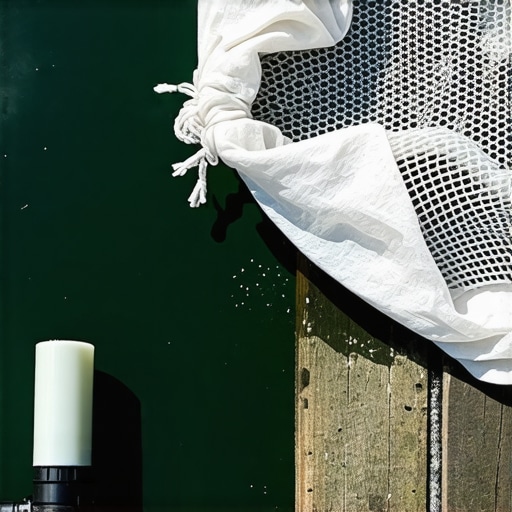
You hear it before you see it. That high-pitched, metallic whine echoing from the skimmer box or the center of the basin. It is the sound of a centrifugal pump dying a slow, painful death. By the time the water flow over your spillway drops to a trickle, the damage is likely internal. In my twenty years of managing high-end aquatic installs, I have seen more pumps fried by simple negligence than by actual mechanical defects. If you are operating a pond in 2026 without a dedicated pre-filter bag, you are essentially asking your equipment to chew through glass and hair. It will fail. It is not a matter of if, but when.
Why Your Pond Pump Keeps Clogging and Burning Out
To fix pond pump clogs, you must implement a pre-filter bag to intercept debris before it reaches the impeller. This prevents mechanical failure, reduces anaerobic bacterial buildup, and maintains consistent GPH flow rates by acting as a secondary physical barrier for organic matter. This setup is the only way to protect the tight tolerances of modern asynchronous motors. Unlike the old-school magnetic drive pumps that could handle a bit of grit, 2026 high-efficiency models are sensitive to even minor particulate matter. When debris enters the volute, it creates friction. Friction creates heat. Heat warps the shaft seals. Once those seals go, the motor is toast.
“A pump is a precision instrument, not a garbage disposal. Failure to mitigate particulate intake leads to immediate cavitation and thermal overload.” – International Hydraulic Standards Manual
I recently got called out to tear up a $30,000 patio that was sinking because the previous contractor failed to account for a leaking pond basin that sat right against the edge. The homeowner thought the pump was just ‘weak’ because it kept clogging every three days. In reality, the pump was cavitating so hard it cracked the internal housing, leaking water into the sub-base of the hardscape. The saturated modified gravel lost its load-bearing capacity, and the pavers began to dive. All of this because they didn’t want to spend forty bucks on a high-density mesh pre-filter bag. I had to excavate three tons of wet base material just to get to the root of a problem that started with a handful of pine needles and some string algae.
The Mechanical Anatomy of a Clog
When we talk about yard cleanup and pond maintenance, we are really talking about managing the nitrogen cycle and organic loading. Leaves, fish waste, and wind-blown dust create a slurry. Without a pre-filter, this slurry is sucked directly into the intake screen. The intake screen on most pumps is too coarse; it lets through ‘micro-debris’ that eventually wraps around the impeller shaft. This is often where the ‘hairball’ effect begins. Once a few strands of string algae catch the shaft, they act as a net, capturing finer silts. This increases the torque required to spin the motor, drawing more amps and spiking your electricity bill before it finally trips the GFCI or melts the windings.
How much modified gravel do I need for a patio base?
For a standard pedestrian patio, you need a minimum of 6 inches of compacted modified gravel (2A or 411), which equates to roughly 1 ton of stone per 50 square feet at that depth. When pond pumps fail and leak into this base, the hydrostatic pressure increases, destabilizing the compacted sub-grade and leading to significant paver settlement. Always ensure your pond plumbing is isolated from your hardscape structural zones to prevent these catastrophic failures.
| Mesh Type | Micron Rating | Best For | Cleaning Frequency |
|---|---|---|---|
| Coarse Industrial | 1000+ Microns | Large leaf debris / Heavy fish load | Bi-weekly |
| Fine Professional | 500 Microns | String algae / Decaying organic matter | Weekly |
| Ultra-Fine Bio-Mesh | 200 Microns | Silt / Pollen / Micro-particulates | Every 2-3 days |
Choosing the right mesh size is a balancing act between filtration and flow. If you go too fine, the bag itself becomes the clog, starving the pump of water and causing the same cavitation issues you are trying to avoid. For most residential 2026 setups, a 500-to-800 micron bag provides the optimal delta between protection and maintenance. You want a bag that is oversized for the pump; a larger surface area means the water can still find a path through even if 50 percent of the bag is covered in muck.
The Irrigation and Sod Connection
Landscaping is a holistic system. If your pond is used as a reservoir for your irrigation system, a clogged pump doesn’t just mean a dead waterfall; it means your new sod install is going to brown out in forty-eight hours. I have seen guys put down five thousand dollars worth of high-quality fescue sod, only for the pond pump to clog, the sprinklers to fail, and the whole yard to bake in the July sun. Your yard cleanup routine must include a physical inspection of the pump intake. Don’t trust the auto-fill to tell you if the pump is working; check the actual GPH output at the discharge point.
Will a filter bag reduce my pump’s water flow?
A properly sized pre-filter bag will not significantly reduce GPH flow, provided the surface area of the bag is at least four times the size of the pump’s intake volute. By distributing the suction pressure over a larger area, the bag prevents vortexing and ensures the motor operates within its designed RPM range without unnecessary strain.
“Effective filtration begins at the point of intake. By managing solids at the source, you extend the operational life of mechanical seals by up to 300 percent.” – Agronomy Mechanical Quarterly
The 2026 Maintenance Checklist
- Inspect the mesh integrity: Check for tears or thinning of the nylon every month.
- De-sludge the bag: Turn off the pump, remove the bag, and spray it inside-out with a high-pressure nozzle.
- Check the impeller: Even with a bag, fine silts can get through. Pull the volute cover every six months to check for build-up.
- Monitor amp draw: If you have a smart-home monitor, watch for spikes in the pump’s power usage.
- Inspect the O-rings: Always lubricate the pump seals with silicone-based grease when re-assembling after a deep clean.
Stop listening to the hacks who tell you that a ‘skimmer is enough.’ A skimmer catches floating debris. It does nothing for the submerged solids that hover in the water column and get sucked into your bottom-fed pumps. A pre-filter bag is your last line of defense. It is the difference between a pond that runs for fifteen years and one that becomes a stagnant, expensive mosquito breeder by mid-summer. Do the work. Protect the equipment. Or keep my number on speed dial, because I charge triple for emergency pump replacements on Sundays.