
The Engineering of Site Reclamation: Why Preparation Trumps Power
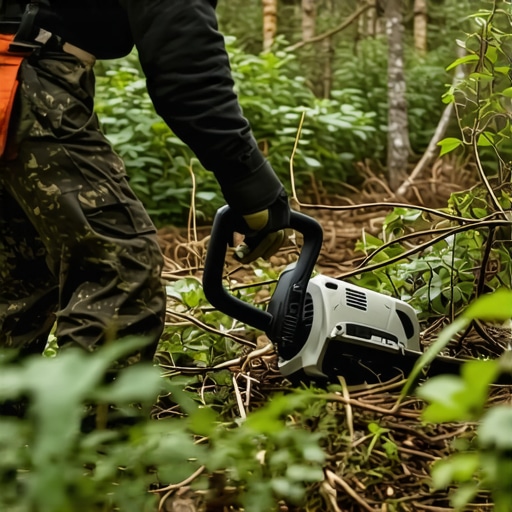
Successful yard cleanup begins with a fundamental understanding of mechanical advantage and site physics rather than raw horsepower. Yard cleanup is not a cosmetic exercise; it is the strategic removal of invasive biomass to restore the ecological balance of the soil and prepare the grade for future sod install or irrigation systems. Most contractors fail because they rush the clearing phase, leaving behind root crowns that compromise new hardscapes. I always drill into my new crew members: if you don’t fix the soil grading first, every plant you put in the ground is just expensive compost. I have seen countless $50,000 landscapes fail within three years because the original clearing was done with high-speed machinery that compacted the subsoil and ignored the existing root architecture of invasive species. We treat every clearing project as a forensic excavation. Before you buy a single plant or lay a foot of sod, the ground must be biologically and structurally prepared. Manual brush cutters provide the precision needed to identify hidden utilities, heritage root systems, and grade changes that a skid-steer would simply crush or bypass. This manual approach is the only way to ensure the long-term viability of high-end landscaping projects. It is about patience, leverage, and metallurgical quality. Don’t skip this. [IMAGE_PLACEHOLDER]
“Proper tool maintenance and selection are the primary factors in preventing operator fatigue and ensuring clean cuts that don’t invite pathogens into the remaining flora.” – Penn State Extension Horticulture Manual
What defines a professional manual brush cutter?
A professional manual brush cutter is a high-carbon steel tool designed to sever woody stems and dense fibrous vegetation through mechanical leverage and sharp-angle impact. These tools utilize specific weight distribution to maximize kinetic energy during the swing, allowing for efficient yard cleanup without the noise or fuel requirements of power machinery. Unlike consumer-grade shears, professional-grade manual cutters like the brush hook or ditch bank blade are forged from heat-treated steel, often 1055 or 1075 carbon grade, to maintain a razor edge through hundreds of strikes. The handle geometry, typically made of straight-grain American hickory or reinforced fiberglass, is engineered to absorb the shock of impact, protecting the user’s joints from repetitive strain. Understanding the difference between a pulling cut and a chopping stroke is essential for effective overgrowth management. When you are clearing 2026-level overgrowth, you aren’t just cutting; you are engineering a path through thickets of multiflora rose, wild blackberry, and invasive honeysuckle. Each tool has a specific mechanical purpose.
How much force is required to clear dense brush manually?
The force required is a function of the blade’s velocity and the cross-sectional density of the vegetation. For woody stems over one inch in diameter, a tool with a forward-weighted balance, such as a clearing axe or a heavy billhook, is necessary to penetrate the cambium layer. The cutting edge must meet the material at a 45-degree angle to maximize the shearing effect. If the angle is too steep, the blade bounces. If it is too shallow, it merely peels the bark. We measure the efficiency of our tools by the ‘strokes-per-stem’ metric. A high-quality manual cutter should sever a one-inch woody stem in a single, fluid motion. Anything less increases operator fatigue and slows the project timeline, which directly impacts the budget for your irrigation and sod install phases.
| Tool Type | Ideal Vegetation | Blade Material | Leverage Ratio |
|---|---|---|---|
| Ditch Bank Blade | Tall Grass & Soft Woody Stems | 1055 Carbon Steel | High (Long Handle) |
| Heavy-Duty Machete | Vines & Soft Growth | 1075 Carbon Steel | Medium (Short Handle) |
| Brush Hook | Woody Saplings & Thick Thickets | Forged Steel | High (Curved Blade) |
| Austrian Scythe | Meadow Grasses | Peened Thin Steel | High (Precision) |
The Metallurgy of the Blade: Why Hardware Store Tools Fail
The chemical composition of your cutting tool determines the longevity of your edge and the safety of your crew during a massive yard cleanup. Cheap tools found at big-box retailers are often made of stamped, low-carbon steel that lacks the structural integrity to withstand repeated impacts against hardwood saplings. These tools dull within twenty minutes, leading to ‘glancing’ blows that are dangerous to the operator. Professional tools are typically drop-forged and oil-tempered. This process creates a hard edge for cutting and a softer, tougher core that can absorb shock without shattering. When we evaluate tools for a 2026 overgrowth project, we look for a Rockwell hardness (HRC) between 54 and 58. Anything harder is too brittle; anything softer won’t hold an edge. The metallurgical reality is that you get what you pay for. A $150 clearing tool will outlast ten $30 machetes and do a cleaner job, preventing the spread of fungal infections in the stumps of the plants you choose to keep.
“A retaining wall doesn’t fail because of the stone; it fails because of the water trapped behind it, much like a clearing project fails when the underlying soil structure is ignored.” – Hardscape Engineering Axiom
How do I maintain a manual brush cutter edge?
Maintenance is a non-negotiable daily task. Use a mill bastard file to maintain the primary bevel at a 20 to 25-degree angle. Follow this with a medium-grit whetstone to remove the burr. A sharp tool is safer than a dull one because it bites into the wood rather than sliding off. We apply a light coat of linseed oil to the handle and mineral oil to the blade after every use. This prevents rust and handle degradation. If you ignore this, the tool will fail exactly when you need it most. Don’t be the contractor with the rusty equipment. It’s unprofessional and inefficient.
The Systematic Approach to Manual Clearing
Clearing a site for landscaping requires a tactical sequence. You do not just start at the edge and work inward. You must analyze the topography and the direction of the growth. We follow a specific protocol to ensure the site is ready for the next phase of development.
- Identify and mark heritage trees and desirable native species to prevent accidental removal.
- Clear a three-foot perimeter around the primary workspace to ensure safe footing and a clear swing arc.
- Cut invasive vines at the ground level first, then again at eye level to prevent them from pulling down canopy limbs.
- Utilize a brush hook for woody stems, working from the outside of the plant toward the root crown.
- Stack debris in centralized locations to minimize soil compaction from repeated walking paths.
- Grub out root crowns of invasive species to prevent immediate regrowth before the sod install.
Preparing the Foundation for Sod and Irrigation
Once the overgrowth is cleared, the real engineering begins. The soil is often depleted of nutrients and heavily compacted by the root systems of the invasive plants. We use the clearing process as a diagnostic tool. As we remove the brush, we are looking for signs of poor drainage, such as moss growth or heavy clay deposits. This informs the design of the irrigation system. A manual clearing allows us to see the micro-topography of the yard. We can identify where water will pool and where the sod install will require additional topsoil or soil amendments. We test the soil pH immediately after clearing. Often, the removal of heavy brush leads to a sudden change in nitrogen levels. We adjust the NPK ratios before the first blade of grass is laid. This is the difference between a yard that survives and a yard that thrives. Every step is interconnected. The quality of your clearing tool dictates the quality of your finish. It is all one system. Use the right tool, or don’t do the job at all. [JSON-LD_SCHEMA]