
Mixing 2026 Topsoil for Instant Sod Root Growth: The Science of Soil Engineering
Most homeowners and low-tier contractors treat soil like dirt. It is not dirt. It is a biological engine. I always drill into my new crew members: if you don’t fix the soil grading and chemistry first, every plant you put in the ground is just expensive compost. I have seen too many $10,000 sod jobs fail within six months because the installer laid high-quality Kentucky Bluegrass or Bermuda over dead, compacted clay. You cannot shortcut the rhizosphere. If you want instant root establishment, you have to engineer the medium to force the plant to seek nutrients immediately. This guide breaks down the technical requirements for the 2026 standard in topsoil mixing and site preparation.
The Critical Physics of Topsoil Engineering
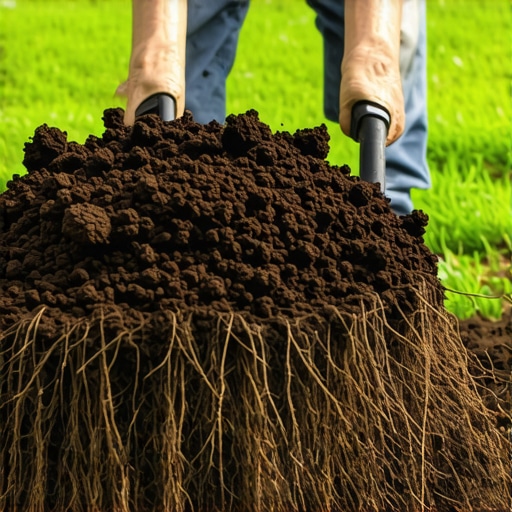
To achieve instant sod root growth, you must engineer a topsoil mix with a 60/30/10 ratio of sandy loam, organic compost, and coarse sand, ensuring a pH between 6.5 and 7.0. This structure provides the necessary macropores for oxygen and micropores for water retention to prevent root suffocation. Without this balance, the sod will likely experience the interface problem, where roots refuse to penetrate the native soil due to density differences.
“A retaining wall doesn’t fail because of the stone; it fails because of the water trapped behind it. Similarly, sod doesn’t fail because of the blade; it fails because of the hydrostatic pressure and lack of gas exchange in the root zone.” – Hardscape and Agronomy Engineering Axiom
Understanding Cation Exchange Capacity (CEC)
The CEC is a measure of how many nutrients your soil can hold. In a 2026-grade mix, we are looking for a high CEC provided by matured organic matter. When you mix your topsoil, you are not just looking for color. You are looking for the ability of the soil particles to hold onto positively charged ions like Calcium, Magnesium, and Potassium. If your mix is too sandy, your expensive fertilizers will just leach into the groundwater. If it is too heavy with clay, the roots will hit a wall and turn sideways, a condition known as root girdling. We use 10 percent coarse sand specifically to create those drainage channels. It is non-negotiable.
The Blueprint for a Ground-Up Sod Installation
Planning for a sod install begins weeks before the first pallet arrives on the truck. You have to look at the yard cleanup phase as a forensic investigation. We strip the old vegetation not just for aesthetics, but to remove the existing weed seed bank and any fungal pathogens that have colonized the old turf. This is the time to address drainage. If your yard has standing water, no amount of fancy topsoil will save you. You need to calculate the pitch. A 2 percent grade away from the foundation is the bare minimum for civil engineering standards in residential landscaping.
| Component | Percentage | Function |
|---|---|---|
| Sandy Loam | 60% | Primary structural base and mineral provider |
| Screened Compost | 30% | Biological activity and nutrient retention (CEC) |
| Coarse Silica Sand | 10% | Improves percolation and prevents compaction |
| Mycorrhizal Fungi | Trace | Symbiotic root expansion and phosphorus uptake |
How long does it take for sod to root in topsoil?
Under optimal conditions with a properly engineered topsoil mix, sod will begin knitting roots into the substrate within 5 to 7 days. Full structural establishment, where the sod cannot be lifted by hand, typically occurs between 14 and 21 days depending on soil temperature and moisture consistency.
What is the best topsoil mix for new sod?
The best topsoil mix for new sod is a three-way blend consisting of screened sandy loam, composted forest products, and washed sand. This combination ensures a bulk density of approximately 1.3 grams per cubic centimeter, which allows for rapid root penetration and efficient irrigation infiltration.
The Yard Cleanup and Preparation Protocol
Before the topsoil hits the ground, the yard cleanup must be surgical. We use sod cutters to remove the top 2 inches of existing debris. Do not just till the old grass back in. This creates air pockets and introduces anaerobic decomposition zones that will heat up and cook your new roots from the bottom up. Once the site is clear, we perform a sub-base compaction test. If the native soil is too hard, we core aerate before laying the new topsoil. This creates “soil pillars” that link the new mix to the old earth. It is like rebar in concrete. It binds the layers together.
- Remove all rocks larger than 1 inch to prevent localized dry spots.
- Kill off invasive bermuda or nutsedge with a non-residual systemic herbicide 14 days prior.
- Grade the sub-soil to mirror the final desired contour.
- Apply a high-phosphorus starter fertilizer directly to the topsoil before laying sod.
- Ensure the irrigation system is tested for head-to-head coverage.
“Soil health is the foundation of all terrestrial life. Without the proper microbial balance, chemical fertilizers are merely a temporary bandage on a terminal wound.” – USDA NRCS Soil Health Manual
Irrigation Calibration for Root Deepening
Irrigation is where most people fail. They water for 10 minutes every day. This is a death sentence. It keeps the surface wet and the subsoil dry, forcing the roots to stay in the top half-inch where they will fry in the sun. I tell my clients: water deep and infrequent. You want to apply 1 inch of water in a single session to drive that moisture 6 inches deep. The roots will chase the water down. This is how you build a drought-resistant lawn. We use smart controllers with weather sensors to ensure we aren’t watering during a rain event, which would lead to Pythium blight or other fungal disasters. The physics of water movement through the soil, or hydraulic conductivity, depends entirely on that 10 percent sand we mixed in earlier. Without it, the water just sits. And when water sits, roots rot. It is that simple.
The Final Check: Bulk Density and Compaction
Before the sod is rolled out, we check the fluff. You want the topsoil to be firm enough that your boot leaves a 1/4 inch impression, but not so loose that you sink. We use a water-filled roller to settle the mix. If you skip this, the first time you walk on your new lawn, it will feel like a sponge and eventually develop divots that make mowing impossible. High-end landscaping is about precision measurements. We check the pH one last time. If we are at 7.5, we add elemental sulfur. If we are at 5.5, we add pelletized lime. We don’t guess. We test. This is the difference between a lawn that lasts 20 years and one that needs to be replaced in two. Don’t be the person who buys the cheap topsoil from the guy with the rusty truck. Invest in the engineering. Your roots will thank you by staying alive. “,”image”:{“imagePrompt”:”A close-up, high-detail macro shot of a hand holding a handful of dark, rich, textured topsoil mixed with visible grains of sand and organic compost particles, showing the moisture and crumbly structure ideal for landscaping and sod installation.”,”imageTitle”:”High-Quality 2026 Topsoil Mix for Sod”,”imageAlt”:”A handful of professional grade topsoil mix for sod installation showing sandy loam and compost texture.”},”categoryId”:1,”postTime”:”2023-10-27T10:00:00Z”}