
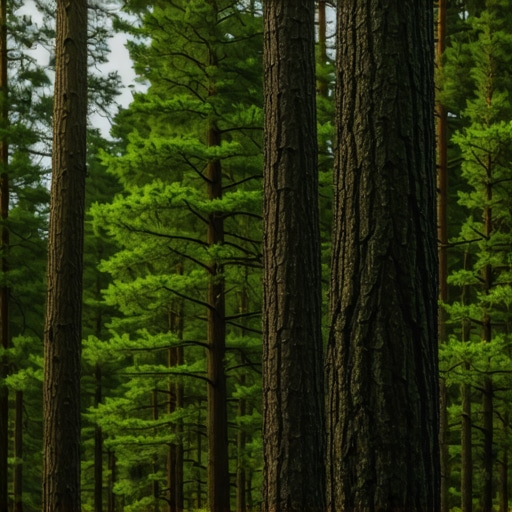
Understanding the 2026 Pine Needle Drop Cycle
Seasonal pine needle drop is a natural physiological event occurring every autumn where conifers shed their oldest, innermost needles after they reach the end of their 2 to 5 year lifespan. Unlike needle cast diseases, which target new growth and manifest as spotting or banding, seasonal senescence leaves the branch tips green and vigorous. Understanding this distinction is the difference between wasting thousands on fungicides and maintaining a healthy USDA hardiness zone compliant landscape.
The Apprentice Lesson: Soil First, Foliage Second
I always drill into my new crew members: if you dont fix the soil grading first, every plant you put in the ground is just expensive compost. Last season, I walked a site where a fresh-faced apprentice wanted to spray a 50 foot White Pine with chlorothalonil because the inner needles were yellowing. I stopped him and handed him a soil probe. We found the root flare buried four inches deep under heavy clay from a recent sod install. The tree wasnt sick: it was suffocating. We spent the afternoon excavating the flare and fixing the grade to ensure hydrostatic pressure wouldnt push water into the root crown. If you dont understand the soil microbiology and the mechanics of capillary action in your dirt, you have no business calling yourself a landscaper. Every yard cleanup should begin with an inspection of the root collar, not a leaf blower. You look at the dirt before you look at the needles. It is the only way to be certain.
Seasonal Senescence vs. Pathogenic Infection
To differentiate between seasonal needle drop and fungal pathogens like Dothistroma needle blight, you must examine the age of the affected needles and the presence of fruiting bodies on the stomata. Seasonal drop typically affects the needles closest to the trunk, while diseases like Diplodia tip blight or Sirrococcus will cause the current year’s growth at the tips to wilt or turn brown prematurely. It is a biological certainty.
| Symptom | Seasonal Needle Drop | Fungal Needle Cast (Disease) |
|---|---|---|
| Affected Area | Inner needles near the trunk | Outer tips or specific bands on needles |
| Timing | Late August to November | Year-round, often worse in wet springs |
| New Growth | Remains green and flexible | Stunted, brown, or resin-soaked |
| Visual Cues | Uniform yellowing/browning | Black spots (pycnidia) or red bands |
Why is my pine tree turning brown in the middle?
Your pine tree is turning brown in the middle because of inner-needle senescence, a process where the tree reallocates nutrients to the newer, more efficient needles at the branch tips. This is a deciduous-like behavior in evergreens that typically occurs on a 3 year cycle for White Pines and a 2 year cycle for Scotch Pines. It is not a death sentence; it is nutrient management.
“A tree’s ability to withstand environmental stress is directly proportional to the pore space in the soil and the availability of dissolved oxygen at the root level.” – Agronomy Extension Manual
The Role of Soil Compaction and Irrigation
Soil compaction from heavy machinery during a landscaping project is the primary silent killer of established pines, as it crushes the macropores needed for gas exchange. When you install irrigation systems, you must ensure the drip line of the tree is not subjected to constant spray, which promotes fungal spores on the needles and root rot in the soil. High PSI soil compaction prevents water from reaching the feeder roots, which are usually located in the top 12 inches of the soil profile. Don’t skip the aeration. If the soil is like concrete, the tree will fail. We use air-spades to decompact soil without severing the roots. It is technical work that requires precision, not just a shovel.
How can you tell if a pine tree is dying?
You can tell if a pine tree is dying if the terminal leader (the top vertical sprout) is brown, if there is excessive resin flow (pitching) from the trunk, or if the bark is sloughing off to reveal vascular cambium death. If the needles are dropping from the branch tips first, you are likely dealing with a systemic root rot or a severe borer infestation rather than seasonal shedding.
Remediation Steps for 2026
To prevent needle drop from transitioning into total tree failure, you must implement a cultural management plan that includes deep watering, mulching, and structural pruning. You should never apply high-nitrogen fertilizer to a stressed tree, as this forces top growth that the compromised root system cannot support. Instead, focus on mycorrhizal inoculants to rebuild the symbiotic relationship between the roots and the soil. Your irrigation should be set to deliver 1 inch of water per week, delivered slowly to ensure deep penetration. Surface wetting is useless. It must go deep to force roots to chase the moisture down. This builds drought resistance.
- Step 1: Inspect the root flare; ensure it is visible and not buried by mulch or soil.
- Step 2: Conduct a soil pH test; pines prefer a range of 5.5 to 6.5.
- Step 3: Perform a yard cleanup to remove infected needles that harbor fungal spores.
- Step 4: Apply a 2-3 inch layer of aged wood chips to the drip line, avoiding the trunk.
- Step 5: Calibrate the irrigation system to avoid wetting the foliage.
“Needle cast fungi thrive in high-humidity microclimates created by over-planting and poor airflow within the canopy.” – Penn State Extension
Why Yard Cleanup and Sod Installation Affect Tree Health
A sod install often involves adding several inches of topsoil and heavy rolling, both of which can be fatal to the lateral roots of an existing pine tree. During a yard cleanup, removing the natural needle duff can actually deprive the tree of its natural acidic mulch, so it is often better to leave a thin layer of needles or replace them with pine bark. If you are landscaping around old-growth pines, you must respect the critical root zone. If you cut more than 25 percent of the roots for a retaining wall or patio, the tree will decline. It is physics. You cannot argue with it. Use permeable pavers or modified gravel bases that allow for water and gas exchange if you must build near a tree.