
Why Invasive Vines Are Structural Parasites on Cedar Fencing
To remove invasive vines from cedar fences fast, you must sever the main vascular trunks at the base, allow the foliage to desiccate for 7 to 10 days, and then mechanically strip the dead material to prevent structural rot and moisture trapping against the wood. Cedar, while naturally rot-resistant due to its high tannin content, cannot withstand the constant hydrostatic pressure and fungal environments created by dense vine canopies like English Ivy or Wintercreeper. I always drill into my new crew members: if you don’t fix the soil grading first, every plant you put in the ground is just expensive compost. The same logic applies here. If you just rip vines off without killing the root system and addressing the soil moisture at the fence line, you are just performing a temporary haircut on a permanent structural threat. I once saw a $15,000 custom Western Red Cedar fence snapped like a toothpick because the homeowner let Wisteria gain 400 pounds of biomass. It was avoidable.
“Vine growth on wooden structures increases the rate of decay by trapping moisture against the surface and providing a pathway for wood-destroying fungi to penetrate the lignin.” – Texas A&M AgriLife Extension
How do I kill vines without damaging my cedar fence?
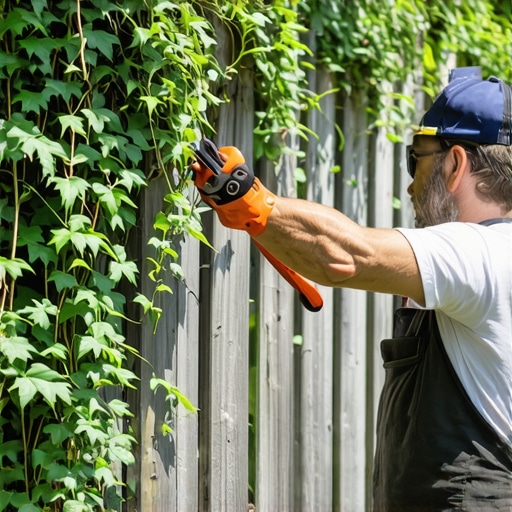
The most effective method for killing invasive vines without damaging the wood is the ‘Cut-and-Paint’ technique. You use bypass loppers to cut the vine at the base, then immediately apply a concentrated systemic herbicide like Triclopyr to the fresh cut. This sends the chemical directly to the root system, sparing the fence from overspray. Don’t pull. Never pull live vines off a fence. The aerial rootlets are physically embedded in the wood fibers. Ripping them while green will take chunks of your cedar with it. Wait until the plant dies and the rootlets lose their grip.
The Hardscape and Softscape Conflict
Vines are not just a cosmetic issue; they are an engineering failure. When vines scale a fence, they trap humidity. This moisture stays against the cedar for months, bypassing the wood’s natural ability to breathe and dry out. This leads to premature softening of the pickets and eventual post-rot. During a standard yard cleanup, most hacks will just use a weed whacker. That is a mistake. You need to clear a 12-inch ‘dead zone’ at the base of the fence. This allows for proper airflow and prevents the fence from acting as a wick for ground moisture.
| Vine Species | Growth Rate | Root Type | Damage Level |
|---|---|---|---|
| English Ivy | Extreme | Aerial Rootlets | High (Moisture Trapping) |
| Wisteria | Rapid | Twining Woody | Severe (Structural Collapse) |
| Trumpet Vine | Moderate | Adventitious Roots | Moderate (Lifting Pickets) |
| Wintercreeper | Fast | Dense Matting | High (Wood Rot) |
The Step-by-Step Removal Protocol
Follow this professional sequence to ensure the vines do not return and your fence remains standing.
- Phase 1: The Girdle: Cut every single vine stem at chest height and again at 6 inches above the soil line. Remove this middle section.
- Phase 2: Chemical Injection: Apply a 25% glyphosate or triclopyr solution to the bottom cut stems within 5 minutes of cutting.
- Phase 3: The Wait: Leave the top growth on the fence for at least a week. It will turn brown and brittle.
- Phase 4: Mechanical Clearing: Gently brush off the dead material using a stiff nylon brush. Avoid wire brushes; they scar the cedar.
- Phase 5: Soil Remediation: Excavate the root crowns. Do not just cut them. Dig them out.
“Structural integrity of timber fencing is compromised when lateral loads from vine biomass exceed the design specifications of the post-set depth.” – Hardscape Engineering Axiom
What is the fastest way to dissolve vine roots?
There is no magical liquid that dissolves roots instantly. However, a high-concentration salt and vinegar solution can desiccate small surface roots, but for 2026-level invasive species, you need systemic herbicides or physical excavation. If you are doing a sod install after the cleanup, you must ensure all vine rhizomes are gone. If you leave a single 2-inch piece of English Ivy root under your new sod, it will punch through in six months. It is relentless. This is where professional landscaping separates itself from DIY. We look at the soil biology, not just the leaves.
Preventing Regrowth with Proper Irrigation and Grading
After the vines are gone, you need to look at your irrigation. If your sprinklers are hitting the fence directly, you are inviting the vines back. Adjust your nozzles. Set them to a low-angle spray that hits the root zone of your grass, not the cedar. Poor drainage also favors vines. If the soil at the base of your fence is always swampy, you need to regrade or install a French drain. Cedar needs to stay dry. Dry wood lasts 30 years. Wet wood lasts five. It is that simple. Don’t ignore the soil pH either. Many invasive vines thrive in acidic soil. A quick application of pelletized lime can sometimes shift the environment just enough to favor your turf grass over the invasive weeds. [image_placeholder] This approach requires patience but yields a permanent result. If you want the fence to last, stop the rot at the source. Clear the vines. Fix the water. Protect the wood.