
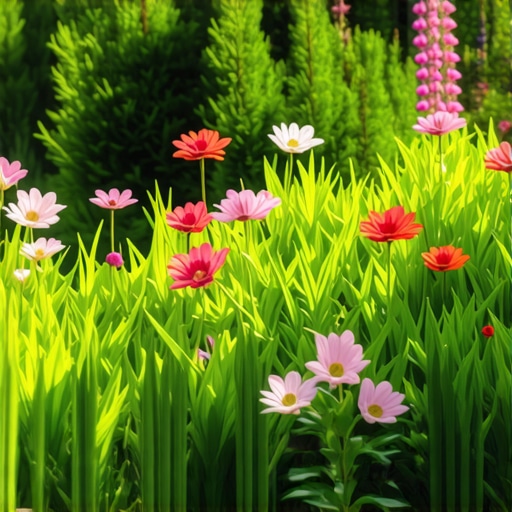
I always drill into my new crew members: if you don’t fix the soil grading first, every plant you put in the ground is just expensive compost. I saw it again last week on a site in the suburbs where a homeowner spent four grand on high-end nursery stock and slapped them into a low spot with zero drainage. Within three months, the Taxodium distichum was the only thing alive because everything else had drowned in an anaerobic soup of compacted clay. When we talk about planning a 2026 native garden, we aren’t talking about aesthetics. We are talking about hydraulic engineering and soil chemistry. A garden that blooms from April to October doesn’t happen by accident; it happens through meticulous phenological mapping and a deep understanding of the rhizosphere.
The Core Mechanics of Native Bloom Sequencing
Successful bloom sequencing requires a strategic selection of taxa that respond to specific photoperiods and soil temperatures, ensuring a continuous nectar bridge for local pollinators from the first thaw to the hard freeze. You cannot rely on the labels at a big-box store. Those plants are pumped with nitrogen and growth regulators to bloom in the pot. Once they hit your yard, they revert to their natural cycle—if they survive the transplant shock at all. We build gardens for the long haul.
“A successful native planting is not a collection of plants, but a functional ecosystem where every species occupies a specific temporal and spatial niche.” – Midwest Ecological Restoration Manual
How do you time native plant blooms for a full season?
To time native blooms, you must categorize your plant palette into three distinct phenological windows—vernal ephemerals, estival heavy-hitters, and autumnal anchors—while cross-referencing their USDA Hardiness Zone and local Growing Degree Days (GDD). Don’t guess. Measure your soil pH. Know your drainage rate. If your soil doesn’t perk at least an inch an hour, you’re planting a swamp, not a garden.
Phase 1: The Sub-Grade and Soil Architecture
Most landscaping fails because people ignore what is under their boots. You want a 2026 garden? You start in 2025 by killing the lawn properly. No, don’t just spray RoundUp and hope for the best. You need to address the compaction. If you’ve had heavy equipment in your yard, your soil is likely compressed to a PSI that prevents root penetration. We use air-spades or deep-core aeration to break that up. If you are doing a sod install elsewhere, don’t let the installers dump their excess scraps in your garden beds. That’s just adding a layer of non-native thatch that will choke out your seeds.
How much modified gravel do I need for a patio base near a garden?
For a standard pedestrian patio adjacent to garden beds, you need a minimum of 6 inches of compacted 2A modified gravel, calculated by multiplying your square footage by the depth in feet and dividing by 21.6 to determine the required tonnage. Do not skimp on the non-woven geotextile fabric between the subgrade and the stone. If the fines from your soil migrate into your gravel base, your patio will heave, and your garden drainage will be compromised. Water follows the path of least resistance. If your patio isn’t pitched at 2 percent away from the foundation, you’re just funneling hydrostatic pressure into your basement.
The 2026 Bloom Calendar: A Technical Breakdown
We look at the garden as a series of hand-offs. In April, we rely on Mertensia virginica and Claytonia virginica. These are the sprinters. They come up, do the work, and go dormant before the heat hits. By June, the Asclepias syriaca and Echinacea purpurea take the lead. These species are built for the humidity and the intense UV index of mid-summer. Finally, the Symphyotrichum and Solidago genera close out the year. Most people hate Goldenrod because they think it causes allergies—it doesn’t. That’s Ragweed. Goldenrod is the high-octane fuel that migrating monarchs need. It’s a biological necessity.
| Plant Species | Bloom Window | Soil Moisture Requirement | Root Structure Type |
|---|---|---|---|
| Aquilegia canadensis | April – May | Mesic to Dry | Fibrous |
| Monarda fistulosa | June – August | Mesic | Rhizomatous |
| Asclepias tuberosa | June – August | Dry/Well-drained | Deep Taproot |
| Symphyotrichum novae-angliae | Sept – October | Wet-Mesic | Fibrous |
Irrigation and Hydrology: The Life Support System
Even native plants need help during the establishment phase. This is where irrigation design becomes critical. We don’t use those stupid oscillating sprinklers that lose 40 percent of their water to evaporation. We run pressure-compensating drip line with 0.9 GPH emitters spaced every 12 inches. This delivers water directly to the rhizosphere. It forces the roots to grow deep rather than staying near the surface where they will bake in July. After year two, you should be able to turn the system off. If you can’t, you picked the wrong plants for your micro-climate.
How often should you water new native plants?
New native plants require deep, infrequent watering—approximately 1 inch per week—to saturate the entire root ball and surrounding soil, encouraging geotropism and deep root establishment. If you just mist the top inch of soil, the roots will turn upward. They will die. Check the soil three inches down with a finger. If it’s dry, water. If it’s wet, walk away. Over-watering causes Phytophthora root rot faster than a drought will kill a native.
Maintenance and the Myth of ‘Low Maintenance’
I hate the term ‘low maintenance.’ It’s a lie told by salesmen. Native gardens are low-input, not low-maintenance. You still have to do a yard cleanup. But don’t do it in October. You leave the stalks. You leave the seed heads. The 2026 garden relies on the 2025 debris for winter mulch and insect habitat. We don’t use dyed hardwood mulch from the gas station. That stuff is trash. It’s often ground-up pallets treated with chemicals. Use leaf mold or arborist wood chips. It breaks down and feeds the soil food web.
- Stop the Scalping: Never mow your native edges shorter than 4 inches; it stresses the crowns.
- Pre-emergent Warning: Do not use pre-emergent herbicides in a native bed if you expect any self-seeding.
- Identification: Learn to tell the difference between a Conyza canadensis weed and your prized asters.
- Tool Prep: Keep your bypass pruners sharp to avoid tearing the vascular tissue of your woody shrubs.
“Hydrostatic pressure is the silent killer of landscape design; if you don’t account for where the water goes, the water will decide for you.” – ICPI Technical Bulletin
The Engineering of Success
By the time 2026 rolls around, your garden should be a closed system. The biomass should be thick enough to suppress most invasive species. The soil structure should be crumbly and rich with glomalin from fungal activity. If you see mushrooms, don’t panic. That’s a sign your soil is alive. You’ve moved past the ‘pretty’ phase into the ‘functional’ phase. That’s the difference between a landscape and a living system. It takes work. It takes dirt. It takes a plan that respects the biology of the site. Don’t be a hack. Do it right the first time.