
Precision Reclamation: The Reality of Tight-Space Clearing
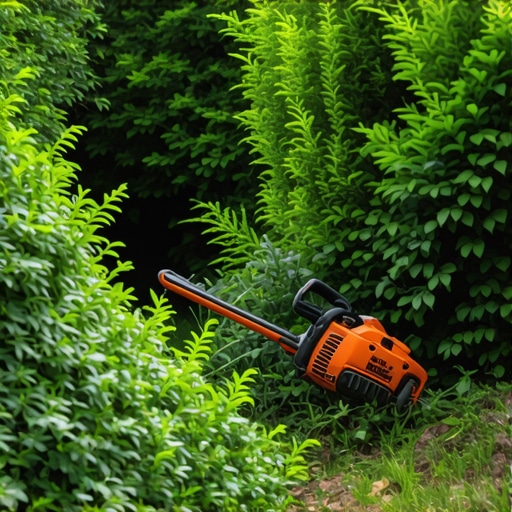
The best tool for clearing heavy overgrowth in tight spaces is a professional-grade brush cutter equipped with a 3-tooth brush knife or a high-torque battery clearing saw, which provides the surgical precision needed to remove woody stems up to 2 inches in diameter without the footprint of heavy machinery. In confined quarters—such as the narrow alleys between residential foundations or the dense thickets behind utility sheds—maneuverability is your primary constraint, necessitating tools that balance power-to-weight ratios with extreme cutting efficiency.
The Apprentice Lesson: Why Site Prep Dictates Success
I always drill into my new crew members: if you don’t fix the soil grading and clear the skeletal remains of old vegetation first, every plant you put in the ground is just expensive compost. Last season, I watched a greenhorn try to install a high-end irrigation system through a patch of untamed Himalayan Blackberry. He thought he could just ‘work around it.’ Within two hours, he had sliced a lateral line and tangled his trencher in a web of invasive cellulose. We had to stop the entire job, excavate the mess, and start from the dirt up. You cannot build on a foundation of neglect. Clearing isn’t just about aesthetics; it is about reclaiming the site’s engineering integrity. Before a single roll of sod goes down, the biomass must be extracted, the root systems neutralized, and the soil profile assessed for compaction.
“Vegetation management in confined urban environments requires specialized hand-operated power tools to prevent damage to existing structural foundations and buried utility lines.” – Landscape Management Standards Manual
The Engineering Behind the Brush Cutter
When you are squeezed into a four-foot wide side yard, a brush hog or a skid steer is a liability, not an asset. You need a tool that functions as an extension of your own mechanics. A brush cutter differs from a standard string trimmer in its gearbox and drive shaft construction. While a trimmer uses a flexible cable to spin nylon line, a true clearing saw utilizes a solid steel drive shaft and a heavy-duty gear head to handle the shock loads of hitting woody stems. For heavy overgrowth, we utilize 35cc to 50cc engines. These powerheads generate the torque necessary to maintain blade speed through dense fibrous material without bogging down. If the RPM drops, the blade tears instead of cuts. Tearing leads to jagged stumps that pose a trip hazard and invite fungal pathogens into the remaining root systems.
| Tool Type | Ideal Vegetation Diameter | Maneuverability Rating | Primary Power Source |
|---|---|---|---|
| Heavy-Duty Brush Cutter | 0.5 – 1.5 Inches | High | 4-Stroke or 2-Stroke Gas |
| Battery Clearing Saw | 0.5 – 1.25 Inches | Extreme | 82V / 5Ah Lithium-Ion |
| Manual Machete (Clearing) | < 0.5 Inches | High | Human Power |
| Reciprocating Saw (Specialized) | 2.0 – 4.0 Inches | Medium | 18V Battery |
Operational Lane: Technical Brush Removal Checklist
- Identify the Target: Differentiate between invasive species and native saplings before the first cut.
- Check for Hazards: Locate 811 marked utility lines, hidden irrigation heads, and large stones.
- PPE Protocol: Steel-toe boots, mesh face shields, and vibration-dampening gloves are non-negotiable.
- Bottom-Up Strategy: Cut at the base to prevent the tool from binding under the weight of the canopy.
- Biomass Management: Plan for 4 cubic yards of debris for every 500 square feet of heavy overgrowth.
How do I clear brush without a machine?
Clearing brush manually in tight spaces requires a combination of a high-carbon steel machete and a long-handled bypass lopper. Focus on the ‘three-cut method’ for larger limbs to prevent bark stripping. First, undercut the limb, then remove the bulk of the weight, and finally make a clean finish cut near the main stem or root flare. It is labor-intensive but necessary when noise ordinances or fuel constraints prevent power tool usage. Expect your caloric burn to triple. Don’t skip the grubbing hoe for root extraction.
What is the fastest way to remove thick vines?
Thick vines like English Ivy or Wisteria require a ‘window cut’ strategy. Cut the vine at chest height and again at the soil level. Do not pull the vines out of the trees or off the siding immediately; let the upper portion wither and die back. This prevents structural damage to the host plant or building. Use a brush-killing herbicide on the freshly cut ground stump within 15 minutes of the cut to ensure systemic translocation to the root system. This prevents the inevitable ‘resurrection’ of the invasive species in the spring.
“Effective site clearing must account for the biomass ratio; removing 1000 square feet of invasive buckthorn can generate over 4 cubic yards of debris that requires immediate processing to prevent pest harborage.” – Agricultural Extension Service
Post-Clearing: Soil Remediation and Sod Install Prep
Once the jungle is gone, you are left with ‘tired’ soil. Years of overgrowth often leave the ground depleted of nitrogen and heavily compacted. Before you even think about a sod install, you must address the soil chemistry. We test for pH levels and typically find that areas of heavy decay are overly acidic. We broadcast pelletized lime and a high-phosphorus starter fertilizer to encourage root development for the incoming turf. If the irrigation system was damaged during the overgrowth phase, now is the window for repair. We excavate the lateral lines, pressure test the valves, and ensure the spray patterns aren’t blocked by new hardscaping. You only get one chance to prep the soil before the sod locks everything down. Don’t waste it. Hard work in the clearing phase pays dividends in the green-up phase.