
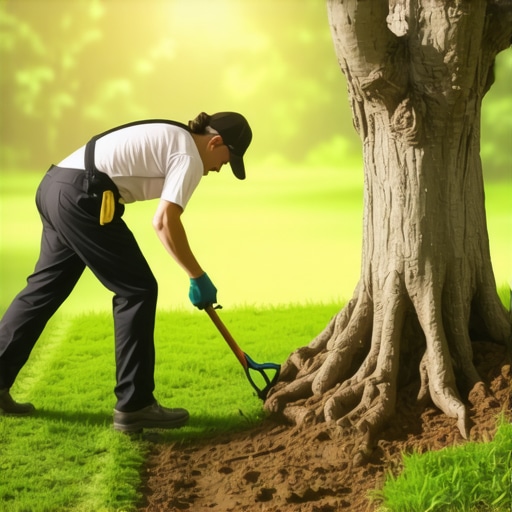
How to Lay Sod Around Trees Without Killing the Roots
I always drill into my new crew members: if you don’t fix the soil grading first, every plant you put in the ground is just expensive compost. I have seen too many rookies and weekend warriors slap down five pallets of fescue right up to the trunk of a fifty-year-old White Oak, only to wonder why the canopy starts thinning three years later. You aren’t just laying grass; you are interfering with a complex biological engine that relies on gas exchange and specific moisture levels. If you suffocate the root flare, you kill the tree. It is that simple. This guide breaks down the engineering and biological requirements for a successful sod install that respects the existing canopy.
Understanding the Critical Root Zone
To successfully lay sod around trees, you must protect the Critical Root Zone (CRZ) by avoiding soil compaction and ensuring that the root flare remains exposed to the air. Most feeder roots responsible for nutrient and oxygen uptake live in the top 6 to 12 inches of soil, and adding a thick layer of sod can disrupt this delicate gas exchange balance. If you block the oxygen, the roots will rot.
“Most tree roots are located in the upper 6 to 18 inches of soil, where they compete with turfgrass for water, nutrients, and oxygen.” – University of Minnesota Extension
The Physics of Root Respiration
Trees are not static objects; they are breathing organisms. Their roots require oxygen to perform cellular respiration, which provides the energy for nutrient uptake. When you lay sod, you aren’t just adding grass; you are adding a layer of organic matter, a root mat, and the soil it was grown in. This can increase the bulk density of the surface layer. If the soil becomes too compacted or too deep, the pore space—the tiny gaps between soil particles where air and water reside—collapses. This creates an anaerobic environment. I have excavated dying trees where the soil smelled like sulfur because the roots were literally fermenting under a layer of poorly placed sod. We don’t do that here. We prioritize the tree’s vascular health over the aesthetic of a green lawn.
Why the Root Flare is Non-Negotiable
The root flare, or the trunk flare, is where the trunk transitions into the root system. This area is anatomically different from the roots themselves. It is bark-covered tissue meant to be exposed to air. When you pile sod or soil against the flare, you trap moisture against the bark. This softens the tissue and invites pathogens like Phytophthora. A buried flare is a death sentence, usually manifesting as a slow decline over five to ten years. You might think you won the battle because the grass looks green today, but you’ve already lost the war for the tree’s survival.
Pre-Installation: Yard Cleanup and Soil Prep
Before any sod arrives on a pallet, a rigorous yard cleanup and site assessment are mandatory to ensure the ground is ready for new growth without compromising the tree. You need to remove all existing weeds, stones, and old turf using hand tools near the tree to avoid mechanical damage to the bark. Mechanical tillers are strictly forbidden within the drip line of any tree you intend to keep. One wrong pass with a tiller can sever 40 percent of a tree’s feeder roots in seconds.
The Soil Compaction Problem
Soil compaction is the silent killer in landscaping. When we do a sod install, the temptation is to use heavy equipment to level the yard. Within the drip line of a tree, you must use a light touch. We measure soil compaction in PSI (pounds per square inch). High-end turf thrives in soil with a bulk density below 1.5 g/cm3. Trees are even more sensitive. If your crew is running a skid-steer over the root zone, they are destroying the soil structure. We use hand-raking and light rolling only.
| Material Type | Compaction Sensitivity | Oxygen Permeability | Recommended Use Near Trees |
|---|---|---|---|
| Heavy Clay | Extreme | Very Low | Requires aeration before sodding |
| Sandy Loam | Low | High | Ideal for gas exchange |
| Standard Sod Soil | Moderate | Medium | Limit to 1 inch depth max |
| Compost/Topsoil Mix | Low | High | Best for leveling minor depressions |
Establishing the No-Sod Zone
Every tree should have a buffer. We call this the ‘Tree Ring’ or ‘Protection Zone.’ Professional standards dictate that you should not lay sod directly up to the trunk. Instead, create a ring of mulch starting 3 to 6 inches away from the flare and extending as far out as the homeowner’s aesthetic allows. This prevents ‘mower blight,’ which is when a maintenance crew hits the tree with a string trimmer or mower deck, wounding the cambium layer.
- Identify the drip line (the outermost edge of the tree canopy).
- Mark a minimum 3-foot radius around the trunk for a mulch bed.
- Verify utility lines via 811 before any grading adjustments.
- Hand-pull weeds within the critical root zone to avoid chemical drift.
- Check soil pH; turf usually wants 6.5, but some trees prefer more acidic levels.
Step-by-Step Sod Installation Protocol
The actual sod install requires surgical precision when working around established root systems to ensure the grass survives the shade and the tree survives the grass. You must lay the sod pieces in a staggered, brick-like pattern, ensuring the edges are tightly butted together without overlapping, which can create air pockets that dry out the roots. Around the tree, you will hand-cut the sod to fit the curve of your pre-established mulch ring.
How much modified gravel do I need for a patio base?
While not directly related to sod, if you are incorporating hardscape near your trees, you typically need a 4 to 6-inch base of compacted 21A or 57 stone. However, near trees, you should use permeable pavers to allow water and air to reach the roots. Standard concrete or non-permeable bases can starve the tree. Always calculate volume by multiplying square footage by depth in feet (e.g., 100 sq ft at 0.5 ft depth = 50 cubic feet or roughly 2 yards).
Irrigation Adjustments for Shared Space
Irrigation is where most people fail. Turf grass and trees have different hydration profiles. Grass needs frequent, shallow watering to establish its roots (about 1 inch per week). Mature trees need deep, infrequent soaking. When you install sod, you are forced to water for the grass. This can lead to over-saturation of the tree’s root zone. I always install a separate zone for the areas under the canopy or use pressure-compensated drip emitters for the trees while the rotors handle the turf.
“A retaining wall doesn’t fail because of the stone; it fails because of the water trapped behind it.” – Hardscape Engineering Axiom
The same logic applies to soil: a tree doesn’t fail because of the sod; it fails because of the water and lack of air trapped beneath it. Proper drainage is the cornerstone of any landscape project.
How much soil can you put over tree roots?
The absolute maximum amount of soil you can add over tree roots is 2 inches, but even that is risky for certain species like Beech or Dogwood. For most professional installs, we aim for zero additional soil, instead opting to lightly top-dress with high-quality compost that will break down and provide nutrients without significantly altering the grade or bulk density.
Maintenance and Long-Term Health
The first year after a sod install is the most critical for both the grass and the tree. You are managing a competition. The grass wants the nitrogen and water, and the tree has the established root system to take it. You must monitor for signs of stress. If the tree leaves start yellowing (chlorosis), you may have a nutrient lockout or a drainage issue. If the sod starts thinning, the tree is winning the shade war. Never scalp the grass near the tree. Keep it at 3 to 4 inches to encourage deeper rooting and better drought tolerance.