
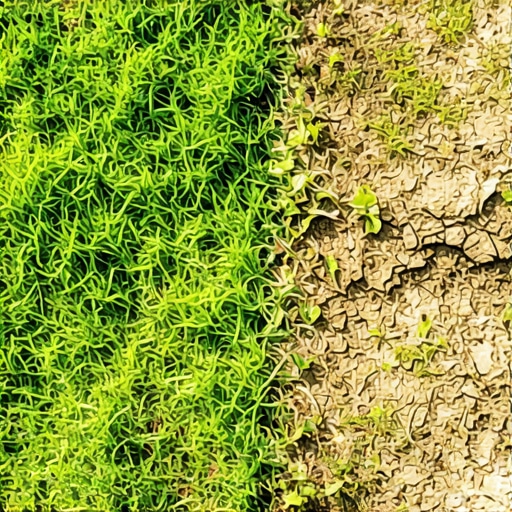
The Forensic Autopsy of a Scorched Lawn
I walked onto a property last July that looked less like a residential landscape and more like an abandoned gravel pit. The homeowner, let’s call him Miller, was standing over a patch of brown, crispy fescue with a look of pure defeat. He had spent the last three months obsessively manicuring his yard, but as the thermometer hit 95 degrees, his lawn checked out. The culprit? He was obsessed with the golf-course look and had dropped his mower deck to one inch. To make matters worse, he’d applied a high-nitrogen ‘weed and feed’ during a heat wave. He didn’t just stress the grass; he effectively salted the earth and cauterized the plant crowns. The soil was so compacted and dry it felt like concrete. I had to tell him the hard truth: his grass wasn’t dormant; it was dead. The combination of scalping and chemical burn had decimated the root system. We ended up having to perform a full yard cleanup, scrape the dead organic matter, and prep for a complete sod install in the fall. It was an expensive lesson in basic plant biology.
The Biological Cost of Scalping Your Lawn
Scalping turfgrass during summer heat destroys the plant’s ability to photosynthesize, leading to crown dehydration and root recession. When you remove more than one-third of the blade, the soil temperature spikes, evaporating moisture and killing the beneficial microbes essential for nutrient uptake. High heat combined with short blades stops the plant’s energy production cold.
How does cutting grass too short affect root depth?
There is a direct, scientific correlation between the height of the grass blade and the depth of the root system. This is known as the root-to-shoot ratio. When you lop off the top of the plant, the grass redirects all its energy from root development to leaf regrowth. In the heat of summer, this is a death sentence. Short grass equals shallow roots. Shallow roots cannot reach the cooler, moister soil deeper in the earth. It will wilt. It will die. For every inch you cut, you lose several inches of root mass that could be scavenging for water during a drought. Proper irrigation cannot compensate for a lack of root surface area.
“Mowing height is the most important factor in determining the depth of the root system. Generally, the higher the grass is mowed, the deeper the root system will be.” – Texas A&M AgriLife Extension
The Soil Temperature and Evapotranspiration Crisis
The grass blade is more than just a green carpet; it is a cooling mechanism for the soil. Think of it as a biological umbrella. When the canopy is thick and tall, it provides shade to the soil surface. This shade prevents the sun from baking the life out of the earth. When you scalp the lawn, the sun hits the soil directly, causing temperatures to skyrocket. This leads to a massive increase in evapotranspiration. Your irrigation system might be running, but if the soil is 110 degrees at the surface, that water is evaporating before it ever hits the roots.
| Mow Height (Inches) | Soil Temperature (at 2″ depth) | Root Depth (Approximate) | Water Retention Level |
|---|---|---|---|
| 1.0 | 105°F | 2″ | Critical/Low |
| 2.5 | 88°F | 5″ | Moderate |
| 4.0 | 76°F | 10″ | High/Stable |
The Weed and Pest Invasion
Tall grass is your best defense against weed seeds. Most common weeds, like crabgrass, require direct sunlight to germinate. When you keep your grass at 3.5 to 4 inches, you are creating a dense canopy that starves weed seeds of light. Scalp that lawn, and you are basically rolling out the red carpet for every weed in the neighborhood. Furthermore, stressed grass emits chemical signals that attract pests like chinch bugs and sod webworms. Healthy, tall grass has the structural integrity to withstand some pest pressure. Scalped grass is a weak target. Don’t invite the enemy in.
What is the best height to mow grass in the summer?
For most cool-season grasses like Tall Fescue or Kentucky Bluegrass, you should aim for a height of 3.5 to 4 inches. Warm-season grasses like Bermuda or Zoysia can be kept slightly shorter, but even they benefit from an extra half-inch during the peak of July and August. Never remove more than one-third of the total grass height in a single cutting. If your lawn has gotten away from you, take it down in stages over several weeks. Don’t hack it all off at once. Your lawn mower blades must be sharp. Dull blades tear the grass instead of cutting it, leaving jagged edges that lose moisture even faster and invite fungal pathogens.
“A lawn mowed at a height of 3.5 to 4 inches will have significantly fewer weed problems and better drought tolerance than a lawn mowed at 2 inches or less.” – Penn State Center for Turfgrass Science
Summer Lawn Care Maintenance Checklist
- Set Mower Height High: Adjust your deck to its highest or second-highest setting.
- Sharpen Blades: Ensure blades are razor-sharp to prevent leaf tissue tearing.
- Monitor Irrigation: Water deeply and infrequently (1 inch per week) early in the morning.
- Skip the Nitrogen: Avoid high-N fertilizers when temperatures exceed 85 degrees.
- Mulch Clippings: Leave the clippings on the lawn to return nutrients and moisture.
- Inspect for Pests: Watch for localized brown spots that don’t respond to water.
Remediation: How to Save a Scalped Lawn
If you have already made the mistake of scalping your lawn, stop mowing immediately. Let it grow. You need to focus on irrigation management to keep the crown of the plant alive. Do not apply heavy fertilizers or weed killers, as the plant is already in a state of high stress. If the damage is too severe and the crowns have turned a gray-white color, you are likely looking at a sod install or heavy overseeding in the fall. Sometimes, a thorough yard cleanup is necessary to remove the dead thatch layer that builds up after a mass die-off. Thatch prevents water from reaching the soil, creating a hydrophobic layer that exacerbates the problem. In my 20 years of doing this, I’ve seen more lawns killed by ‘over-maintenance’ than by neglect. Nature knows how to handle the heat, but it needs the biological tools to do it. Keep the blades long. Protect the roots. It is that simple. Don’t be like Miller. Put the mower on the highest notch and go get a cold drink instead.