
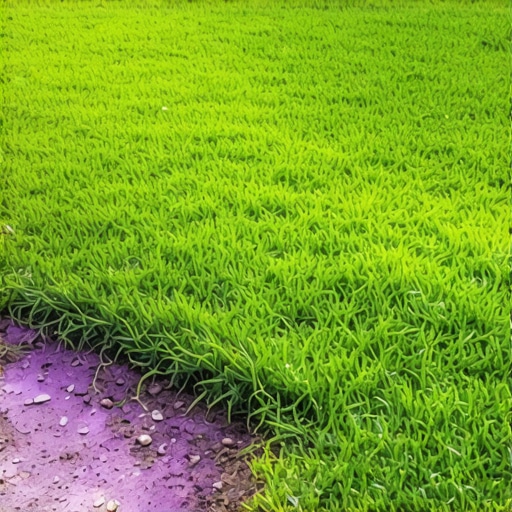
The Forensic Autopsy of a Purple Lawn
When you see your newly installed turf shifting from a deep forest green to a bruised, sickly purple, it is a physiological scream for help. New sod turns purple primarily due to phosphorus deficiency or extreme temperature fluctuations that trigger the accumulation of anthocyanin pigments in the leaf blades. This metabolic roadblock occurs when the young root system is unable to extract enough phosphorus from the soil, often due to cold soil temperatures or poor root-to-soil contact. It is a biological response to stress, not a permanent death sentence.
A homeowner called me in a panic last spring after they completely torched their front lawn by applying a high-nitrogen ‘winterizer’ on fresh sod during a cold snap. The grass didn’t just burn; it turned a deep, royal purple within forty-eight hours. They thought they had a fungus. I walked onto the site, pulled a core sample, and saw the truth: bone-dry roots sitting on a bed of compacted clay with a pH of 5.2. The nitrogen they dumped only accelerated the plant’s metabolic demand while the roots were locked out of the phosphorus they needed to fuel that growth. It was a classic case of chemical mismanagement and poor site preparation. If you don’t fix the soil chemistry, you’re just throwing money into a green-tinted furnace.
The Science of Anthocyanin Accumulation
Why purple? In the world of plant physiology, purple is the color of phosphorus (P) deficiency. Phosphorus is a mobile nutrient within the plant but highly immobile in the soil. It is responsible for energy transfer (ATP) and root development. When the soil temperature drops below 55 degrees Fahrenheit, microbial activity slows down, and the physical movement of phosphorus into the root slows to a crawl. The plant produces anthocyanins to protect its photosynthetic machinery from light damage when it can’t process energy normally. It is shivering. Don’t reach for more fertilizer yet. You need to understand the underlying cause.
“Phosphorus deficiency symptoms are usually more pronounced in young plants, which have a high phosphorus requirement but a limited root system. The most common symptom is a dark green color with a purple or reddish-purple tint on the older leaves.” – Penn State Center for Turfgrass Science
How much modified gravel do I need for a sod base?
Actually, you don’t use gravel for sod; you need a well-amended sandy loam base to ensure the cation exchange capacity (CEC) is high enough to hold nutrients. For a standard sod installation, you should aim for 4 to 6 inches of loosened, high-quality topsoil, not the compacted ‘builder’s dirt’ found on most new construction sites. If your soil is compacted, the roots will never penetrate the subgrade, leading to the phosphorus lockout mentioned earlier. You need to verify your soil density. If you can’t push a screwdriver six inches into the ground with ease, your sod will fail. Period.
| Nutrient Deficiency | Visual Symptom | Primary Cause in New Sod |
|---|---|---|
| Nitrogen (N) | General yellowing (chlorosis) | Leaching from over-irrigation |
| Phosphorus (P) | Purple or reddish-purple blades | Cold soil or poor root development |
| Potassium (K) | Firing or browning of leaf edges | High traffic or drought stress |
| Iron (Fe) | Interveinal yellowing (striping) | High pH (alkaline) soils |
Why Root-to-Soil Contact is Non-Negotiable
If you see purple patches specifically in the corners or edges of your sod rolls, it is likely an air pocket. Sod is a living, breathing carpet of biomass. If there is a gap between the bottom of the sod and the soil surface, the roots will air-prune. They stop growing. The plant then enters a state of localized drought and nutrient deficiency. This is why we use a water-filled roller. You aren’t trying to flatten the yard; you are trying to marry the roots to the earth. If you skip the roller, you are a hack. It’s that simple.
What is the best irrigation schedule for purple sod?
The solution to purple sod isn’t just dumping more water; it’s about consistent moisture without saturation. New sod needs to be kept moist for the first 14 days, but if you create a swamp, you’ll trigger anaerobic conditions. Roots need oxygen to take up nutrients. If the soil is waterlogged, the roots suffocate, and they certainly won’t be absorbing any phosphorus.
“Excessive soil moisture limits the oxygen available to the roots, which directly inhibits the active uptake of phosphorus, leading to temporary deficiency symptoms even in P-rich soils.” – Agronomy Manual for Turfgrass Professionals
A Checklist for Recovering Your Purple Sod
- Perform a Soil Test: Stop guessing. You need to know your P levels and your pH. A pH below 6.0 locks up phosphorus.
- Check Soil Temperature: If it’s below 50°F, wait. The color will likely correct itself once the soil warms up.
- Inspect for Air Pockets: Step on the purple areas. If it feels spongy, the sod isn’t touching the ground. Roll it.
- Foliar Feeding: If the soil is too cold for root uptake, a light foliar application of a high-phosphorus ‘starter’ fertilizer can provide a temporary fix.
- Adjust Your Irrigation: Aim for 1/4 inch of water twice a day rather than one deep soak that leads to runoff.
The Yard Cleanup Protocol
Before the sod even arrives, your yard cleanup must be surgical. You cannot lay sod over dead weeds, old thatch, or construction debris. I’ve seen crews lay sod over plywood scraps. The wood rots, creates a fungal nightmare, and the grass turns purple as it dies. You need a clean, graded slate. Remove the organic debris, till in your amendments, and firm the base. If you’re looking for a shortcut, you’re looking for a dead lawn.
Is purple sod dead?
No, it is not dead yet. Purple is a warning; brown is a funeral. If the crown of the plant—the white, fleshy part at the base—is still firm and green, the grass can be saved. If the blades are brittle and the crown is mushy, you’re looking at a replacement job. Most homeowners freak out at the first sign of purple, but a veteran knows this is just the plant’s way of surviving a transition. Stop the ‘mow-and-blow’ mentality and start thinking like a soil scientist. Fix the drainage, balance the pH, and give the roots a reason to grow. It’s biology, not magic.