
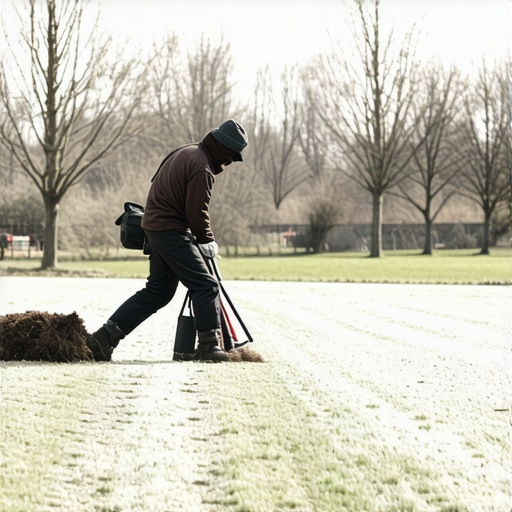
I always drill into my new crew members: if you don’t fix the soil grading first, every plant you put in the ground is just expensive compost. I have seen countless homeowners and green-as-grass contractors rush a sod install in early March, thinking they are beating the heat, only to realize they have ignored the fundamental physics of the freeze-thaw cycle. Last spring, I walked a site where a client had laid three pallets of high-quality Tall Fescue, only to have the entire yard turn into a mushy, brown soup by April. Why? Because the site grading allowed water to pool under the newly laid rolls. When that standing water froze, it expanded, physically shearing the delicate new root hairs from the soil. That is not a gardening mistake; it is an engineering failure. This guide breaks down the biological and structural requirements to ensure your investment survives the volatile spring transition.
The Critical Vulnerability of Early Spring Sod
To protect new sod from early spring frost, you must focus on soil hydration to provide thermal mass, avoid high-nitrogen fertilizers that stimulate soft cellular growth, and utilize frost blankets to prevent the plant’s crown from reaching critical freezing temperatures. New sod lacks the deep root system of established turf, meaning it cannot draw warmth from the deeper soil profile. When the temperature of the crown, the whitish base of the plant where growth originates, drops below 20 degrees Fahrenheit, the cellular walls can rupture. This is a permanent mechanical failure of the plant. It will not recover. It will rot. You must treat a new install as a fragile biological system, not a finished product.
The Cellular Reality of Frost Damage
Turfgrass goes through a process called hardening off in the fall, where it moves carbohydrates to the roots and reduces the water content in its cells. When you lay fresh sod in early spring, the grass is often coming out of dormancy or has been forced into growth at a turf farm. This means the cells are turgid and full of water. When that water freezes, it forms ice crystals that pierce the cell membranes. By maintaining a moist, but not saturated, soil profile, you utilize the latent heat of the earth to keep the surface slightly warmer than the air. Water holds heat better than air-filled soil pores. You are essentially creating a thermal battery beneath your grass.
“The survival of cool-season turfgrass during erratic spring temperatures is dependent on the carbohydrate reserves in the crown and the rate of soil moisture evaporation which can lead to desiccation.” – Penn State Center for Turfgrass Science
Engineering the Site for Thermal Protection
Before you even think about the sod install, you need to look at your yard cleanup and site grading. A flat yard is a dead yard. You need a minimum of a 2 percent slope away from all structures to ensure that late-season snowmelt or heavy spring rains do not sit in the root zone. In my twenty years, I have seen more sod killed by hydrostatic pressure and ice encasement than by simple air frost. If water cannot move through the soil, it occupies the pore spaces meant for oxygen. When that water freezes, the expansion force is roughly 30,000 PSI. Your new grass roots do not stand a chance against that kind of pressure.
How much water does new sod need during a freeze?
A common mistake is turning off the irrigation entirely when a frost warning is issued. You should actually run a light irrigation cycle the evening before a predicted frost. Moist soil traps more heat than dry soil. Aim for approximately 0.25 inches of water. This moisture acts as an insulator, releasing heat slowly throughout the night. However, do not over-water to the point of puddling. If the water freezes on the leaf blade, it is generally fine, but if it freezes in a pool around the crown, you have created a coffin of ice that prevents gas exchange, leading to anoxia.
| Protection Method | Effectiveness | Mechanism | Primary Risk |
|---|---|---|---|
| Frost Blankets | High | Radiant heat retention | Wind displacement |
| Hydration (Irrigation) | Moderate | Latent heat release | Ice encasement if over-watered |
| Straw Mulching | High | Physical insulation | Weed seed contamination |
| Heavy Rolling | Low | Soil contact improvement | Soil compaction and crown crush |
The Nutrient Management Protocol
Your landscaping strategy must include a strict moratorium on high-nitrogen fertilizers during the first 30 days of a spring install. Nitrogen pushes top growth, which results in thin, watery cell walls that are highly susceptible to frost burn. Instead, focus on Potassium. Potassium (the ‘K’ in N-P-K) acts like an antifreeze within the plant’s vascular system. It regulates osmotic pressure and strengthens the cell walls, making them more resilient to the expansion of ice crystals. Use a starter fertilizer with a ratio like 5-10-15 or similar, where the potassium is the dominant or equal factor. Do not chase the green color too early. You want a deep root system, not a tall leaf blade.
Can you lay sod on frozen ground?
No. Never lay sod on frozen ground. If the subgrade is frozen, the roots cannot penetrate the soil surface, and you will create a layer of ice between the sod and the earth as soon as the temperature fluctuates. This layer of ice acts as a barrier to moisture and nutrient uptake. If your soil is frozen, wait. You need a soil temperature of at least 40 degrees Fahrenheit at a 3-inch depth before the roots will even consider waking up and moving into the native soil. Use a soil thermometer. Don’t guess. Professionals don’t guess.
The Frost Blanket Execution
If the forecast calls for a hard freeze (below 28 degrees Fahrenheit for more than 4 hours), you need physical protection. Forget plastic tarps; they transfer cold directly to the plant and can cause more damage via the greenhouse effect the next morning. Use a breathable frost blanket or a non-woven geotextile. These fabrics allow gas exchange while trapping the radiant heat rising from the soil. You must anchor these blankets securely. If they shift and rub against the frozen grass blades, they will cause mechanical bruising that leads to fungal infections like gray snow mold once the weather warms up.
- Monitor local weather stations for ‘Wet Bulb’ temperatures.
- Ensure all irrigation lines are blown out or insulated if a deep freeze is coming.
- Remove frost blankets as soon as air temperatures exceed 40 degrees.
- Avoid all foot traffic on frozen sod; the frozen blades will shatter like glass.
- Check for ‘heaving’ where the frost has physically lifted the sod rolls off the soil.
How long does it take for sod to root in spring?
In early spring, the rooting process is significantly slower than in late summer. While you might see root attachment in 7 to 10 days in June, March installs may take 3 to 4 weeks to firmly knit into the subgrade. During this window, the sod is entirely dependent on the moisture held within the 1-inch of soil it was grown in. This makes frost protection even more critical. If that 1-inch layer freezes solid, the plant has zero access to moisture. This is why site prep and yard cleanup are vital; removing old debris ensures the new sod has direct, seamless contact with the warm earth below.
Long-Term Recovery and Maintenance
Once the threat of frost has passed, do not rush out with the mower. Wait until the grass has reached at least 4 inches in height, and make sure the roots have knitted. Use the ‘tug test.’ If you pull on the grass and the corner of the sod roll lifts, it is not ready. When you do finally mow, use a sharp blade. A dull blade will pull and tug on the sod, potentially dislodging the fragile new roots you worked so hard to protect through the frost. Keep your mower deck high. You want as much leaf surface as possible to facilitate photosynthesis and fuel further root expansion. The first year is about survival and establishment, not aesthetics. If you focus on the biology, the beauty will follow. Skip the shortcuts. Your yard is an investment, treat it like one.{“@context”:”https://schema.org”,”@type”:”Article”,”headline”:”How to Protect Your New Sod from Frost in Early Spring”,”author”:{“@type”:”Person”,”name”:”Veteran Horticulturist”},”datePublished”:”2024-05-22″,”publisher”:{“@type”:”Organization”,”name”:”Professional Landscaping Services”},”mainEntityOfPage”:{“@id”:”#main”},”articleSection”:”Lawn Care”}{“@context”:”https://schema.org”,”@type”:”FAQPage”,”mainEntity”:[{“@type”:”Question”,”name”:”How much water does new sod need during a freeze?”,”acceptedAnswer”:{“@type”:”Answer”,”text”:”Apply approximately 0.25 inches of water the evening before a frost. This moisture acts as a thermal insulator for the soil, protecting the roots from rapid temperature drops.”}},{“@type”:”Question”,”name”:”Can you lay sod on frozen ground?”,”acceptedAnswer”:{“@type”:”Answer”,”text”:”No. Sod should never be laid on frozen ground as it prevents root penetration and creates an ice barrier that leads to desiccation and plant death.”}},{“@type”:”Question”,”name”:”How long does it take for sod to root in spring?”,”acceptedAnswer”:{“@type”:”Answer”,”text”:”In early spring, rooting typically takes 3 to 4 weeks, which is slower than warmer months due to lower soil temperatures.”}}]}