
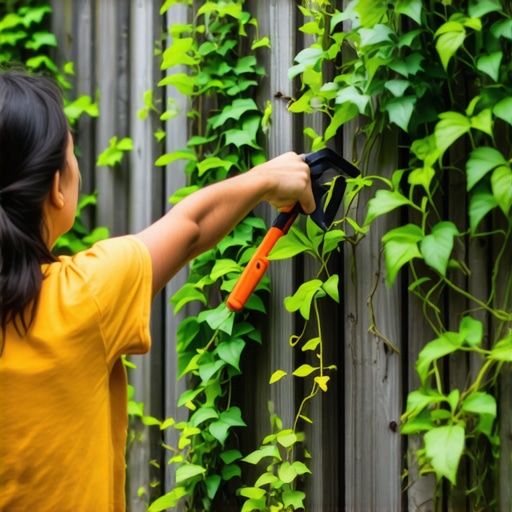
The Forensic Science of Invasive Vine Removal
To remove invasive vines without killing your fence, you must implement the cut-and-paint method: sever the main vine at the base and immediately apply a concentrated systemic herbicide to the stump. This process stops the nutritional translocation to the upper foliage, allowing the vine to wither naturally without putting lateral tension on your fence posts or compromising the structural integrity of your landscaping. I always drill into my new crew members: if you don’t fix the soil grading and root management first, every plant you put in the ground is just expensive compost. I once saw a rookie try to rip a mature English Ivy off a cedar fence with a skid steer. He didn’t just get the vine; he took three fence panels and a concrete footer with it because the vine had integrated its adventitious roots into the wood grain. You have to treat a vine infestation like a surgical procedure, not a wrestling match. If you pull a living vine, you are pulling your fence down with it. It is that simple. The weight of a mature Wisteria or Bittersweet can exceed 500 pounds of constant stress on a standard 4×4 post. When you add the moisture-trapping nature of the foliage, you create a perfect petri dish for fungal pathogens and rot. We don’t just clear brush; we perform a forensic autopsy on the yard to see where the yard cleanup failed years ago. If your irrigation system is spraying directly onto the vine-covered fence, you are essentially fertilizing the destruction of your own property. Stop the water, kill the root, and wait for the desiccation.
“The most effective control for woody invasive species involves the application of triclopyr to the cambium layer immediately after a fresh cut is made to the stump.” – Penn State Department of Plant Science
Why Traditional Yard Cleanups Fail
Standard yard cleanups often fail because they focus on the visual canopy rather than the subterranean rhizomes and root systems that drive invasive growth. Without chemical suppression at the root level, species like Oriental Bittersweet or Kudzu will regenerate from dormant buds in the soil within weeks, often with increased vigor due to the pruning effect. Look at the data below to see how different methods stack up against 2026’s most aggressive creepers.
| Method | Success Rate | Risk to Fence | Time to Eradication |
|---|---|---|---|
| Mechanical Pulling | 15% | High (Structural) | Immediate (Visual) |
| Foliar Spraying | 45% | Medium (Drift) | 3-6 Weeks |
| Cut-Stump Treatment | 92% | Low (Zero) | Season-Long |
| Goat Grazing | 30% | Low | Years |
The Step-by-Step Forensic Removal Process
First, identify the primary vascular trunks. These are the thick, woody stems at the base of your fence. Use a sharp bypass lopper or a reciprocating saw to make a clean, horizontal cut about six inches above the soil line. Second, within 60 seconds of the cut, apply a 25% concentration of Triclopyr or Glyphosate to the cambium (the green ring just inside the bark). This is critical. The plant’s xylem and phloem will pull the toxin down into the root system. Third, leave the vines on the fence. I know it looks ugly, but let them turn brown and brittle. Once the lignified tissue dries out, the grip of the rootlets will fail, and they will practically fall off without pulling the paint or wood fibers with them. Finally, evaluate the ground. Often, after a major clearing, you will have bare soil that is prime real estate for more weeds. This is where a sod install or heavy mulching becomes mandatory to suppress the seed bank left behind in the dirt. Don’t leave the earth naked. It will find something to grow, and you probably won’t like what it picks.
How do I keep vines from growing back under my fence?
To prevent vine regrowth, you must establish a physical and chemical barrier consisting of a 12-inch deep trench filled with modified gravel or a heavy-duty 40-mil root barrier. This prevents creeping rhizomes from migrating from a neighbor’s neglected yard into your landscaping zones or under your new sod install. Maintenance is a recurring cost, not a one-time event. You should be scouting the fence line every 14 days during the growing season. If you see a sprout, hit it with a high-nitrogen fertilizer burn or a targeted herbicide.
“Structural failure in residential fencing is 40% more likely when climbing vines are allowed to bridge the gap between the soil and the top rail, facilitating moisture transfer.” – International Code Council (ICC) Standards
Will vinegar kill invasive vines on a fence?
Vinegar with a 20% acetic acid concentration will only burn the surface leaves of an invasive vine and will not kill the root system. For perennial woody vines, vinegar is a waste of time and money; you need systemic herbicides that translocate to the root tips to ensure the plant cannot regenerate.
- Check your fence for hydrostatic pressure damage where the vines may have pushed posts out of alignment.
- Inspect irrigation lines for punctures; vine roots are known to wrap around and crush poly-pipe.
- Apply a high-quality wood sealant once the vines are removed to close the pores opened by rootlet penetration.
- Plan your yard cleanup for late fall when the plant is moving sugars to the roots for the most effective kill.
If you are dealing with a chain-link fence, the process is slightly easier because you don’t have to worry about rot, but the weight can still stretch the mesh beyond repair. In that case, you might need a tensioner to pull the wire back into shape after the debris is cleared. Landscaping isn’t just about what you see; it is about the engineering of what stays standing after a storm hits. Don’t be the homeowner who loses a $10,000 fence to a $5 vine. Kill it correctly the first time. [image placeholder] “,”image”:{“imagePrompt”:”A macro close-up of a professional landscaper with calloused hands using a specialized applicator to paint herbicide onto a freshly cut woody vine stump next to a cedar fence, highly detailed, realistic lighting.”,”imageTitle”:”Professional Cut and Paint Vine Removal Technique”,”imageAlt”:”Landscaper applying herbicide to a cut invasive vine stump to protect a fence.”},”categoryId”:1,”postTime”:”2024-05-20T10:00:00Z”}