
The Reality of Side Yard Engineering
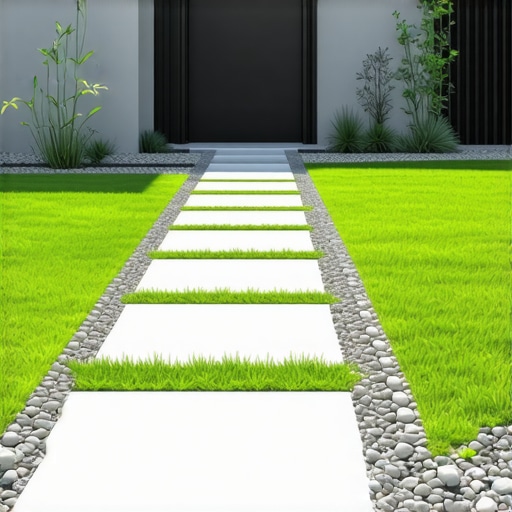
Side yards are the most neglected zones in residential landscaping, often serving as the primary drainage corridor for the entire property. In 2026, the trend is moving away from purely aesthetic mulch beds toward high-performance river rock paths that manage water runoff and soil compaction. Most homeowners view a side yard path as a decorative addition, but as a contractor with 20 years in the dirt, I see it as a functional utility. When you fail to account for the grade, the compaction, and the soil type, you are not building a path; you are building a trench that will eventually flood your basement. This guide breaks down the physics of a proper river rock installation to ensure it lasts two decades rather than two seasons.
The Hardscape Autopsy: A Warning
I recently got called out to tear up a $30,000 patio and walkway system that was sinking because the previous contractor ignored the sub-base. The homeowner was devastated. The stone was high-end, but the foundation was garbage. They had used a thin layer of sand over uncompacted clay soil. When the first heavy freeze hit, the water trapped in that sand expanded, heaving the stones three inches out of alignment. By the time I arrived, the side yard was a muddy swamp because the drainage had been completely blocked by settling rock. We had to excavate four tons of material and start from zero. Do not be that homeowner. If you do not fix the soil grading first, every plant you put in the ground is just expensive compost. It is cheaper to do it right once than to pay me to fix it twice.
Why Side Yards Fail and How River Rock Fixes the Problem
Side yards often fail due to compaction and poor drainage, leading to standing water and foundation damage. Utilizing river rock over a geotextile fabric and a compacted sub-base ensures a stable, low-maintenance path that manages hydrostatic pressure and prevents weed infiltration effectively. This material allows for rapid percolation of rainwater, keeping the walkway dry even during heavy storms. Unlike mulch, it does not rot or attract termites. Unlike solid concrete, it allows the ground to breathe and move slightly without cracking. It is the gold standard for high-traffic, low-sunlight corridors.
“A retaining wall doesn’t fail because of the stone; it fails because of the water trapped behind it.” – Hardscape Engineering Axiom
The Science of Soil and Site Preparation
Before you buy a single pebble, you must understand your soil classification. Are you dealing with heavy red clay, sandy loam, or silty soil? Clay expands when wet and shrinks when dry, creating a moving target for your path. A yard cleanup is the first step, removing any organic matter that will decay. You cannot build a path over old turf or roots. They will rot. This creates air pockets, leading to sinkholes in your rock path. We use a sod cutter to strip the top three inches of organic material. After the yard cleanup, we grade the area at a 2% slope away from the house foundation. This is non-negotiable. If you grade toward the house, you are literally funnelling water into your crawlspace. We measure this using a laser level or a simple string line and a line level. Every foot of width should drop a quarter of an inch.
How deep should a river rock path be?
For a residential side yard path using 1 to 3 inch river rock, you need a total excavation depth of approximately 4 to 6 inches. This depth allows for a 2-inch compacted sub-base of 21A or 57 stone gravel, followed by a layer of heavy-duty geotextile fabric, and finally, 2 to 3 inches of river rock. If the path will experience heavy traffic or heavy equipment, increase the sub-base thickness to 4 inches. Shallower paths will experience shifting and stone migration into the soil below, rendering the project useless within a few years.
Engineering the Sub-Base and Geotextile Layer
The sub-base is the skeleton of your project. We use a plate compactor to hit the raw soil until it reaches 95% Proctor density. If the tamper does not bounce off the ground, it is not compacted enough. Once the soil is tight, we lay down a non-woven geotextile fabric. Do not buy the thin, black plastic junk from a big-box store. You want a 4 to 6 ounce non-woven needle-punched fabric. This allows water to pass through while preventing the river rock from sinking into the mud. It also acts as the primary weed barrier. Without it, the rocks will slowly disappear into the earth as they are stepped on.
| Material | Lifespan | Drainage Rate | Maintenance Level |
|---|---|---|---|
| River Rock (1-3 inch) | 25+ Years | Excellent | Very Low |
| Pea Gravel | 10-15 Years | High | Moderate (shifts) |
| Wood Mulch | 1-2 Years | Moderate | High |
| Flagstone on Sand | 5-10 Years | Low | High (weeds) |
Selecting the Right River Rock
Not all river rock is equal. For a path, you want a mix of sizes, usually 1 to 3 inches. This size is large enough that it stays in place but small enough to walk on comfortably. Round, smooth stones are aesthetically pleasing but can be slippery when wet. If you want more stability, look for rock that has been slightly crushed or has some angular edges to lock together. Avoid rocks smaller than 1 inch for the main path surface, as they tend to get stuck in shoe treads and migrate into the lawn. If you have an existing irrigation system, ensure the rock is not covering the spray heads. We often relocate heads to the edge of the path or swap them for drip lines that run underneath the fabric.
Do I need a landscape fabric under river rock?
Yes, landscape fabric is mandatory for any permanent river rock installation. Without a high-quality geotextile fabric, the rocks will eventually mix with the native soil due to foot traffic and rain, creating a muddy mess. Furthermore, the fabric prevents weed seeds from germinating in the soil below. While some weeds may grow in the dust that accumulates between rocks over time, they will be shallow-rooted and easy to pull, unlike weeds that anchor deep into the sub-soil. Skip the fabric, and you will be weeding your path every weekend.
“Proper drainage is the most overlooked aspect of site development.” – ICPI Standards for Hardscape Construction
The Installation Process: Step-by-Step
- Mark the path edges using marking paint. Make the path at least 36 inches wide for comfortable walking.
- Excavate to a depth of 5 inches, ensuring the 2% outward grade.
- Compact the sub-grade using a vibrating plate compactor.
- Install a heavy-duty edging. Aluminum or professional-grade plastic edging prevents the rock from spilling into the lawn.
- Lay the non-woven geotextile fabric, overlapping seams by at least 12 inches.
- Add 2 inches of 57 stone (clean gravel) as a drainage base and compact again.
- Spread the river rock at a depth of 2 to 3 inches. Level it by hand with a rake.
- Perform the final sod install along the edges to lock the edging in place and provide a clean finish.
Irrigation and Plant Integration
If you are planning a sod install adjacent to your new path, you must coordinate the irrigation at the same time. Many homeowners make the mistake of laying the path first, then realizing they have no way to get water to the other side. We always install a 2-inch PVC sleeve under the path before we lay the rock. This allows for future wire or pipe runs without tearing up the hardscape. For plants along the side yard, we use drip irrigation emitters located under the river rock. This keeps the water at the root zone and prevents the stones from becoming a breeding ground for moss or algae due to overspray from traditional sprinklers.
Long-Term Maintenance and 2026 Trends
Low-maintenance does not mean no-maintenance. Once a year, use a leaf blower to clear organic debris from the rocks. If leaves are left to rot, they turn into soil, and that soil will grow weeds. Every five years, you might need to top off the rock by adding a few bags to areas that have settled. However, if your sub-base was compacted correctly, settling should be minimal. In 2026, we are seeing more homeowners integrate large basalt boulders or flagstone steppers into the river rock paths for a more rugged, natural look. This breaks up the visual monotony and provides a flatter surface for walking. It works. Just make sure the steppers are set into the base gravel, not just sitting on top of the river rock.