
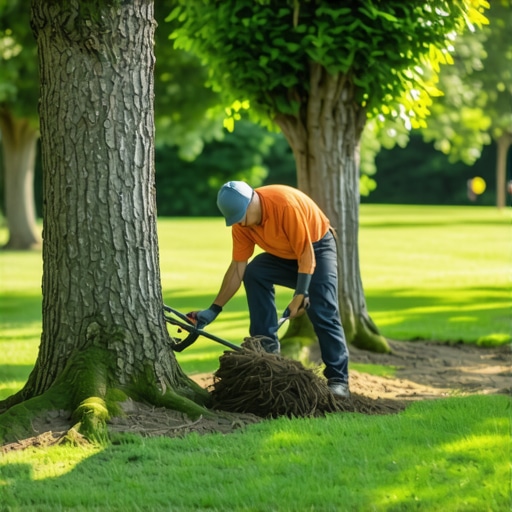
Mastering the Tree-Sod Interface: The Wedge Method Guide
I always drill into my new crew members: if you don’t fix the soil grading first, every plant you put in the ground is just expensive compost. For 20 years, I have watched rookies and ‘mow-and-blow’ outfits slap sod install slabs right against the trunk of a mature oak or a young maple, effectively signing a death warrant for the tree. In 2026, we are moving beyond basic landscaping toward high-precision arboriculture engineering. The Wedge Method is a technical cutting technique that creates a clean, beveled transition between turfgrass and the root flare, preventing bark rot and ensuring oxygen exchange for the root system. It is not just about aesthetics; it is about preventing the slow suffocation of your canopy.
Why Traditional Sod Cutting Around Trees Fails
Traditional flat-cutting leads to the accumulation of thatch and moisture against the tree cambium, causing fungal infections and structural decline. When you lay sod flat against a tree, you are creating a ‘mulch volcano’ effect with living tissue. This trapped moisture invites pests and pathogens like Phytophthora. I have excavated $5,000 specimens where the bark was literally sloughing off because the previous contractor didn’t understand the Wedge Method. You need a 45-degree relief cut. Anything less is negligence.
“The most common cause of tree mortality in the managed landscape is the burial of the root flare by soil, turf, or mulch, which inhibits gas exchange and promotes adventitious root growth that can lead to girdling.” – Horticultural Research Group
How to Execute the Wedge Method for 2026 Sod Installs
The Wedge Method for 2026 sod installation involves creating a precise 45-degree inward bevel at the grass-to-mulch interface, ensuring the root flare of the tree remains exposed while preventing encroachment of grass rhizomes into the critical root zone. This technique requires a sharpened half-moon edger and a deep understanding of the tree’s drip line. You are essentially creating a subterranean barrier that tells the grass where to stop and the tree where to breathe.
| Feature | Traditional Flat Cut | The 2026 Wedge Method |
|---|---|---|
| Angle of Cut | 90-degree vertical | 45-degree inward bevel |
| Root Flare Exposure | Often buried | 100% visible and ventilated |
| Moisture Retention | High at the trunk (Bad) | Drained away from cambium |
| Maintenance | Requires constant edging | Self-limiting growth edge |
Step 1: Identifying the Critical Root Zone (CRZ)
Before you even touch a roll of sod, you must map the CRZ. This isn’t guesswork. Use a soil probe. You’re looking for the transition where the trunk flares out into the buttress roots. If you bury this, the tree will die. Period. I don’t care how ‘green’ the lawn looks if the shade provider is rotting. During a yard cleanup, we often find years of accumulated organic debris that must be cleared to find the true grade. If the grade is off, your irrigation will pool, and you’ll have a swamp around your specimen trees. This is where engineering meets biology.
How much modified gravel do I need for a patio base?
While often asked in general landscaping, for tree-adjacent work, you avoid gravel. You need loam-based soil with a pH of 6.0 to 7.0. If you are installing a path near the tree, you must use permeable aggregates to allow the roots to breathe. Use 4-6 inches of compacted modified stone only for non-root zones. Near trees, use air-spade technology to keep soil loose.
Can I install sod over existing tree roots?
Installing sod directly over surface roots is a recipe for disaster. The sod layer acts as an insulator that can bake the roots in summer and suffocate them in winter. If you must have grass, you use the Wedge Method to create a buffer zone of at least 2-3 feet from the trunk. You never lay sod over roots that are thicker than 2 inches in diameter. You’ll scalp the roots when you mow. It’s a mess.
Managing Irrigation and Soil Microbiology
Proper irrigation for new sod install around trees is a balancing act. New turf needs daily watering, but mature trees hate ‘wet feet.’ The Wedge Method allows for a physical break where you can adjust your nozzle heads. You want rotary nozzles that apply water slowly, allowing it to penetrate the 6-inch root zone of the grass without saturating the deeper tree roots. Check your hydrostatic pressure. If you have a slope, your tree might be drowning while your grass is thirsty.
“A retaining wall doesn’t fail because of the stone; it fails because of the water trapped behind it, much like a tree fails when turf management ignores drainage dynamics.” – Hardscape Engineering Axiom
The 2026 Maintenance Checklist
- Check for root girdling every spring.
- Maintain the 45-degree Wedge Cut with a hand-edger.
- Apply pre-emergent only to the turf, never inside the wedge.
- Monitor soil pH; 2026 standards suggest a 6.5 target for mixed zones.
- Ensure irrigation sensors are not placed in the ‘shadow’ of the trunk.
The Technical Execution: A Step-by-Step
Start by laying your sod rolls toward the tree but stop 3 feet short. Manually place the final pieces. Take your edger and cut the 45-degree bevel away from the tree. This creates a trench that you will fill with a high-quality arborist mulch. Do not use dyed mulch. It is trash. Use double-shredded hardwood. The mulch should be 2 inches deep but should not touch the bark. This ‘V’ notch created by the Wedge Method serves as a filtration strip for irrigation runoff. It catches the nitrogen-rich water from your lawn fertilizer before it can shock the tree’s mycorrhizal fungi. This is how you build a landscape that lasts 50 years, not 50 days.
Final Thoughts on Grade and Drainage
If you see standing water after 20 minutes of irrigation, your grade is wrong. I don’t care what the blueprint says. Nature doesn’t read blueprints. You must ensure the sod install promotes a 2% slope away from the tree base. If the tree is in a low spot, you need a French drain or a dry well. Don’t be the hack who hides a drainage problem under a fresh layer of green grass. It will rot. It’s that simple. Do the work. Respect the biology. Use the wedge.