
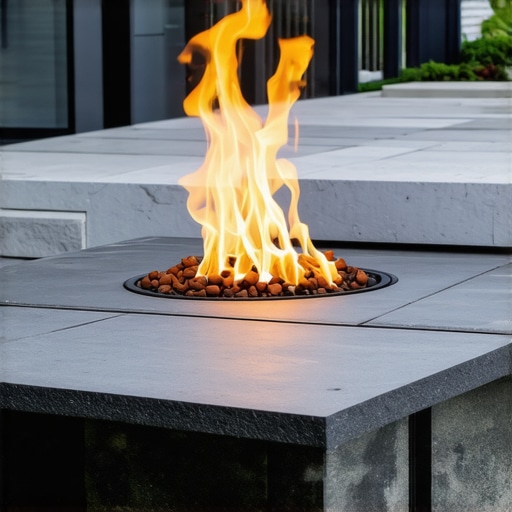
Modern 2026 fire pit kits have evolved, but the physics of heat remains constant. If you are planning a high-end hardscape project, the steel liner is not an optional accessory; it is a structural necessity that protects your masonry from thermal shock. Most homeowners assume that stone or concrete blocks are indestructible, but constant expansion and contraction will eventually shatter even the most expensive pavers. As a contractor, I treat the fire pit as a thermal engine. Without proper containment, that engine destroys its housing. We see it every season: beautiful custom pits reduced to rubble because the heat had nowhere to go but into the stone.
The Critical Role of Steel Liners in Modern Hardscaping
A steel liner acts as a thermal barrier between the open flame and the masonry exterior, preventing direct heat transfer that causes stones to crack, spall, or explode. By creating a dedicated combustion chamber, the liner regulates internal temperatures and provides a consistent structure for landscaping projects that must withstand years of use. I recently got called out to tear up a $30,000 patio that was sinking and cracking because the previous contractor built a fire pit directly on the pavers without a liner or a heat shield. The heat had literally dehydrated the concrete base until it turned back into powder, causing the entire fire pit to tilt and the surrounding stone to delaminate. It was a forensic autopsy of a failed project that could have been saved by a $200 steel insert. This is why we never skip the liner. It is the insurance policy for your hardscape investment.
“A retaining wall doesn’t fail because of the stone; it fails because of the water trapped behind it, and a fire pit fails because of the heat trapped within it.” – Hardscape Engineering Axiom
The Engineering Behind Thermal Expansion
Concrete and natural stone have low thermal conductivity but high thermal expansion coefficients. When you light a fire, the inner face of the stone heats up rapidly while the outer face remains cool. This temperature gradient creates massive internal stress. We call this spalling. In 2026, the best kits utilize 10-gauge or 12-gauge carbon steel or Corten steel. This isn’t just about looks. Thinner metals warp under high heat, which can actually push against your stones and accelerate the damage. You want a heavy-duty ring that can expand independently of the masonry wall. We always leave a half-inch air gap between the steel and the stone. This gap serves as an insulator, allowing air to circulate and carry away excess heat before it reaches the mortar joints. It’s a simple engineering trick that doubles the life of the pit.
| Material Type | Heat Resistance (F°) | Estimated Lifespan | Maintenance Requirement |
|---|---|---|---|
| 10-Gauge Carbon Steel | 1,200°+ | 15-20 Years | Annual High-Temp Paint |
| Corten Steel | 1,500°+ | 30+ Years (Self-Protecting) | None (Natural Patina) |
| Standard Masonry Only | 400°-600° | 2-5 Years | Frequent Mortar Repair |
| Stainless Steel 304 | 1,800°+ | Lifetime | Periodic Polishing |
How much modified gravel do I need for a fire pit base?
For a standard 48-inch fire pit, you need approximately 0.5 to 0.75 cubic yards of 3/4-inch modified gravel to create a stable 6-inch deep compacted base. Never build on top of topsoil or sod install areas; organic matter decays and shifts. You must excavate down to the subsoil, compact it until the tamper bounces, and then add your gravel in 2-inch lifts. Each lift needs to be vibrated or hand-tamped to reach a Standard Proctor Density of at least 95%. If your base isn’t solid, your liner will eventually sit unevenly, leading to poor airflow and uneven heating. We also ensure that the drainage layer connects to the surrounding landscaping grade to prevent the pit from becoming a puddle after a rainstorm.
Protecting Your Irrigation and Sod During Construction
One of the biggest mistakes in yard cleanup and fire pit installation is ignoring the irrigation lines. Heat travels downward. If you have a PVC lateral line running two feet under a fire pit, it will eventually melt or become brittle. Before we set the first stone, we locate all lines. We sleeve them or reroute them at least five feet away from the pit’s perimeter. Furthermore, the sod install should never come right up to the edge of the pit. We recommend a 24-inch ‘buffer zone’ of decorative river rock or pavers. High-intensity heat from a 2026-spec fire pit can easily scorch nearby turf grass, leading to a dead ring around your feature. This isn’t just aesthetics; it’s about biology. Heat kills root systems.
“Effective fire pit design requires a minimum of 3 inches of non-combustible material as a base layer to prevent root-zone ignition and structural subsidence.” – National Agronomy Manual Section 4.2
The Step-By-Step Installation Checklist
- Mark the center point and excavate 8 inches deep, extending 12 inches wider than the liner diameter.
- Install a geotextile fabric to separate the subsoil from the gravel base.
- Add 3/4″ minus crushed stone in 2-inch increments, compacting each layer.
- Set the first course of stones and verify level across all axes.
- Drop the steel liner into the center to check for fit, ensuring the lip sits flush on the stone.
- Install the remaining courses, maintaining a 1/2-inch air gap between the liner and the inner wall.
- Drill drainage holes or leave ‘weep holes’ in the bottom course of stone to allow water to escape the liner area.
- Complete the yard cleanup by removing all excavated clay and debris before finishing the surrounding sod install.
Does a fire pit need a vent for the steel liner?
Yes, oxygen is the fuel for your fire, and a liner without airflow is just a bucket for smoke. Modern 2026 designs utilize the Venturi effect. By leaving two small gaps in the bottom course of your masonry—opposite each other—you create a natural draw. Cold air enters at the bottom, feeds the flame, and pushes the smoke upward. This results in a hotter, cleaner burn with less soot buildup on your stone. If you don’t vent it, the liner will retain too much heat, potentially leading to warping despite the gauge of the steel. It also helps with drainage. A fire pit that holds water is a mosquito factory and a rust accelerator. Keep it dry. Keep it vented. Keep it professional.
Final Maintenance and The Settling Period
Once the project is done, don’t light a bonfire immediately. Let the mortar or adhesive cure for at least 72 hours. During the first year, you will see some settling. This is normal. However, if you see the liner tilting more than a fraction of an inch, your base compaction was insufficient. After the first heavy rain, perform a thorough yard cleanup to ensure no silt has washed into your drainage holes. Check your irrigation heads to ensure they aren’t spraying directly into the pit, as thermal shock from cold water on a hot liner can cause the steel to stress-crack. A well-installed 10-gauge liner should last you two decades. It is the heart of the pit. Treat it with respect, and your masonry will stay standing long after the neighbors’ ‘mow-and-blow’ special has crumbled into the dirt.