
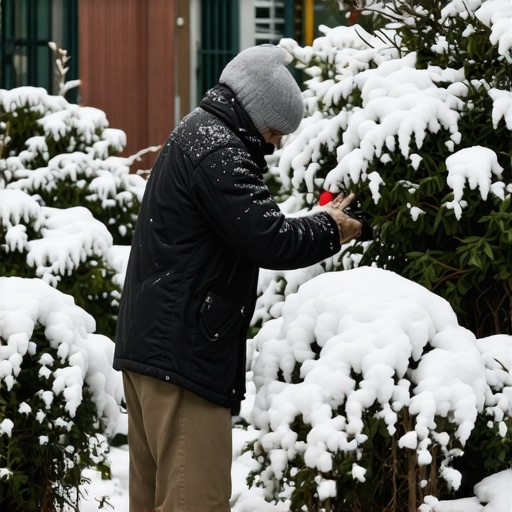
Protecting Shrub Integrity Against Heavy Snow and Ice
Heavy snow load isn’t just a weather event; it’s a mechanical stress test that exploits every structural weakness in your landscaping. To protect shrubs from heavy snow, you must implement structural pruning to eliminate weak crotch angles and apply physical barriers like burlap or wooden A-frames, which mitigate mechanical limb failure and prevent desiccation caused by freezing winds and salt spray. I always drill into my new crew members: if you don’t fix the plant’s architecture through proper pruning in the fall, every specimen you put in the ground is just expensive compost waiting for a blizzard. This isn’t about aesthetics; it’s about the physics of load-bearing wood. When I see a multi-stemmed arborvitae splaying out under four inches of wet slush, I don’t see a ‘natural occurrence.’ I see a failure of maintenance. A single cubic foot of wet snow can weigh upwards of 20 pounds. For a mature shrub with a broad canopy, that translates to hundreds of pounds of downward force on branch unions that were never designed for vertical weight. We focus on the biology of the plant—ensuring the cells are hydrated through proper late-season irrigation—because a dehydrated plant is a brittle plant. Brittle wood snaps; hydrated wood bends. During our standard yard cleanup protocols, we identify high-risk species like boxwoods, yews, and rhododendrons that lack the structural xylem density to survive the ‘big one’ without intervention.
“Woody plants fail during winter not merely from the cold, but from the accumulation of ice and snow exceeding the modulus of rupture of the branch tissue.” – Penn State Agricultural Extension
How do I stop my bushes from splitting in the snow?
Preventing shrubs from splitting requires mechanical stabilization using arbor tape or twine to wrap multi-stemmed evergreens, effectively creating a single structural column that sheds snow. Start at the base of the shrub and spiral upward, pulling the branches into a tight, but not constricted, cylinder. This prevents snow from settling inside the ‘bowl’ of the plant, which is the primary cause of splaying. Don’t use wire or thin nylon string; these will cut into the bark when the plant expands or when the wind gusts. Use a wide, breathable 1-inch poly-tape. This is especially critical if you recently did a sod install nearby, as the disturbed soil might not yet provide the root anchorage needed to counter-balance a heavy, snow-laden top. If the root ball shifts because the ground isn’t fully frozen, the whole plant can heave. We see this often in new landscaping projects where the homeowner skipped the late-autumn watering. You want the ground frozen solid around a well-hydrated root system to lock that plant in place like a concrete pier.
The Science of Desiccation and Winter Burn
Winter burn is the result of transpiration exceeding the plant’s ability to uptake water from frozen soil. When the sun hits those evergreen needles on a 20-degree day, the needles try to photosynthesize and lose water. Since the ground is a block of ice, the roots can’t replace that moisture. The result is brown, dead foliage in April. This is why we use burlap screens. A burlap screen isn’t a blanket; it’s a windbreak and a sunshade. It reduces the wind speed across the leaf surface, which dramatically lowers the rate of moisture loss. We also look at the soil chemistry. High nitrogen levels late in the season (from cheap big-box fertilizers) force new, tender growth that hasn’t ‘hardened off.’ That soft growth has thin cell walls that rupture the moment the temperature drops below 32 degrees. It’s a death sentence. Stick to high-potassium applications in late fall to strengthen cell membranes instead.
| Protection Method | Best For | Material Cost | Durability |
|---|---|---|---|
| Burlap Wrapping | Evergreens / Boxwoods | Low | 1 Season |
| Wooden A-Frames | Low-growing broadleaf | Medium | 5+ Seasons |
| Spiral Twine | Columnar Arborvitae | Very Low | 1 Season |
| Anti-Desiccant Spray | Holly / Rhododendron | Medium | 6-8 Weeks |
How much modified gravel do I need for a patio base?
While often asked during landscaping consultations, the answer depends on the hydrostatic pressure and frost heave potential of your specific soil. For a standard pedestrian patio, you need a minimum of 6 inches of compacted 21A or 3/4-inch modified gravel. If you are in a heavy clay zone, you must increase that to 8 or 10 inches and include a geotextile fabric. Without a proper base, the freeze-thaw cycle will heave your pavers, and that movement can actually push against the root flares of nearby shrubs, causing mechanical stress to the plants you’re trying to protect. Proper drainage is the foundation of both hardscaping and horticulture. If water pools around your shrubs because your patio wasn’t graded at a 2% slope away from the planting beds, you’re creating an ice lens that will suffocate the roots. It’s all connected. A yard cleanup isn’t just raking leaves; it’s checking these grades before the snow hides the flaws.
“A retaining wall doesn’t fail because of the stone; it fails because of the water trapped behind it, which exerts immense lateral pressure during a freeze.” – Hardscape Engineering Axiom
Step-by-Step Shrub Winterization Checklist
- Hydration: Apply 1 inch of water per week until the ground freezes solid.
- Mulching: Apply 3 inches of wood chips around the drip line, but never touch the bark (no mulch volcanoes).
- Pruning: Remove dead, damaged, or crossing branches that could act as leverage points for snow.
- Wrapping: Use burlap or snow fencing for salt-sensitive species near driveways.
- Internal Cleanup: Remove fallen leaves from the interior of the shrub to prevent fungal pathogens during the spring thaw.
Don’t be the homeowner who waits until the first blizzard to worry about their plants. By then, it’s too late. If you see a branch bowing under snow, do not shake it violently. You will snap the frozen fibers. Use a broom to gently brush the snow upward and off. If it’s encased in ice, leave it alone. The ice actually provides a layer of insulation, and trying to chip it off will do more damage than the weight itself. Wait for the melt. Your job is the prep work. If you’ve engineered the plant correctly in October, it will stand tall in January. High-end landscaping is about foresight, not reaction. Real professionals know that the work we do in the dirt during the ‘off-season’ is what defines the success of the spring bloom. Stop buying the cheap twine and start investing in structural integrity.
{“@context”:”https://schema.org”,”@type”:”HowTo”,”name”:”How to Protect Shrubs from Snow Damage”,”step”:[{“@type”:”HowToStep”,”text”:”Water shrubs deeply until the first hard freeze to ensure cell turgidity.”},{“@type”:”HowToStep”,”text”:”Spiral wrap multi-stemmed evergreens with poly-tape or burlap twine.”},{“@type”:”HowToStep”,”text”:”Construct wooden A-frames over small or brittle shrubs to deflect snow weight.”},{“@type”:”HowToStep”,”text”:”Apply a 3-inch layer of organic mulch to insulate the root zone.”}]}