
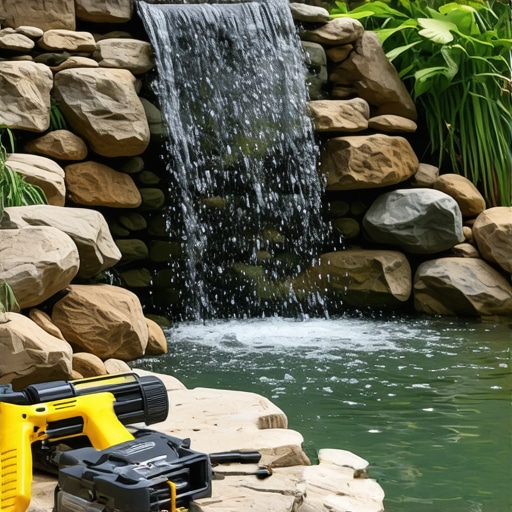
Why Your Waterfall Looks Like Swamp Sludge: The Forensic Autopsy
An algae-choked waterfall is a biological red flag indicating a total collapse of the nitrogen cycle within your water feature. To effectively clean a stone waterfall without draining the pond, you must focus on physical removal of organic debris and the application of targeted oxidizing agents like sodium percarbonate to break the molecular bond between the algae and the stone substrate. This process requires precision to avoid crashing the pond’s delicate pH balance or killing beneficial biofilm.
I always drill into my new crew members: if you don’t fix the soil grading first, every plant you put in the ground is just expensive compost. The same logic applies to your pond. If your surrounding landscaping allows irrigation runoff to dump nitrogen-rich fertilizer into your water, you will be scrubbing those rocks until your knuckles bleed. I recently spent three days remediating a project where the homeowner thought a sod install right up to the pond’s edge was a good idea. Every time they watered their new grass, the runoff turned their waterfall into a green slime factory. You cannot fight biology with a garden hose alone.
“Excessive nutrient loading, particularly phosphorus and nitrogen, is the primary driver of filamentous algae growth in managed aquatic systems.” – Penn State Agricultural Extension
How much hydrogen peroxide do I need to clean pond rocks?
For a localized spot treatment on a stone waterfall, use a 3% hydrogen peroxide solution applied directly to the algae while the pump is off, using approximately 1 quart per 100 square feet of stone surface. This oxidizes the cell walls of the algae without leaving toxic residues in the water column.
Can I use a pressure washer on my waterfall stones?
Using a pressure washer on waterfall stones is generally discouraged as it can strip away the beneficial nitrifying bacteria and damage the structural mortar or pond liner hidden beneath the rocks. If you must use one, keep the pressure below 1500 PSI and use a wide fan tip to prevent dislodging the stones or puncturing the EPDM liner.
The Non-Drain Cleaning Protocol: Step-by-Step
Cleaning without draining is about containment and biological management. It requires a surgeon’s touch, not a sledgehammer. It is a slow process. Follow the steps. Do not skip the prep work.
- Shut down the pump: You cannot clean moving water. The rocks must be exposed.
- Physical Extraction: Use a stiff-bristled nylon brush. Avoid metal brushes; they leave fragments that rust.
- Oxidation: Apply a dusting of sodium percarbonate or 3% hydrogen peroxide. Let it fizz for 15 minutes.
- The Gentle Rinse: Use a bucket of pond water to rinse the loosened muck.
- Muck Vacuuming: Use a specialized pond vacuum to suck up the debris before it settles in the deep end.
- Bio-Boost: Add a double dose of beneficial bacteria to consume the remaining microscopic spores.
| Cleaning Agent | Action Mechanism | Safety Level (Fish/Plants) | Best Use Case |
|---|---|---|---|
| Sodium Percarbonate | Rapid Oxidation | High (When dosed correctly) | Heavy string algae on rocks |
| 3% Hydrogen Peroxide | Cell Wall Rupture | Medium | Spot cleaning small areas |
| Beneficial Bacteria | Nutrient Competition | Highest | Long-term maintenance |
| Barley Straw Extract | Lignin Breakdown | High | Preventative only |
Waterfalls fail because of hydrostatic pressure and organic buildup. When muck accumulates in the crevices of your stone, it creates anaerobic pockets. These pockets produce hydrogen sulfide. That is the rotten egg smell you notice in the summer. During a yard cleanup, most people ignore the pond. That is a mistake. Organic matter like leaf litter and grass clippings must be removed from the waterfall’s start point immediately. It will rot. It will feed the algae. Keep it clean.
“A retaining wall doesn’t fail because of the stone; it fails because of the water trapped behind it.” – Hardscape Engineering Axiom
Integrating Irrigation and Landscape Logic
Your irrigation system is often the hidden culprit behind a dirty waterfall. If your spray heads are hitting the pond, you are constantly introducing city water chemicals or well-water minerals into the ecosystem. This causes mineral scaling on your stone. Those white crusty lines are calcium deposits. You can dissolve them with a mild citric acid solution, but if you don’t adjust your sprinklers, they will return. Your landscaping should include a buffer zone—a dry creek bed or a mulch barrier—to intercept runoff before it reaches the water feature. This is engineering 101. Prevent the problem. Don’t just treat the symptoms.
Maintenance Schedule for a Sludge-Free Waterfall
You need a rhythm. Consistency beats intensity every time. Check the skimmer basket daily. It takes ten seconds. Do it. If the basket is full, the pump works harder. The motor will burn out. That is a $500 mistake you can avoid. Perform a yard cleanup around the pond perimeter every two weeks to ensure no debris is poised to blow in. Test your phosphate levels. If they are above 0.05 ppm, you have a nutrient problem. Address it with a phosphate binder. This is how pros keep water crystal clear. No shortcuts.