
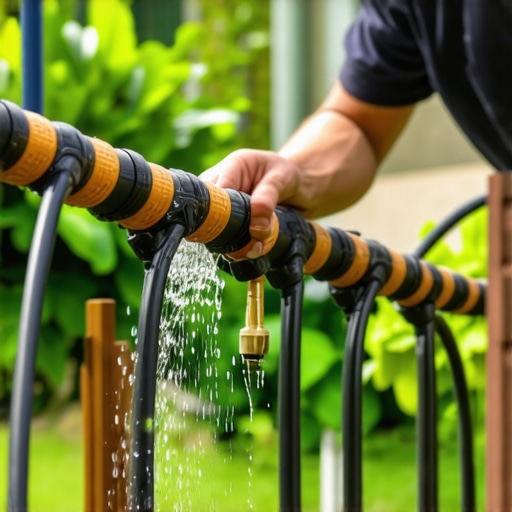
Understanding the Physics of Low Pressure in Drip Irrigation
To fix low water pressure in a drip irrigation system, you must first isolate the hydraulic bottleneck by checking the filter screen for sediment, inspecting the pressure regulator for failure, and calculating the total GPM (Gallons Per Minute) demand against your source capacity. Most failures occur because of friction loss or emitter clogging. I always drill into my new crew members: if you don’t fix the soil grading and the hydraulic math first, every plant you put in the ground is just expensive compost. I have spent twenty years watching rookies throw $10,000 worth of nursery stock into the dirt only for it to desiccate because they didn’t understand the difference between static pressure and dynamic flow. Landscaping is not just about aesthetics; it is about engineering a life-support system. When a client calls me because their drip emitters are barely weeping, I don’t look at the emitters first. I look at the source. If the physics are wrong, the plants die. It is that simple.
The Forensic Autopsy of a Failed Zone
I recently walked onto a job site where a homeowner had attempted a massive sod install and a custom drip grid simultaneously. They were baffled. The irrigation system worked at the valve but the end of the lines were bone dry. The problem was not the pump. It was the lateral length. They had run 400 feet of half-inch poly tubing on a single zone. Friction loss is a relentless thief. Every foot of pipe and every elbow fitting robs the system of energy. By the time the water reached the final plant, the PSI had dropped below the opening threshold for the emitters. You cannot fight physics. You must work within the parameters of your flow rate. If you are doing a yard cleanup and find old, brittle lines, just rip them out. Do not try to patch a failing system. The internal scaling from calcium deposits will eventually choke the orifice of every emitter you install. It is a waste of time.
“Irrigation efficiency is not merely the application of water, but the management of pressure to ensure uniform distribution across the entire root zone.” – Texas A&M AgriLife Extension
How much water pressure does a drip system need?
A standard drip irrigation system requires a dynamic pressure between 20 and 30 PSI to function correctly, though some specialized pressure-compensating emitters can operate as low as 10 PSI. If your pressure exceeds 40 PSI, you risk blowing the emitters right out of the tubing. This is why a high-quality pressure regulator is non-negotiable. I see too many “contractors” skip the regulator to save fifteen dollars. Two months later, the homeowner has a flooded basement because a connector popped off under a midnight pressure surge. Don’t be that guy. Use a regulator. Check it yearly. They are wear items; they fail. When they fail, they usually fail closed or restricted, killing your flow. Test the pressure at the furthest point of the run using a Schrader valve adapter. If you have 30 PSI at the valve but 5 PSI at the end, your line is too long or too narrow.
| Tubing Diameter | Max Flow Rate (GPM) | Max Run Length (Feet) | Primary Use Case |
|---|---|---|---|
| 1/4 Inch (Vinyl) | 0.5 – 0.75 | 30 | Pots and Containers |
| 1/2 Inch (Poly) | 4.0 – 6.0 | 250 | Garden Beds |
| 3/4 Inch (Poly) | 8.0 – 12.0 | 450 | Large Scale Perimeter |
Diagnosing the Three Killers: Clogs, Leaks, and Math
The first killer is the Y-filter. If you are pulling from a well or even city water with high mineral content, that mesh screen will blind over with bio-film or grit. Clean it monthly. The second killer is the invisible leak. Check for areas where the mulch is suspiciously damp or where the soil has turned to muck. A nick from a shovel during a landscaping project can create a parasitic loss that starves the rest of the line. The third killer is bad math. Total up the GPH (Gallons Per Hour) of every emitter on the circuit. If that total exceeds 75% of your available flow at the source, the system will fail. You are asking for more than the pipe can give. It is like trying to breathe through a cocktail straw while running a marathon. It will not work. You must split the zone or increase the pipe size. No amount of “fiddling” with the valve will change the internal diameter of the tubing.
“Pressure-compensating emitters are designed to maintain a consistent discharge rate despite fluctuations in inlet pressure, provided the minimum threshold is met.” – ASABE Standards Manual
Can you mix emitters on one line?
You can mix different flow rates of pressure-compensating emitters on the same line, but you should never mix drip emitters with spray heads because their operating pressures and application rates are fundamentally incompatible. Spray heads need 30-50 PSI and dump gallons in minutes. Drip emitters need 20 PSI and take hours to achieve the same saturation. If you put them on the same valve, you will either blow out the drip line or starve the spray heads. I see this mistake often during a sod install where someone tries to tap into a flower bed line to water a small patch of grass. The grass dies because it never gets enough volume, and the flowers rot because they are being drowned. Keep your zones pure. Logic dictates that plants with different ET (Evapotranspiration) rates should be on separate valves.
The Hard-Nose Maintenance Checklist
- Monthly Filter Flush: Open the end caps and let the water run for 60 seconds to purge sediment.
- Visual Emitter Check: Look for the ‘salt crust’ on emitters; soak them in white vinegar if they are crusty.
- Regulator Test: Use a pressure gauge to ensure the output remains at the specified PSI.
- Lateral Depth Inspection: Ensure lines haven’t been buried deeper than 2 inches by shifting mulch; deep lines get crushed.
- Battery Replacement: If using a hose-end timer, change batteries every spring. Do not wait for it to die in July.
The Reality of Soil and Hydrology
If you are working in heavy clay, your low pressure might actually be a drainage problem masquerading as an irrigation issue. Saturated clay prevents oxygen from reaching the roots, causing the plant to wilt. A homeowner sees a wilting plant and assumes the irrigation is failing, so they turn up the pressure or add more emitters. Now you have a swamp. You have effectively turned your yard into a vat of anaerobic sludge. Always check the soil moisture with a probe before you start hacking at the plumbing. Sometimes the fix isn’t more water; it is better yard cleanup and aeration to let the soil breathe. Engineering a landscape requires respecting the site’s natural drainage. If you ignore the grade, the water will find its own way, usually into your crawlspace or under your patio. Compacted soil is the enemy of every sod install and planting project. Break it up. Amend it. Then worry about the pipes.